How to Throw a Masquerade Party: A Host’s Guide
What is a masquerade party?
A masquerade party is a social event where every guest wears a decorative mask, usually with formal or semi-formal dress. The mask is what separates it from an ordinary dress-up party: it hides enough of the face to loosen people up, which is exactly why the format has survived since the European carnival balls of the fifteenth century.
In practice the mask does two jobs for a host. It makes a room of people who barely know each other talk to one another, and it gives an otherwise ordinary venue a strong visual identity without you having to decorate every wall. That is why masquerade works so well for milestone birthdays, engagements, fundraisers, work Christmas parties, school formals and Halloween nights alike.
How do you choose the format?
Decide the format before anything else, because it sets the venue, the guest count and the dress code in one go. Four formats cover almost everything hosts actually run.
| Format | Typical size | Venue | What it asks of guests |
|---|---|---|---|
| Formal masquerade ball | 60+ | Ballroom, function centre, hotel | Black-tie dress and a structured mask; seated supper and dancing |
| Cocktail masquerade | 20-60 | Bar, gallery, hired room, large home | Cocktail dress or a suit, half masks, standing and grazing |
| At-home dinner masquerade | 8-20 | Your dining room or courtyard | Smart dress and masks worn until the meal is served |
| Themed or Halloween masquerade | Any | Home or hired space | Costume welcome, bolder masks, no formal seating |
The failure mode to avoid is mixing two of them. A black-tie invitation for a party in a backyard leaves guests overdressed and awkward; a casual invitation for a hired ballroom leaves the room feeling empty of occasion. Pick one and describe it plainly on the invitation.
Where should you hold a masquerade party?
Match the room to the format. A formal ball needs a ballroom or dance hall with a floor people can actually dance on and space to photograph arrivals. A cocktail masquerade suits a hired bar, a gallery space or a large open-plan home. A dinner masquerade needs nothing more than your own table.
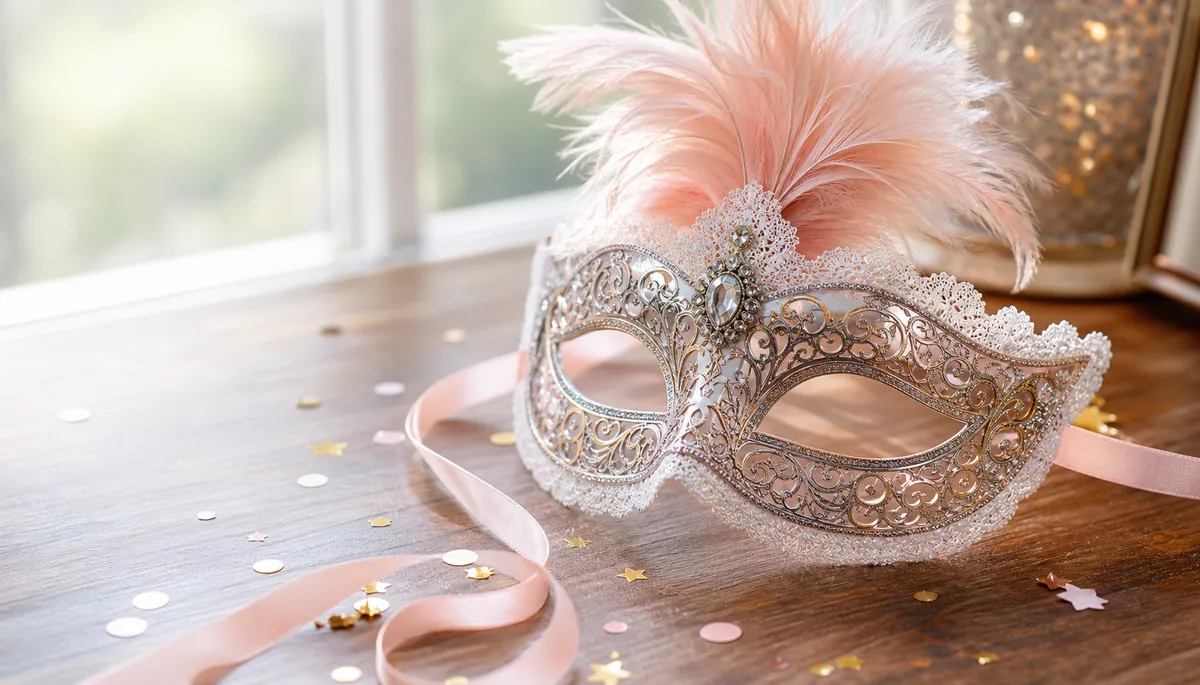
Whatever the space, lighting is the single biggest lever you have. Masks are made of texture — filigree scrollwork, feathers, moulded leather, gold leaf — and all of it disappears under flat overhead light. Warm lamps, candles, uplighting against a wall or fairy lights behind the bar make every mask in the room look twice as good, and they photograph far better.
Two practical checks before you commit: is there somewhere near the entrance to stage arrival photographs, and is there a table or shelf where guests can safely put masks down during supper? Masks left on chairs get sat on.
When should you send invitations, and what goes on them?
Send invitations around six weeks ahead for a formal ball and about a month for anything smaller, then follow up with a reminder two weeks out. Guests need lead time for a masquerade in a way they do not for a normal party, because most of them have to source an outfit and a mask.
Every masquerade invitation should carry six things: the format in plain words (“black-tie masquerade ball” or “cocktail masquerade”), date and start time, venue and parking or transport notes, the dress code in a single line, whether masks are provided or brought, and an RSVP date. If you are running an unmasking moment, say the time on the invitation — guests plan their hair and photos around it.
A line that saves hosts a dozen text messages: “Half masks recommended — supper is seated.” It answers the question guests are actually asking, which is whether they can eat in the thing.
Should you supply masks for your guests?
You have three workable options, and the right one depends on how much you care about the photographs. Ask guests to bring their own and you get the most variety, though a few will turn up bare-faced. Supply a basket of spare masks at the door and nobody is left out — this is the option most hosts land on. Buy masks for everyone and you control the palette completely, which is what you want for a wedding, a milestone birthday or anything being professionally photographed.
If you are buying for the room, order a spread rather than one style: a few structured pieces for the guests who will lean in, and a set of simple half masks for the ones who will not. Half Face Masquerade Masks are the safest bulk choice because guests can eat, drink and talk in them all night. For a split by gender, Men’s Masquerade Masks covers shapes cut for a broader face, and Masquerade Masks for Women covers the formal shapes that work with an updo.
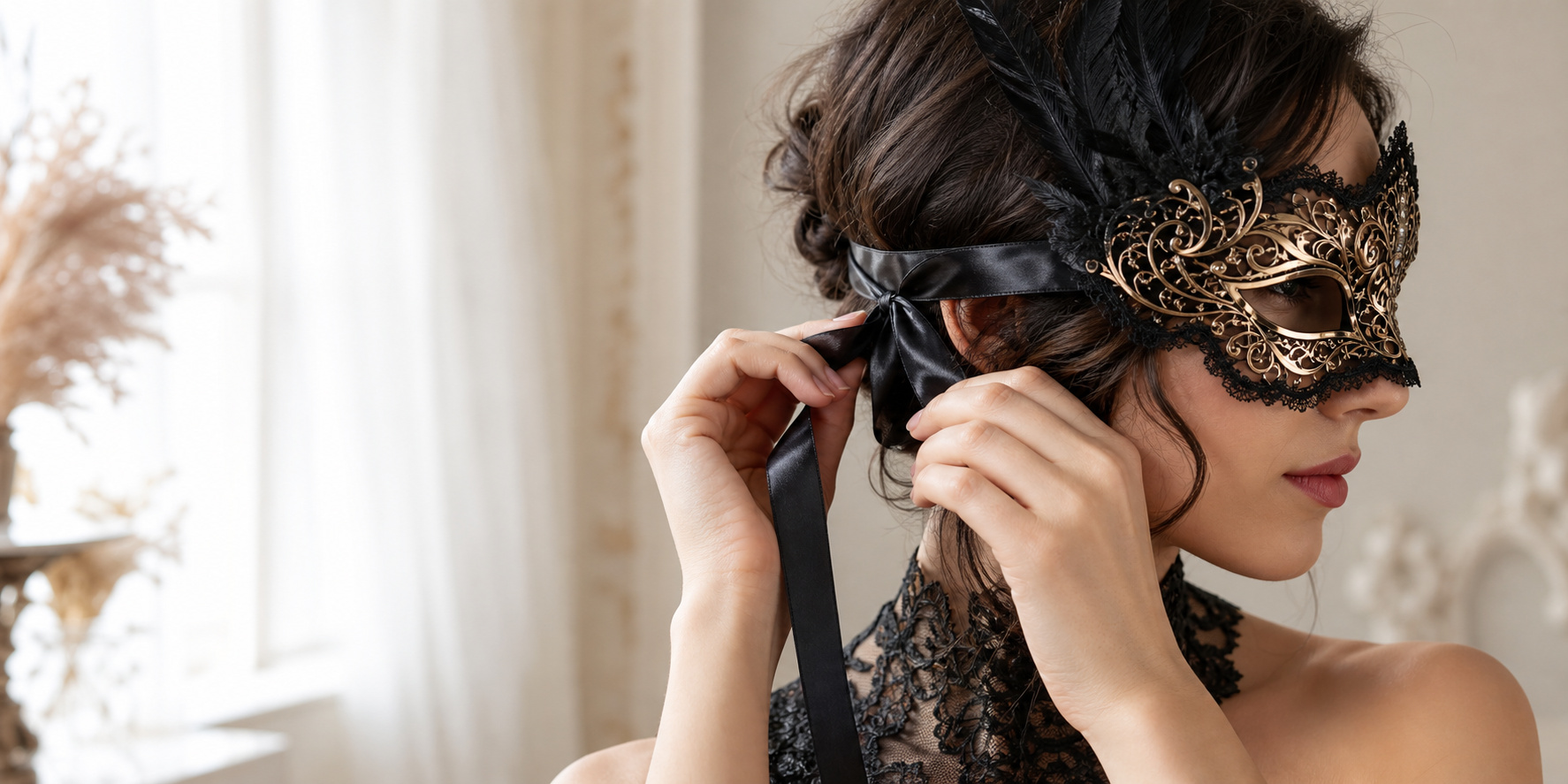
For a formal ball where you want the room to look consistent, Black Masquerade Masks photograph crisply against every outfit colour, while Venetian Masks give a traditional carnival look if that is the theme you have set. Our guide to picking the right masquerade mask is worth sending to guests with the invitation, along with how to tie and secure a mask so it stays put.
What dress code should you set?
Set it in one line and match it to the format: “black tie and masks” for a ball, “cocktail and masks” for a bar or a large home, “smart dress, masks on arrival” for a dinner. Guests only need to know how formal to go and whether to bring a mask — the detail is their problem, not yours.
For the detail itself, point guests at our full guide on what to wear to a masquerade ball or party. It covers dress code by event type, what men and women actually wear, whether a short dress works, and how to match a mask to an outfit — every question your guests will otherwise ask you in the week before the party.
What happens at a masquerade party?
Run the night in three acts. Arrival: masks on, drinks in hand, a photographer or a phone on a tripod near the door, and music low enough to talk over. The middle: supper or grazing, then the music lifts and the floor opens. The unmasking: a set moment, usually late — after supper or at midnight — where guests take their masks off together.
The unmasking is the tradition worth keeping. It gives the night a shape and a natural photograph, and it releases anyone who has quietly been uncomfortable in their mask for three hours. Announce it, count it down, and have somewhere for the masks to go.
For music, anything works as long as the first hour is background and the later part is danceable — string or jazz playlists during arrival, then whatever your crowd actually dances to. Keep the food simple enough to eat in a half mask: grazing boards, canapes and anything on a skewer beat a plated dish that needs two hands and a clear line of sight. Planning something larger? Our companion guide on planning a masquerade party goes deeper on masks, theme and detail.
Frequently Asked Questions
How do you host a masquerade party at home?
Choose a cocktail or dinner format rather than a ball, keep the guest list to what your largest room holds standing, and put your effort into lighting rather than decorations — warm lamps, candles and uplighting make masks look their best. Set a one-line dress code on the invitation, keep a basket of spare half masks by the door, and serve food guests can eat one-handed in a mask.
How far in advance should you plan a masquerade ball?
Book the venue two to three months out for a formal ball and send invitations about six weeks ahead, with a reminder two weeks before. Guests need longer than usual because most have to source both an outfit and a mask. For a smaller party at home, a month’s notice is generally enough.
Do you provide masks for guests?
It is your call, but say which on the invitation. Asking guests to bring their own gives you the most variety; keeping a basket of spare half masks at the door covers the few who forget; buying for everyone gives you a consistent look, which matters for weddings, milestone birthdays and anything professionally photographed.
What do you do at a masquerade party?
Arrival with drinks and photographs, then supper or grazing, then dancing, then a set unmasking moment late in the night. Some hosts add a best-mask vote, a photo backdrop or a first dance. The unmasking is the one tradition worth keeping — it gives the evening a shape and a natural point for group photographs.
What dress code should I put on a masquerade invitation?
Use one line that names the formality and the mask: “black tie and masks”, “cocktail and masks”, or “smart dress, masks on arrival”. Add “half masks recommended — supper is seated” if guests will be eating at a table. For everything guests then ask about outfits, send them to our guide on what to wear to a masquerade ball or party.