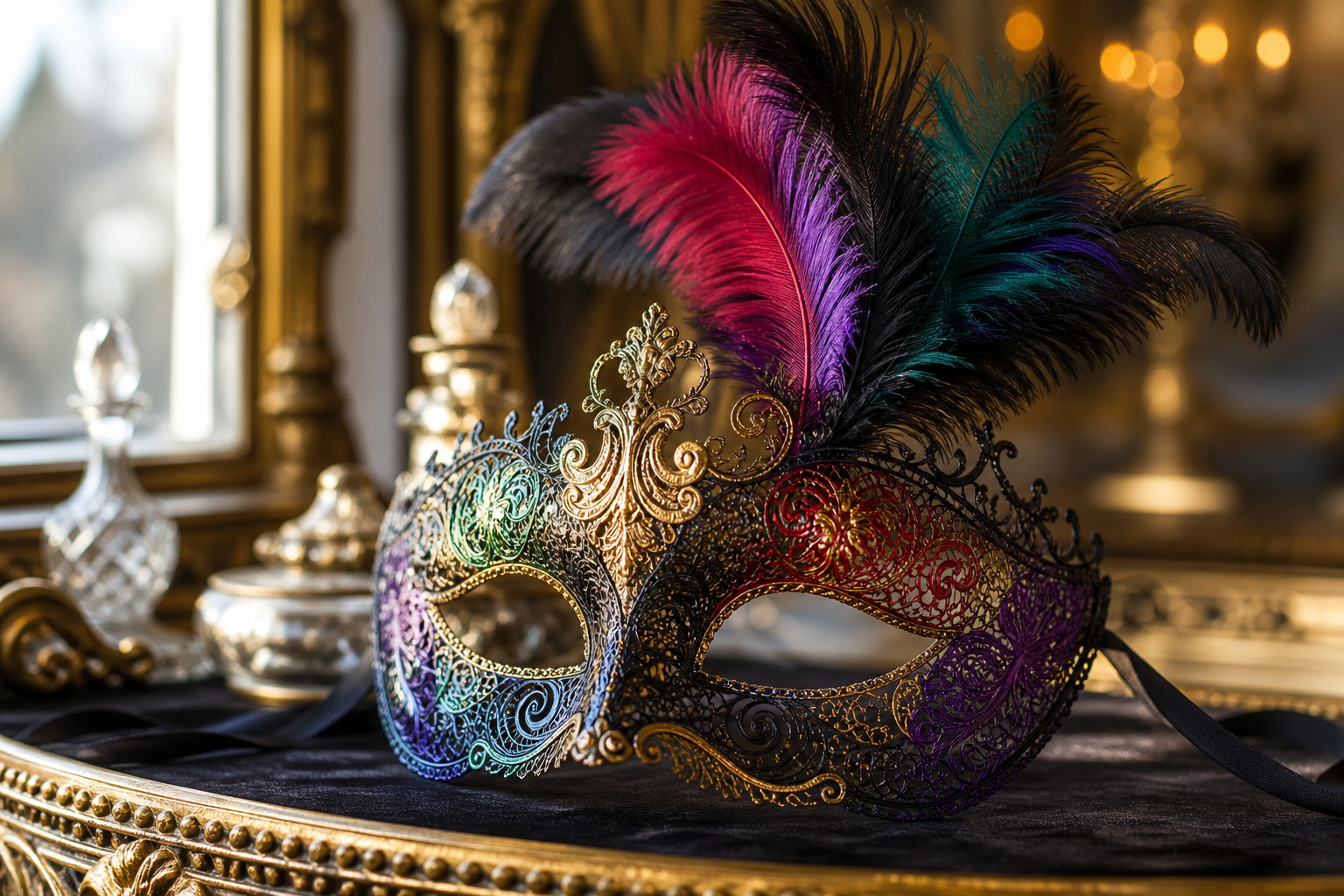
How to Tie and Secure a Masquerade Mask So It Stays Put
Why a Secure Mask Actually Matters
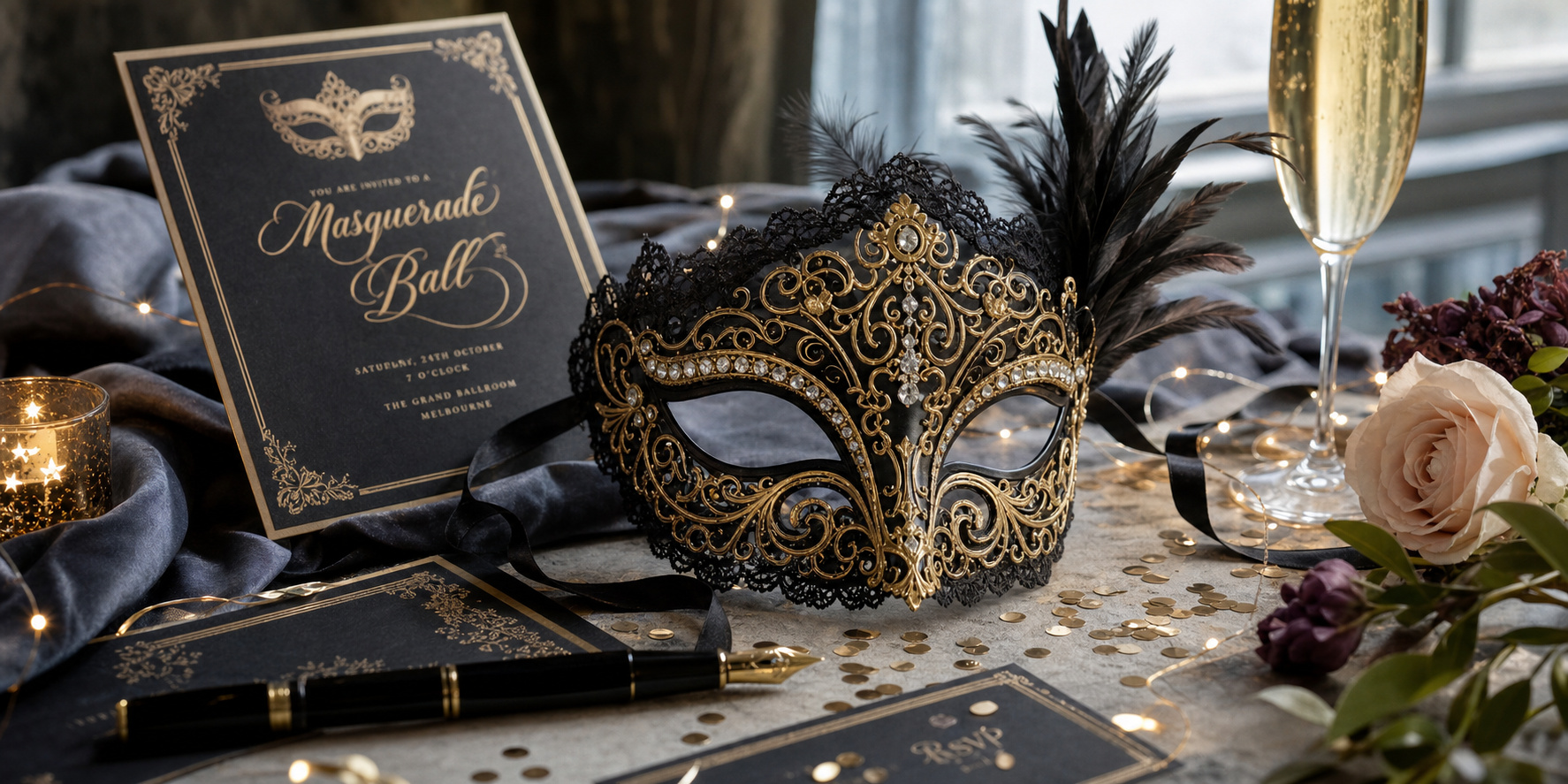
Anyone who’s spent an evening at a masquerade ball tugging their mask back up their nose knows the problem isn’t the mask itself, it’s how it’s tied on. A gorgeous Venetian mask or an ornate piece from the filigree metal range can look stunning in the box and still end up crooked by 9pm if the ribbon’s too loose or the elastic’s the wrong tension.
Tying it properly isn’t just about comfort. A mask that slides around ruins photos, breaks the illusion of the character you’re playing, and honestly gets annoying fast when you’re trying to talk to people or hold a drink. Get the tie right at the start of the night and you forget it’s even there, which is really the whole point of wearing one.
There’s also a safety angle worth mentioning. If you’re at a masquerade with dancing, a mask tied too loosely can slip mid-spin and become a trip hazard on the floor, or worse, an eye hazard if it swings around. A snug, well-adjusted tie means you can move freely without babysitting your face the whole night.
Choosing the Right Tie Method
There’s no single “correct” way to tie a masquerade mask, it genuinely depends on your hairstyle, how long you’re wearing it, and what the mask itself is designed for. Some masks in our full masquerade mask range come with ribbon ties already attached, others use elastic, and a few are made to be held on a stick for shorter appearances.
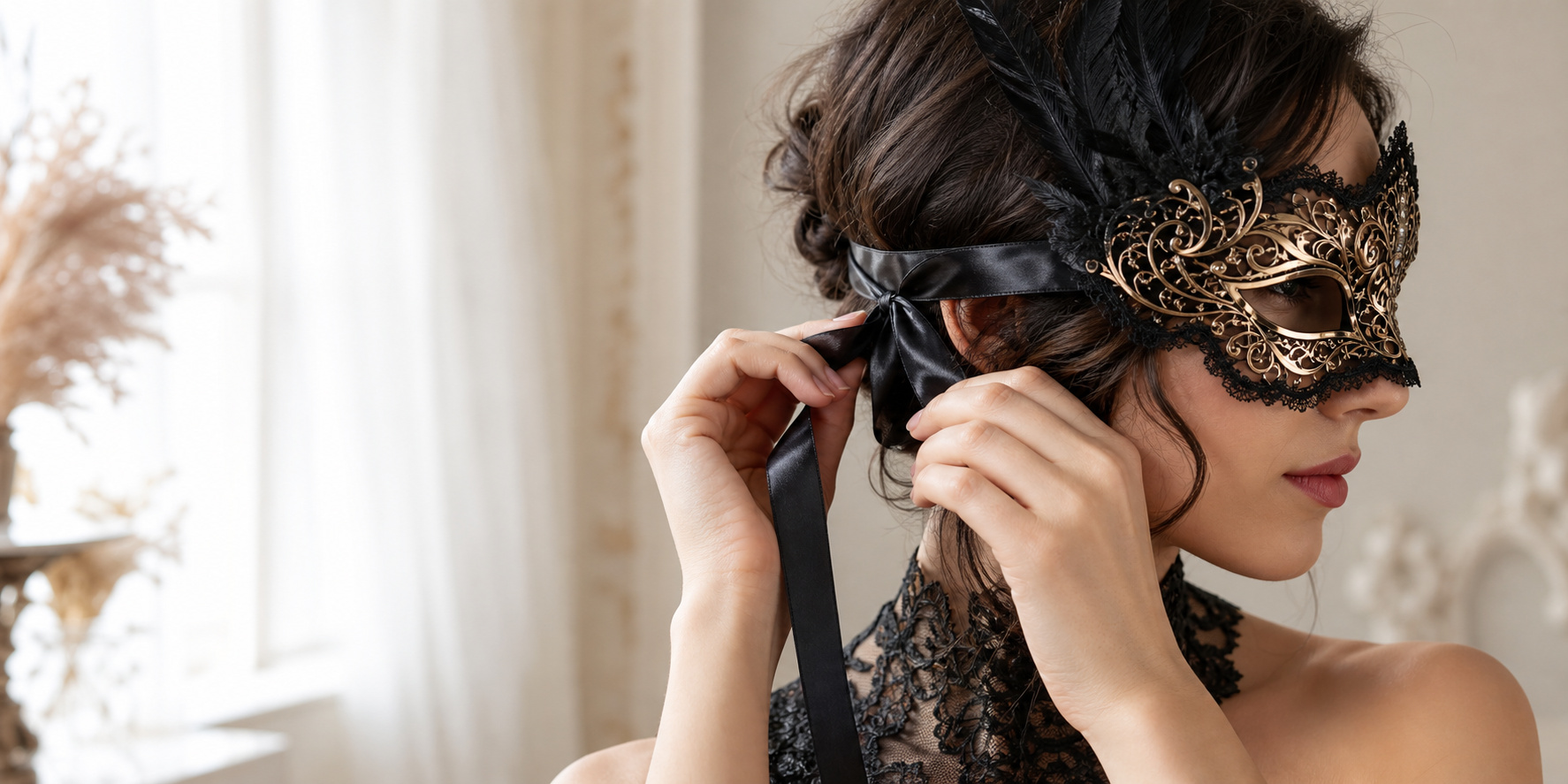
If you’ve got an updo or a fascinator sitting on top of your head, ribbon ties are almost always the better choice. You can thread them below the hairstyle rather than through it, so nothing gets crushed or pulled loose over the course of the evening. If you’re wearing your hair down, elastic sits more comfortably because it doesn’t need retying every time you adjust it.
Face shape matters too, more than people expect. Masks that sit higher on the cheekbones (a lot of the leather masks are cut this way) need a slightly higher tie point at the back of the head to stop them dragging down under their own weight. A mask that’s heavier on one side, like anything with a large feather plume, benefits from a slightly asymmetric tie to balance the pull.
Matching the tie to the occasion
A wedding masquerade where you’re seated for a three-course dinner is a different job to a masquerade nightclub event where you’re on your feet dancing for four hours. For the seated event, comfort over a long stretch matters most, so go looser and check it doesn’t dig in behind the ears. For the dancing event, go firmer and double-check the knot, because that’s the one that’s going to get tested.
Top Tie Styles and Options
There are really three main ways masquerade masks get secured, and each has its place.
Ribbon ties
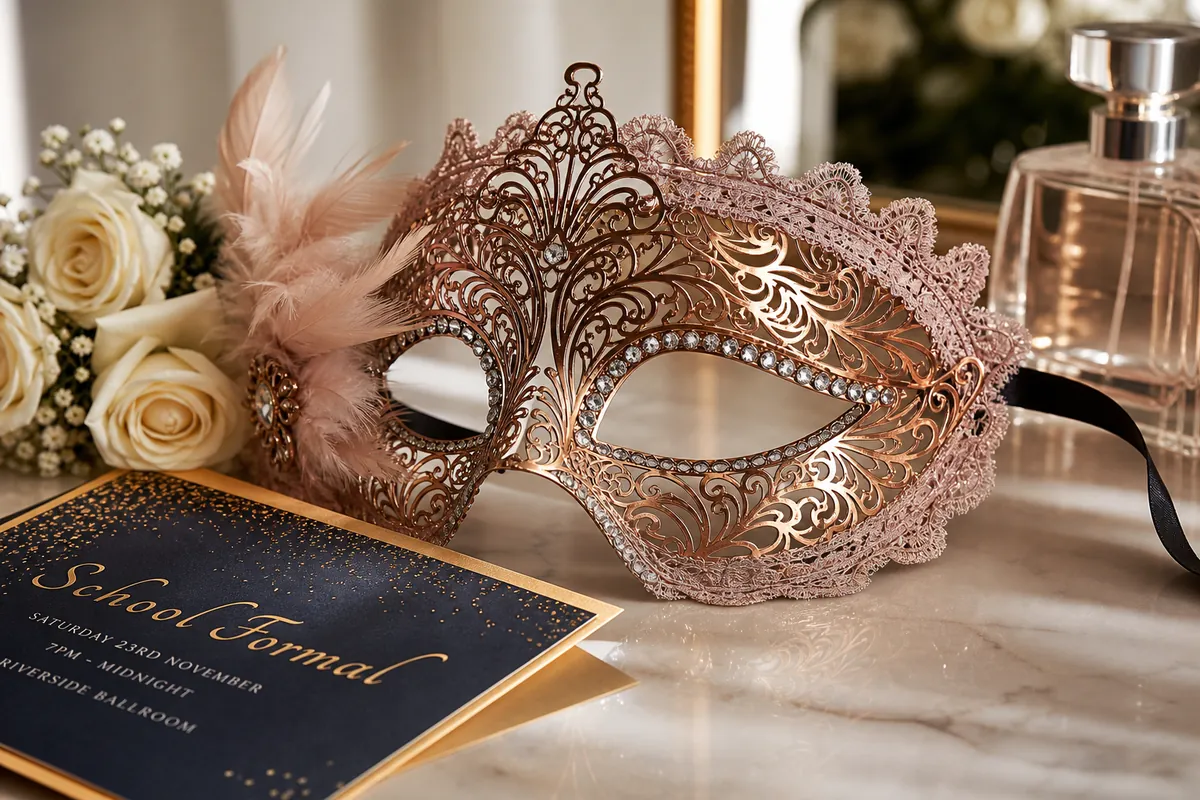
Ribbon is the classic option and still the most reliable for a full night of wear. Standard length is around 90 to 100cm per side, long enough to wrap around and tie in a bow or a simple double knot at the back of the head. Satin ribbon (used on most of our black filigree masks) looks the part but can be slippery, so a double knot rather than a single bow is worth the extra ten seconds. Grosgrain or cotton ribbon grips better if you’re worried about it working loose.
Elastic bands
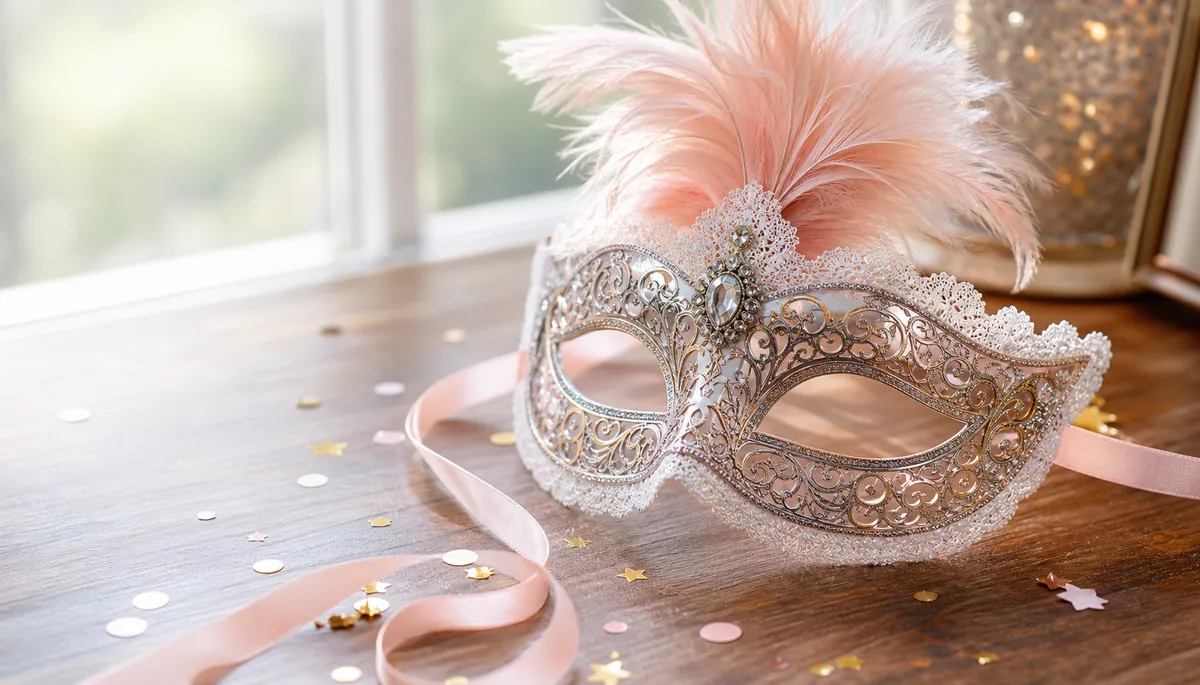
Elastic is the practical choice, especially for kids’ parties, corporate events where people are cycling masks on and off, or anyone who doesn’t want to fuss with a bow. It’s quicker to put on and stays at a consistent tension all night, though it does compress hair styling more than ribbon and can leave a faint line if worn for hours. A lot of our cream masks and simpler styles come set up this way.
Hand-held sticks
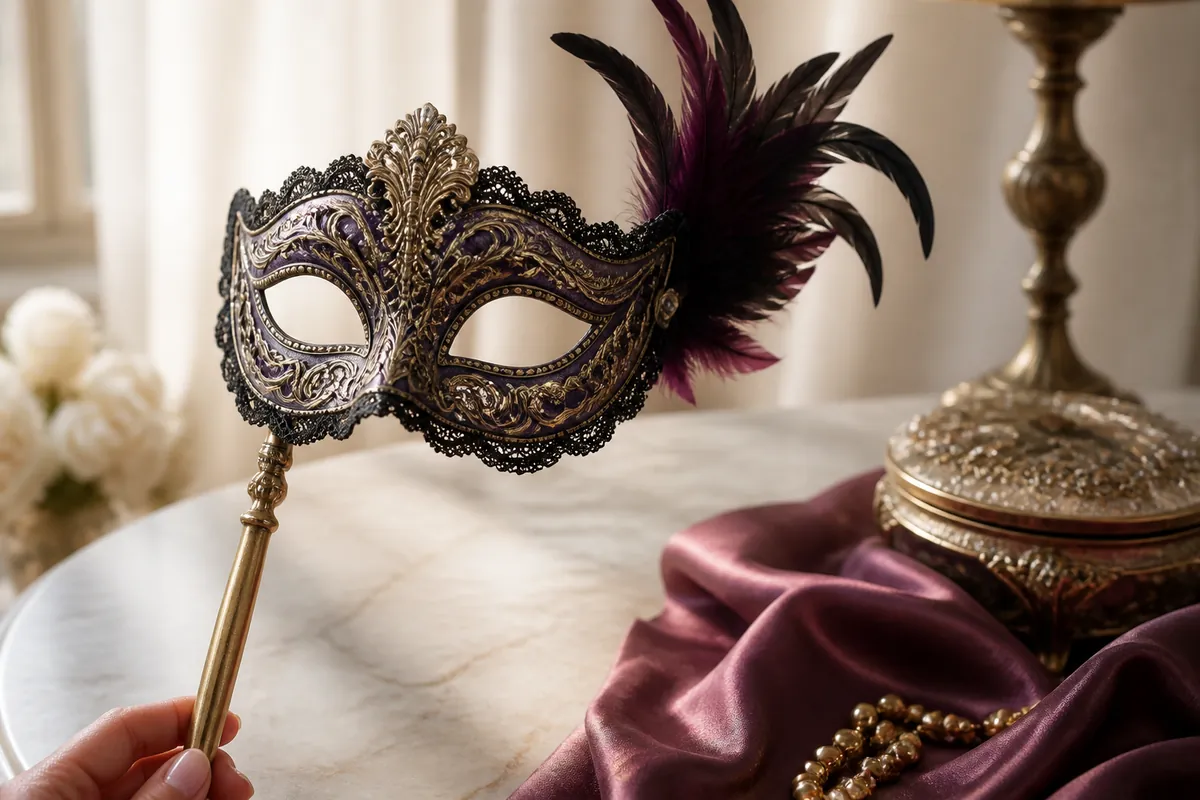
The stick option (sometimes called a “masquerade wand” style) is really for photo moments, toasts, or shorter appearances rather than an entire evening. You hold it up to your face rather than tying anything at all, which is handy if you want to switch expressions or take it on and off constantly for pictures, but it’s not practical if you need both hands free.
The actual knot that works
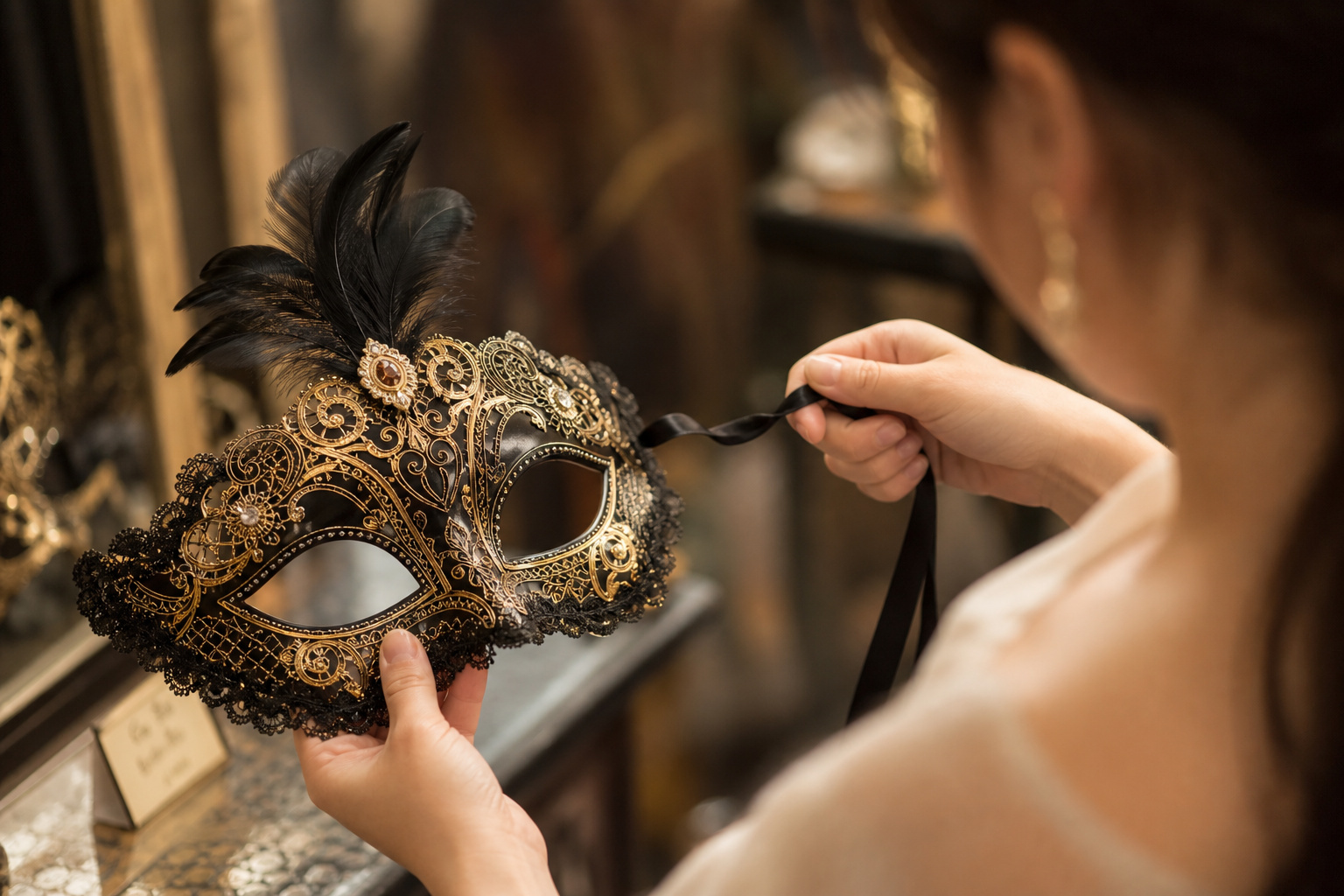
For ribbon ties, skip the single bow. Tie a firm double knot flat against the back of your head, then let the bow sit loosely over the top of it for looks. The knot does the holding, the bow is just decoration. If you’ve got long hair, tie the knot slightly above your natural hairline rather than right at the base of your skull, it’s a more stable anchor point and won’t slip down as the night goes on.
What to Consider Before You Buy
Before you buy a masquerade mask, it’s worth thinking about the tie situation the same way you’d think about sizing for clothing. A few things to check:
How long you’ll actually wear it
A two-hour cocktail hour is a completely different demand to an eight-hour costume party. If you’re in it all night, prioritise ribbon over elastic, since elastic loses tension and starts to feel tighter as the hours go on (your skin gets warmer, the elastic doesn’t stretch back the same way).
Weight and balance
Heavier masks, particularly full-face pieces from the black mask collection or anything with metal filigree detailing, put more strain on a tie point than a lightweight half-mask. If you’re buying a statement piece, check the product listing for tie type before you commit, and consider whether ribbon (adjustable) suits you better than fixed elastic (not adjustable at all once it’s sewn in).
Skin sensitivity and elastic irritation
If you’ve got sensitive skin or you’re prone to headaches from tight headwear, elastic can be the worse option over a long night. Ribbon lets you loosen it slightly the moment it starts to feel tight, elastic generally doesn’t.
Hair and hairstyle compatibility
Updos, braids and anything with hairspray holding it in place do better with ribbon tied below the style. If you’re wearing your hair loose, either option works, though elastic sits more discreetly under loose hair.
It’s also worth browsing the blue mask and blue crystal filigree ranges if you’re colour-matching to an outfit, since tie colour (black ribbon versus the mask’s accent colour) is a small detail that photographs surprisingly well.
Tips From the Experts
Costume designers and event stylists who deal with masquerade balls regularly have a handful of tricks worth stealing.
First, always do a test tie at home before the event, not in the car five minutes before you walk in. Sit down, stand up, turn your head side to side, and see if it shifts. If it moves during a seated test, it will definitely move on a dance floor.
Second, if you’re using ribbon and worried about it slipping loose over a long night, a small dab of clear double-sided fashion tape at the temple points (where the mask touches your skin) adds extra hold without any visible fixing. This is a trick borrowed straight from bridal styling, where the same problem shows up with veils and headpieces, as covered in Brides magazine’s styling guides.
Third, for anyone buying a mask for a wedding party rather than a Halloween event, it’s worth checking etiquette guides on formalwear pairing. The Knot has decent general guidance on coordinating accessories with formal event dress codes, and the same logic (match tie colour and mask weight to the formality of the event) applies directly to masquerade masks.
Fourth, if you’re prone to losing bobby pins or the tie keeps sliding on very smooth hair, a single hidden bobby pin crossed over the ribbon knot at the back of your head stops it slipping without being visible at all. It’s a two-second fix that solves probably 80% of “my mask kept sliding” complaints we hear about.
Fifth, practice taking it off one-handed. Sounds unnecessary until you’re holding a champagne glass in one hand and need to adjust your mask with the other. A double knot with a proper bow on top means you can release it with one hand without unpicking a tangle.
Frequently Asked Questions
What is the best way to tie a masquerade mask?
For most events, a firm double knot with ribbon ties sitting just above your natural hairline holds best for a full night of wear. Let a loose decorative bow sit over the top of the knot for looks, but the knot itself is doing the actual holding.
How do I know which tie style is right for me?
Think about your hairstyle and how long you’ll wear the mask. Ribbon suits updos and long events, elastic suits loose hair and shorter, low-fuss wear, and a hand-held stick works if you mostly need it for photos.
What should I look for when buying a masquerade mask?
Check the tie type listed on the product (ribbon, elastic or stick), the weight of the mask if it’s a full-face or filigree style, and whether the tie colour suits your outfit. Heavier masks generally hold better with adjustable ribbon than fixed elastic.
Are there budget-friendly masquerade mask options?
Yes, simpler styles with elastic ties tend to sit at the lower end of the range and still look sharp for parties or costume events. Browse the full masquerade mask range and filter by style if you want something affordable that still photographs well.