Masquerade Mask Colours and What They Signal at a Ball
What Mask Colours Signal at a Ball
Walk into any decent masquerade and you’ll notice something within about ten seconds: people are reading each other’s masks before they’ve said a word. That’s the whole point of the colour choice. A mask isn’t just covering a face, it’s setting a tone before you’ve even had a chance to open your mouth.
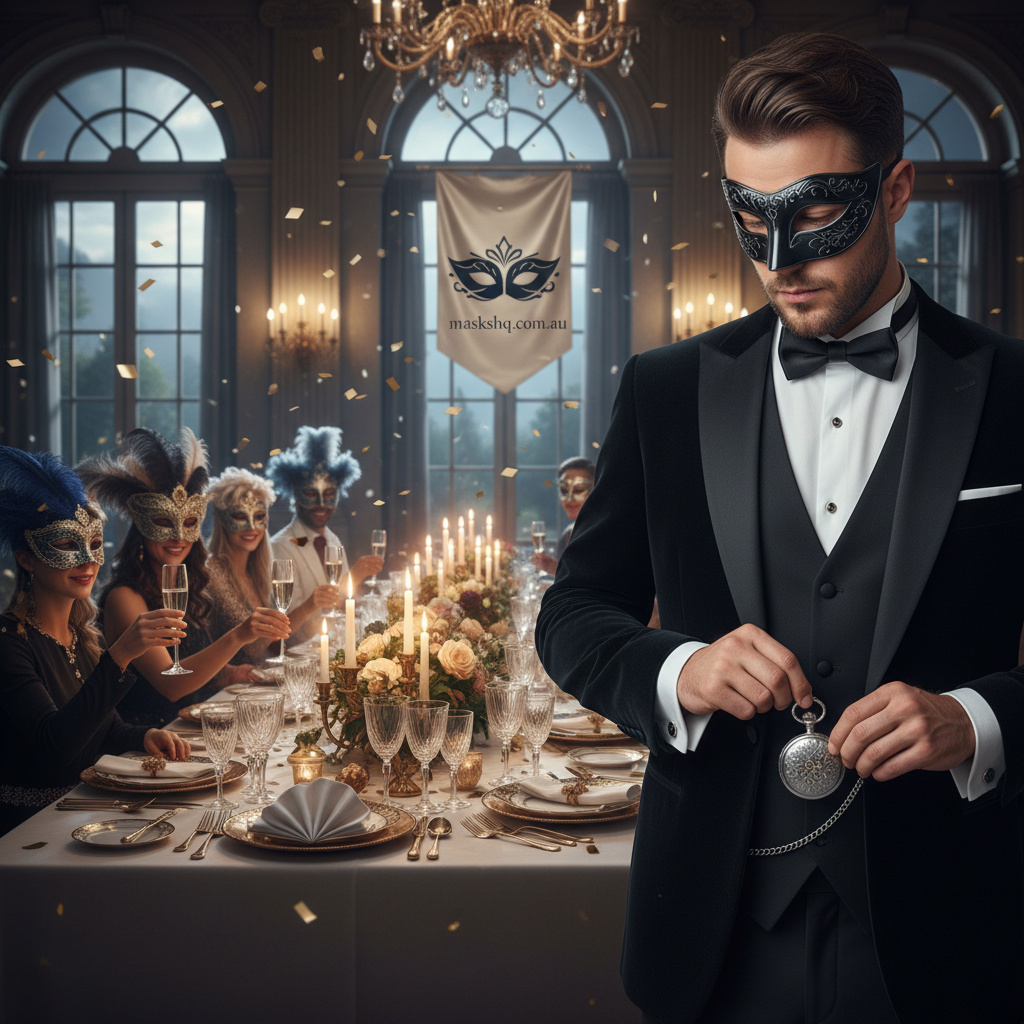
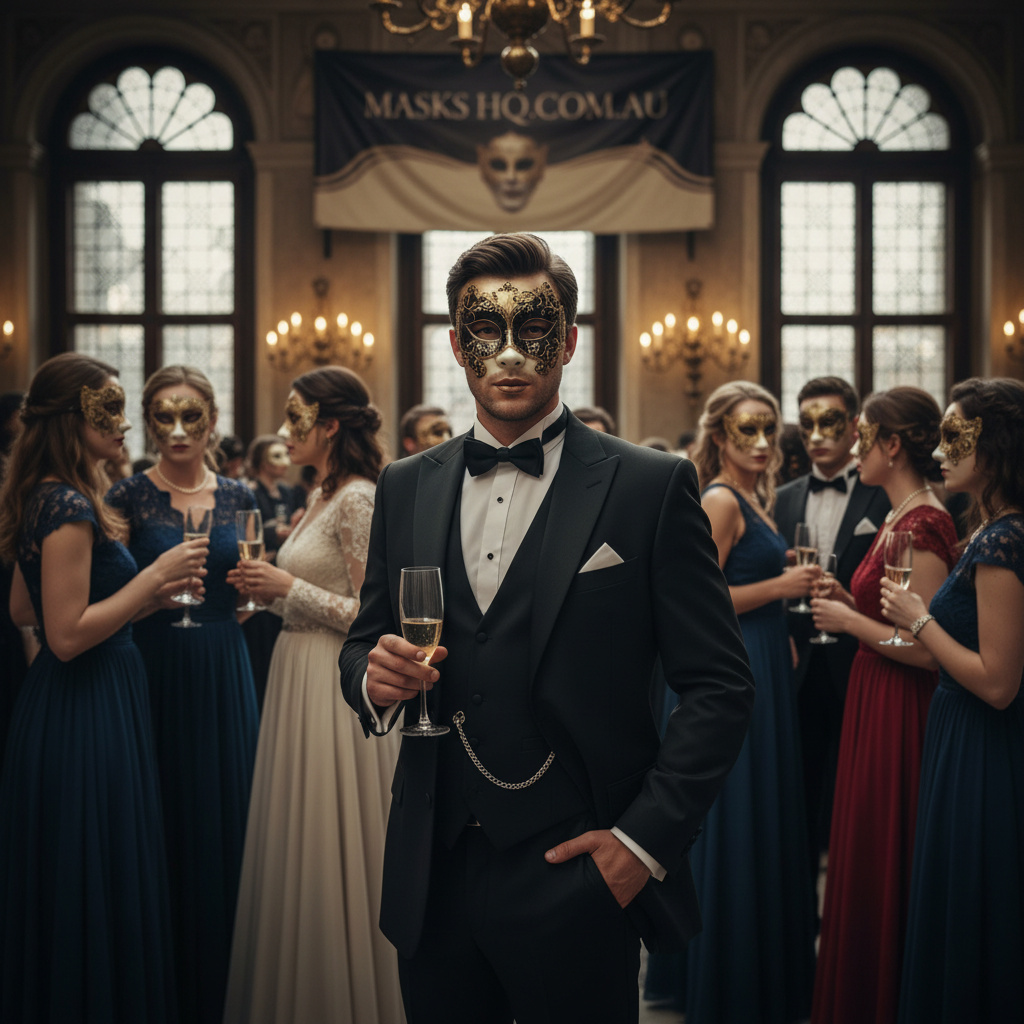
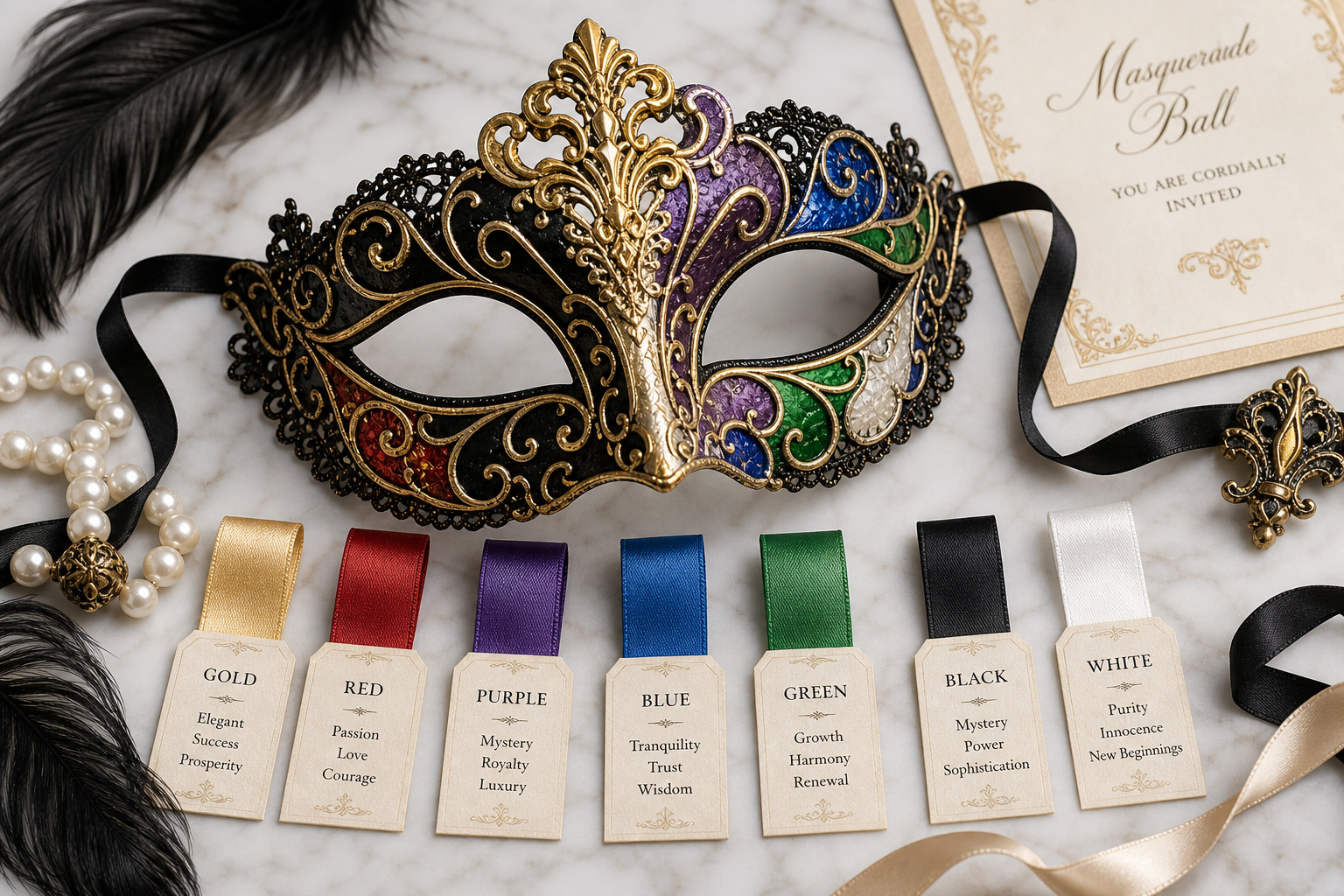
Black has carried the “serious, mysterious, in control” signal since the earliest Venetian carnivals, and it still does. If you want to be approached but not immediately figured out, black does that job better than anything else in the range. It’s why black masks are consistently the most-picked option we see go out the door, and it’s a safe pairing with almost any formalwear colour.
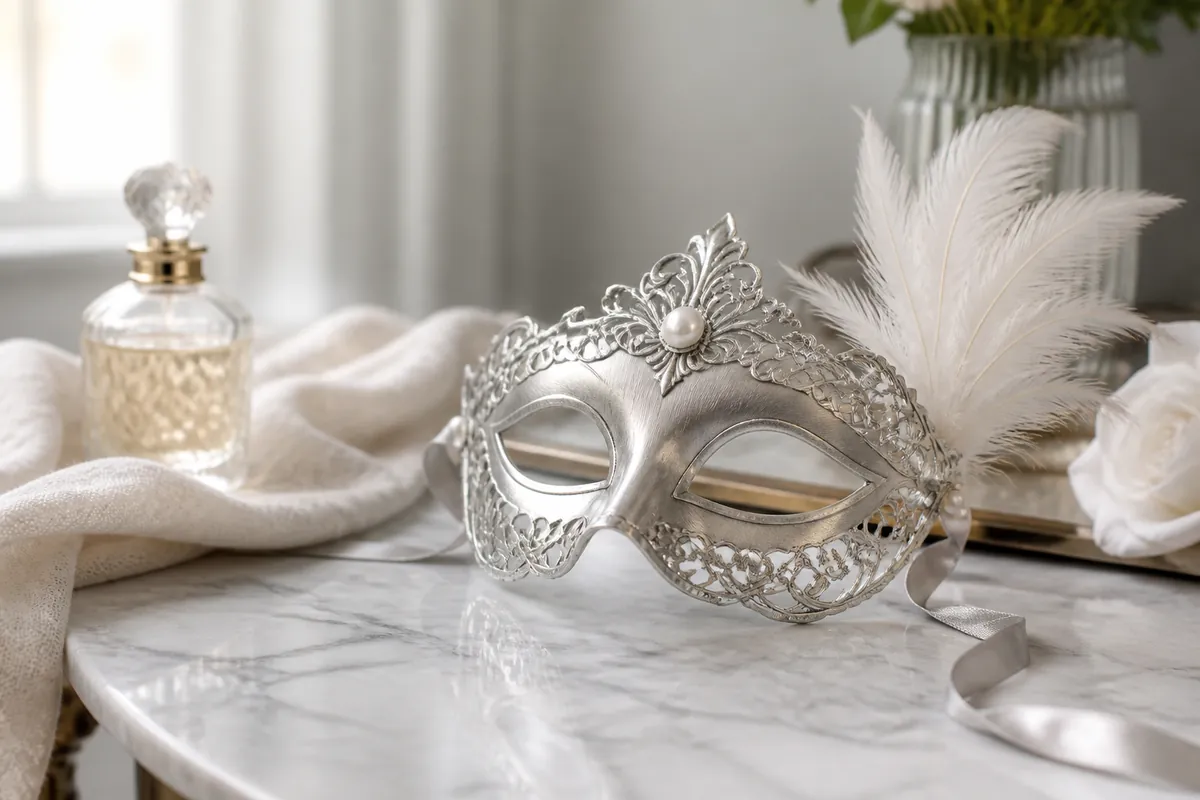
Gold and white sit at the other end. These read romantic, celebratory, a little bit bridal even outside of a wedding context. If the event is a milestone party or an engagement do, white and gold masks tend to photograph beautifully and don’t compete with a lighter outfit.
Then there’s the middle ground: deep blues, wine reds, emerald greens. These say “I’m here to be noticed but I’m not shouting about it.” A blue mask in particular works well under warm venue lighting, the crystal or filigree detail tends to catch candlelight in a way flat black doesn’t.
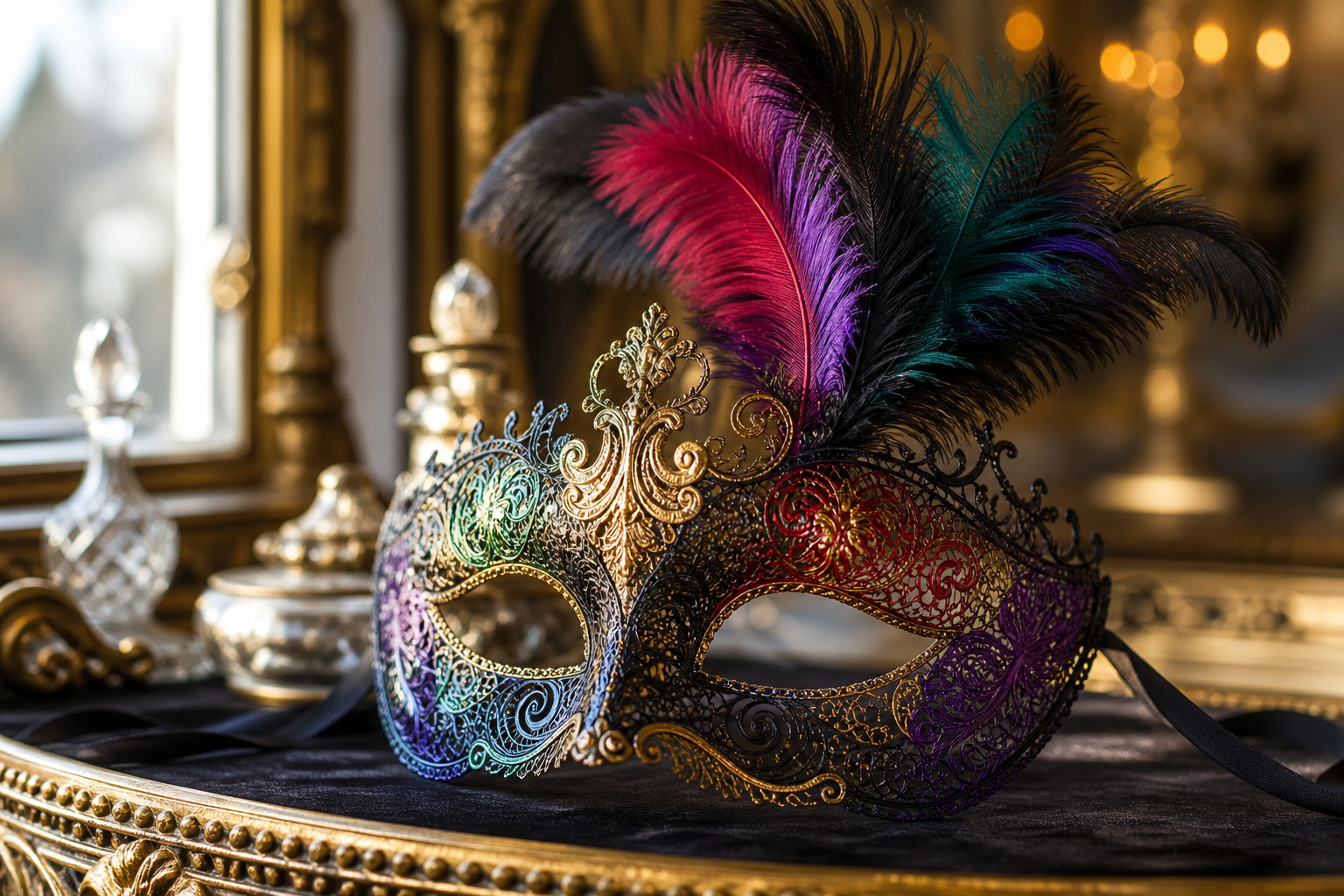
Colour theory isn’t the only factor either. Texture and finish change how a colour reads. A matte black leather mask feels grounded and almost rugged, while a glossy black lacquered Venetian piece with gold trim reads formal and theatrical. Same colour family, completely different message. This is worth sitting with before you assume “black” or “gold” answers the whole question on its own.
How to Choose Your Mask Colour
Start with the dress code, not the colour chart. Formal black-tie masquerade balls lean towards black, deep navy or burgundy because those tones sit naturally against tuxedos and dark gowns. A garden party or daytime masquerade gives you licence to go lighter, think cream or soft beige tones that won’t look out of place in daylight.
Next, think about your outfit’s undertone rather than just its colour. Warm-toned gold jewellery and champagne fabrics pair better with beige, gold-filigree or warm blacks. Cool-toned silver accessories and jewel-toned dresses sit better against blue, silver-filigree or true black. It’s the same rule stylists use for foundation shades, just applied to a metal or fabric mask instead of skin.
How much attention do you actually want? Be honest with yourself here. If you’re the type who wants to work a room and be remembered, a blue crystal filigree mask or something in red will do that job. If you’d rather observe and mingle without becoming the centre of every photo, a black filigree mask gives you presence without pulling focus.
One thing people get wrong: matching the mask exactly to the outfit colour. It almost always looks flatter than choosing a complementary or contrasting tone. A black dress with a deep red or gold mask reads far more interesting on camera than black on black.
Top Styles and Colour Options
Once you’ve settled on a colour direction, the style and material matter almost as much. Here’s how the main categories tend to play out.
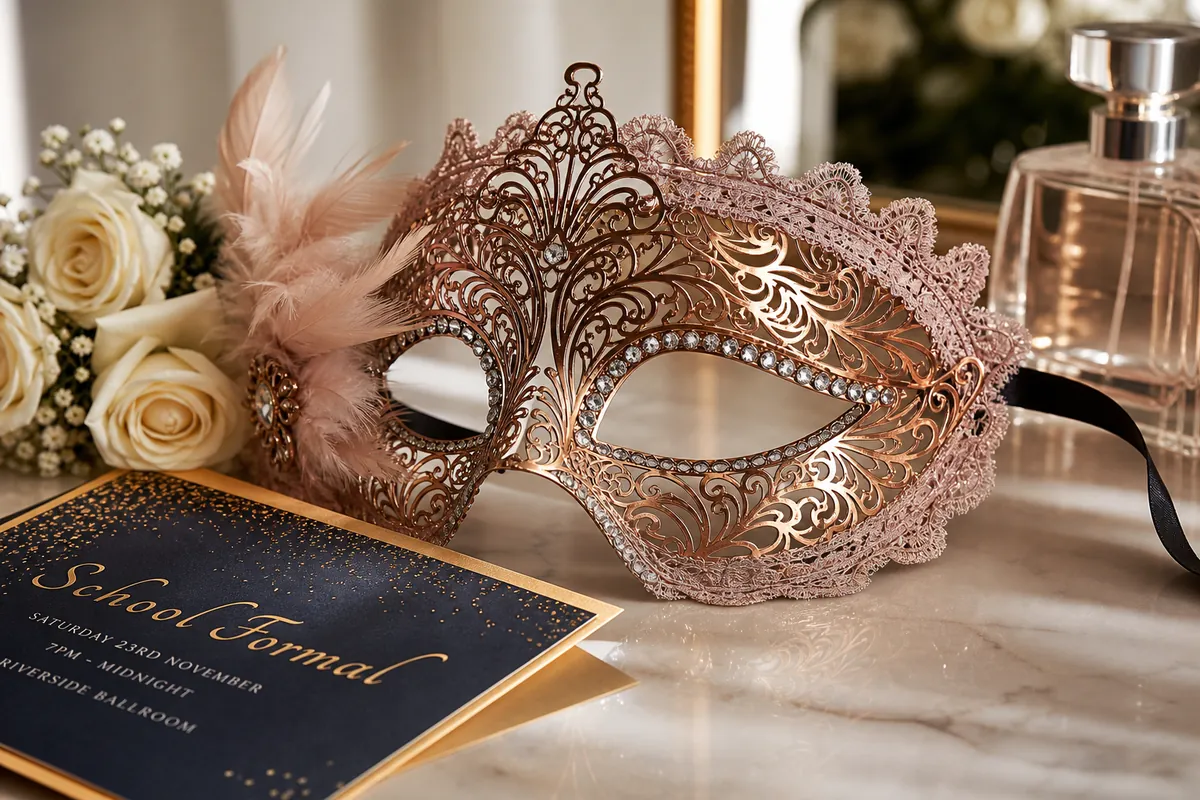
Filigree metal masks are the most photographed style at any ball, full stop. The cut-out metalwork means light passes through and around the design, which is why filigree masks tend to look more expensive than their price point suggests. If you want something with sparkle and structure without going full feathered showgirl, this is the category to shop first.
Leather masks sit at the opposite end of the texture spectrum, matte, structured, closer to the face. A black leather mask reads a little more grounded and masculine than metal filigree, which makes it a strong pick for men who don’t want anything too ornamental. There’s a full leather masks range if you want to compare finishes side by side, and the blue leather option is a genuinely underused choice, most people default straight to black without checking what else is on the shelf.
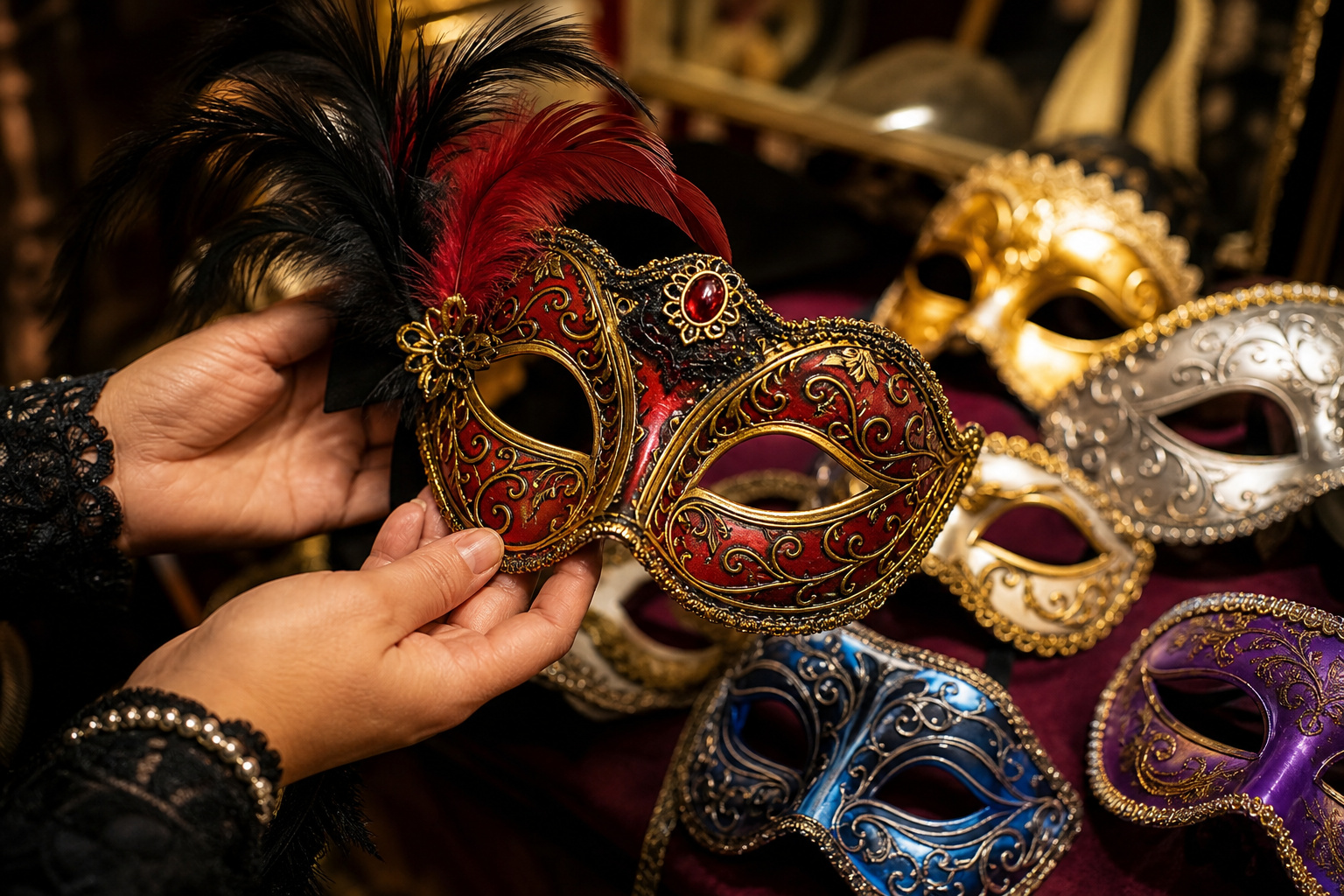
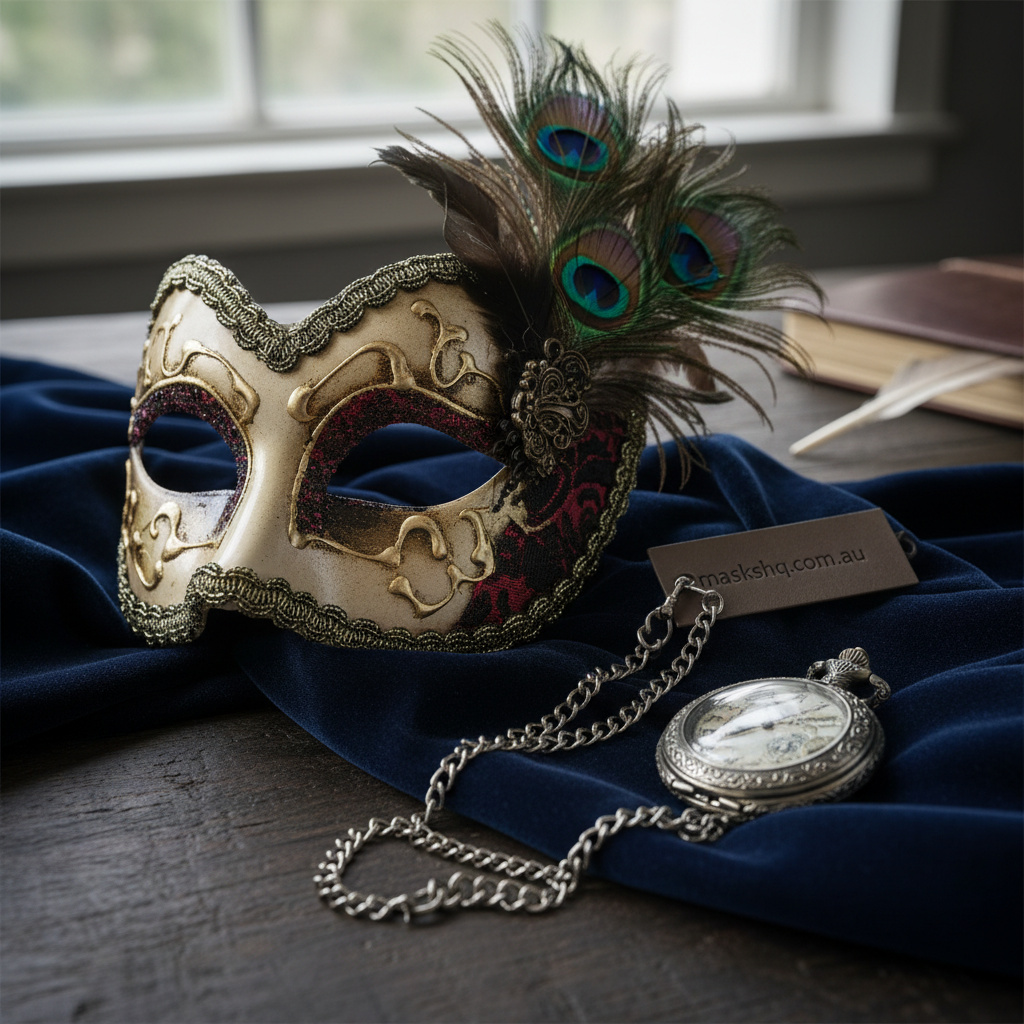
Venetian masks are the traditional carnival shape most people picture when they hear “masquerade.” The Bauta style in particular has real history behind it, it was originally worn in Venice specifically because it covered enough of the face to let the wearer eat and drink without revealing who they were. That’s a genuinely useful bit of trivia to drop at the bar, and it’s also just a good-looking, full-coverage option if you want maximum anonymity for the night.
Clear and crystal-accented masks are the newer trend we’re seeing pick up, particularly for events with strong lighting design. A clear filigree crystal mask catches coloured stage lighting in a way solid colours simply can’t, which is why they’ve become popular for events with a DJ or photo booth as the centrepiece.
For a broader look at what’s actually available before you narrow things down, the full masquerade masks collection is worth a scroll, styles get added seasonally and it’s easy to miss a colourway if you jump straight to a filtered category.
What to Check Before You Buy
Colour gets all the attention in the browsing stage, but fit and comfort are what actually determine whether you enjoy wearing the thing for four hours straight. A few practical checks before you commit:
Elastic vs. ribbon ties. Elastic is faster to put on and stays put through dancing, but ribbon ties give a more finished, formal look and let you adjust tension exactly. If the event involves dancing or a lot of movement, elastic is the more sensible pick even if ribbon photographs slightly better.
Weight, especially for filigree and metal styles. Heavier metal masks can start to dig in around the temples after a couple of hours. If you know you’ll be wearing it all night rather than just for photos, ask about weight before assuming any filigree piece will feel the same.
Eye hole placement. This sounds obvious until you’re at the venue squinting through a gap that doesn’t quite line up. Masks with a slightly wider eye cut are more forgiving for anyone who wears glasses or just wants full peripheral vision on a crowded dance floor.
Colour under venue lighting. A lot of ball and function venues use warm gold lighting, which can wash out cooler tones like true blue or silver and make black look almost brown. If you know the venue’s lighting style in advance, it’s worth factoring that into the colour decision rather than relying purely on how it looks in a product photo.
Tips From the Experts
A few things that come up again and again from people who’ve run or attended dozens of these events:
Bring a backup pin or clip. Elastic stretches out over a long night, and a mask that starts sliding down your nose by 10pm isn’t a good look no matter how good the colour match was. A single bobby pin at the back solves this in about four seconds.
Don’t overthink symmetry between partners. Matching couples’ masks in the exact same colour often looks less interesting than choosing complementary tones, one in black, one in deep wine, for example. It reads as coordinated without looking like a costume set.
Test the mask in front of a mirror under lamp light, not daylight, before the event. Most masquerades happen in the evening under warm artificial lighting, so judging the colour in bright daylight will give you a false read on how it’ll actually look on the night.
If you’re not sure which direction to go, start with black or a dark jewel tone. It’s genuinely the safest option across venues, lighting and outfit colours, and it’s rare to see someone regret it. Bright or novelty colours are more fun but they’re also higher risk if the rest of the room skews formal.
Frequently Asked Questions
What is the best masquerade mask colour meaning?
There isn’t one universal “best” colour, it depends on the tone you want to set. Black signals mystery and formality, gold and white lean romantic, and jewel tones like blue or wine sit in between, noticeable without being loud. Match the colour to the event’s dress code first, then to your own outfit.
How do I know which mask colour is right for me?
Look at your outfit’s undertone rather than just its base colour, warm tones pair better with gold and beige, cool tones with blue and silver. Then decide how much attention you actually want that night. If in doubt, a black or deep navy mask works across almost every outfit and venue.
What should I look for when buying a masquerade mask?
Beyond colour, check the tie style (elastic for movement, ribbon for a formal finish), the weight if you’re wearing it for hours, and the eye hole width for comfort and visibility. It’s also worth checking how the colour looks under warm evening lighting, not just in daylight product photos.
Are there budget-friendly masquerade mask options?
Yes, simpler filigree and solid-colour styles are generally more affordable than heavily feathered or hand-painted Venetian pieces, without looking cheap. Black and beige tones in particular tend to sit at the lower end of the range while still photographing well and suiting most dress codes.