How to Store a Masquerade Mask So It Keeps Its Shape
What It Means to Store a Mask Properly
When people say they want to store a masquerade mask properly, they usually mean more than just putting it away somewhere safe. They want to protect the mask’s shape, prevent crushed feathers or bent trims, and avoid damage from heat, humidity, dust, and friction. That matters because masquerade masks are often made with layered materials: lightweight bases, glued decorative elements, delicate paint, sequins, lace, satin, wire, ribbon, and sometimes feathers or beadwork. Those details can look sturdy in the moment and then lose their form quickly if they are packed badly.
The best storage method supports the mask instead of asking it to hold itself up. A sculpted nose bridge or tall feather detail should never be flattened under accessories, and painted surfaces should not rub against rough fabric. Even simple masks can age faster in heat, dampness, or pressure.
If you are building a small collection for parties, balls, themed dinners, or wedding events, good storage also makes the next wear much easier. You are not hunting for a missing ribbon or repairing a bent edge the night before you need it. It is the kind of housekeeping that saves time later and helps every mask look better for longer. If you are exploring styles, the filigree metal masks page is a useful place to see how different silhouettes and finishes are built, which can help you decide how much support each piece needs.
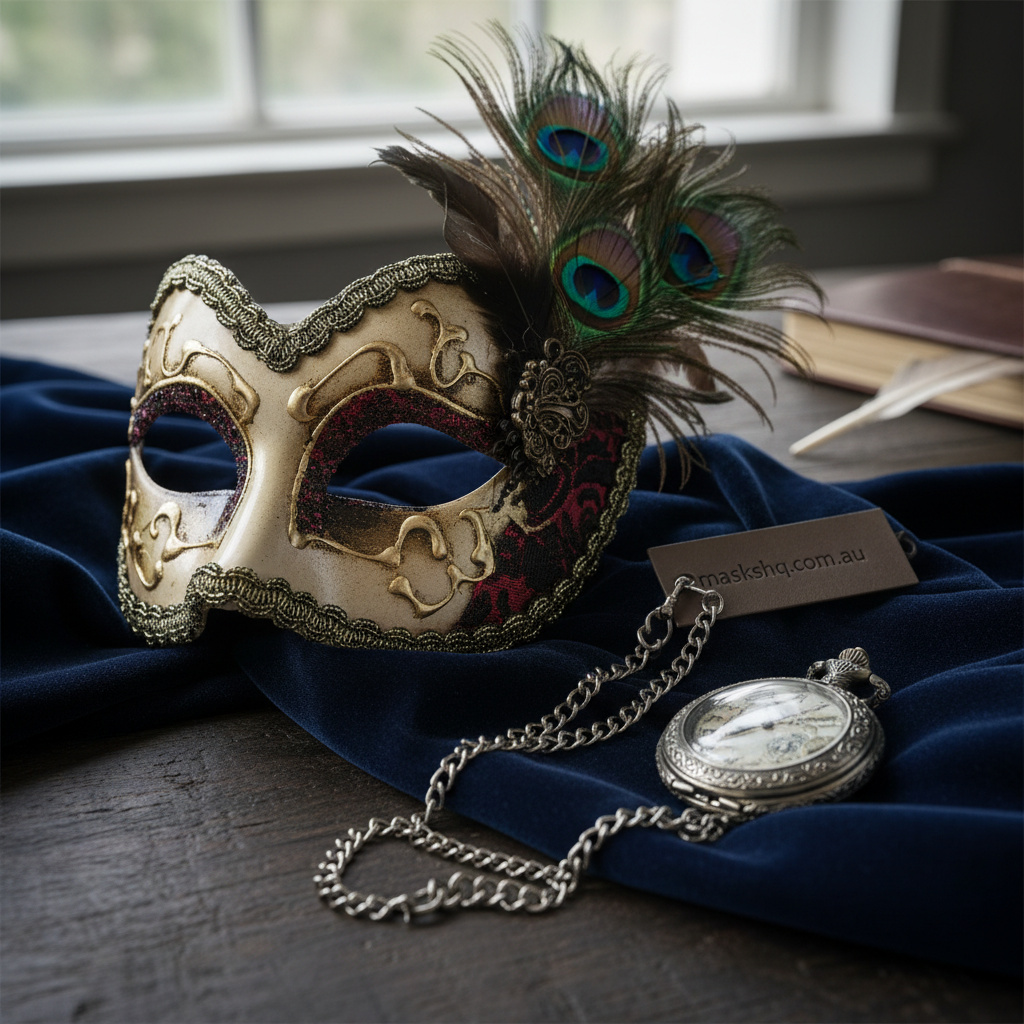
Storage is really about prevention. Once a feather is crushed or a glued ornament shifts out of place, fixing it can be time-consuming, and sometimes the original finish is never quite the same again. A few minutes of care after each wear is usually enough to avoid that problem.
How to Choose the Right Storage Method
Choosing the right storage method starts with understanding the mask itself. A rigid Venetian-style mask with a molded base needs support so the face contour does not warp, while a softer fabric-covered mask may need protection from snagging more than from compression. If the mask has tall feathers, floral appliqués, beading, or long ribbons, the storage solution should create enough space that those pieces do not get crushed or tangled. In practice, that usually means a box, drawer insert, or shelf space with a dedicated section rather than a loose pile.
Think about how often you use the mask. A one-off event piece can live in a more formal archival-style setup, while a regular wear piece may need a box that opens easily and encourages gentle handling. The storage method should fit your routine.
Material is the next big factor. Paper-based or papier-mâché masks need low pressure and stable humidity. Fabric masks need protection from dust and snagging. Metallic finishes and glitter surfaces need a smooth wrap so they do not scratch themselves. Feathered masks need extra vertical space. The more delicate the embellishment, the more the storage needs to act like a protective shell. That is why many collectors keep masks in individual boxes instead of grouping them together by theme.
It can also help to match the storage to the rest of your accessories. If you already keep jewellery in trays or formalwear in garment bags, your mask storage can follow the same logic: one item, one protected space, easy retrieval, minimal friction. If you are selecting a new mask and want to compare finishes and structure, the about page gives a sense of the brand’s approach to event-ready pieces, while the leather masks page shows how different styles hold their form.
For preservation principles, museum and conservation guidance is useful even for personal accessories. The Smithsonian’s conservation resources emphasise stable environments and gentle handling, while the National Park Service highlights clean, dry, controlled storage for collection items. Those same basics apply here: keep the mask supported, keep it clean, and avoid needless stress on the materials. You can find general conservation guidance from the Smithsonian conservation resources, the National Park Service conservation notes, and the V&A textiles collection.
Top Storage Styles and Options
There are a few storage styles that work especially well when you want to store a masquerade mask properly. The first and most versatile is the rigid box method. A sturdy box protects the mask from dust and impact, and it gives you room to build gentle support around the nose, chin, and decorative edges. Acid-free tissue, soft unbleached paper, or a clean cotton layer can help hold the mask in place without marking it. This is often the safest choice for masks with paint, glitter, sequins, or ornate trim.
The second option is a drawer or shelf with dedicated support. This works best for masks you use often and do not want to pack and unpack repeatedly. The key is to ensure nothing heavier sits on top of the mask, and that the storage space does not create pressure points along the brow or sides. If you use this method, the mask should still have a soft layer underneath it and, ideally, a cover that keeps dust away. A drawer that is too crowded is usually a bad idea because it invites rubbing and snagging.
A third option is a shaped holder or display stand that keeps the mask upright while it is not being worn. This can be helpful for especially sculptural masks that risk flattening in a box. The downside is that display storage can expose the mask to more dust and light, so it is a better choice for short-term presentation than for long-term protection unless the space is very controlled. For many people, a display stand works best inside a cabinet rather than out in the open.
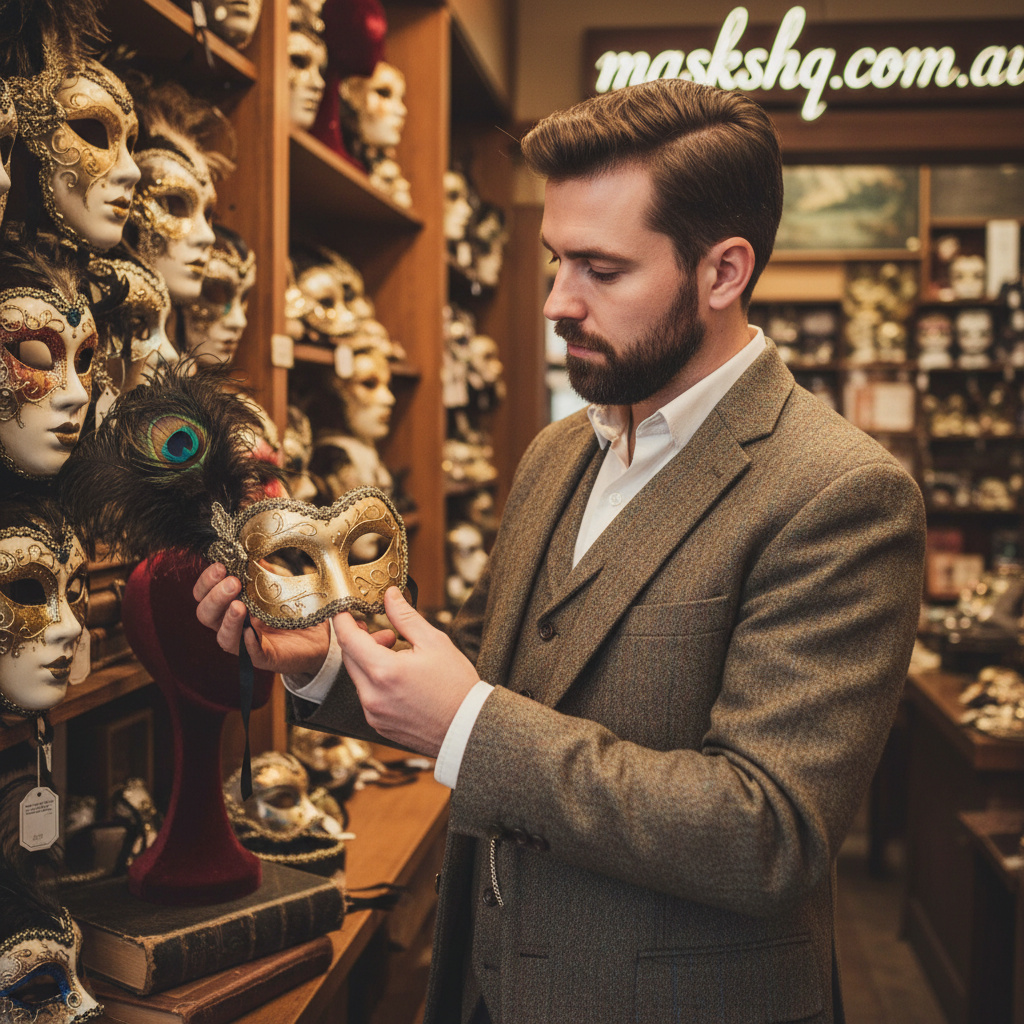
There is also the travel pouch approach, which is useful for masks with simpler structures or for short trips to an event. A soft pouch can prevent scratches and keep ribbons together, but it is rarely enough on its own for masks with rigid shapes or tall embellishment. If you use a pouch, think of it as the outer layer, not the full storage solution. It should sit inside a larger protected space whenever possible.
For many buyers, the best answer is a simple combination: a supportive box at home, a pouch for transit, and a dust-free drawer or shelf for frequent use. If you are sorting styles by finish and structure, the homepage and blog can help you see which designs need more care.
Whatever style you choose, the goal stays the same: support the mask’s shape, stop pressure from bending it, and make sure the storage method is cleaner and gentler than the event bag or dresser top where masks often end up. A little structure now saves a lot of repair later.
What to Consider Before You Buy
Before buying a storage solution, measure the mask carefully. A mask can look slim in hand and still need a surprisingly large box once you account for feathers, ribbons, and decorative edges. Measure width, height, and depth at the widest points, then add extra space for tissue or internal padding. If you buy a container that is too tight, you end up bending the mask to make it fit, which defeats the whole purpose.
It is also worth considering the climate where you store it. In Australia, heat and humidity can be real issues, and a box in a hot car or damp laundry is far riskier than one kept in a cool indoor cupboard. Stable indoor storage is the safer choice.
Next, think about the material inside the box or pouch. Acid-free tissue and clean soft paper are good because they are gentle and less likely to react with delicate finishes over time. Rough fabrics, random plastic bags, and old newspaper are not great options. Plastic can trap moisture, and newspaper can transfer ink. A proper storage setup should be boring in the best possible way: neutral, dry, and predictable.
If the mask has a narrow nose bridge, a structured brow, or an asymmetrical finish, support becomes especially important. A custom fold of tissue or paper can keep the inner curve from collapsing. If the mask has feathers, leave extra space above the tallest point so the plume does not get flattened every time the lid closes. These small choices matter because masquerade masks are usually part fashion object, part craft piece. They are not meant to be stuffed into the same drawer as sunglasses and spare batteries.
Budget matters too. You do not need museum-grade materials to do this well. A simple sturdy box, some acid-free tissue, and a clean shelf can do a fine job for many masks. The point is to avoid pressure and contamination, not to spend a fortune. If you want a polished storage routine without overcomplicating it, start with one good box per special mask, label it clearly, and keep the box somewhere cool and dry. That is the kind of practical system that scales nicely if your collection grows.
Finally, buy storage that you will actually use. If a setup is too fussy, too fragile, or too far from where you get dressed, it will end up ignored. The best storage is the one that makes the correct behaviour easy. Once that is in place, the mask will keep its shape with far less effort from you.
Tips from the Experts
Experts in costume care agree on one thing: handling matters as much as storage. Lift a mask by the stronger base or strap, and keep hands clean and dry so oils do not build up on painted surfaces, fabric, or metallic trim.
Another practical tip is to inspect the mask before and after each use. Look for loose glue, bent wire, frayed ribbon, or crushed feathers. Small issues are much easier to fix early. If you notice an ornament shifting, store the mask in a way that keeps that area from bearing weight. A mask that gets a quick check after the event is far more likely to still look event-ready six months later.
If you share storage with other accessories, separate the mask from anything sharp, dusty, or heavy. Earrings, brooches, shoe embellishments, and other hard pieces can scratch a mask if they touch during storage. A divider, tissue wrap, or individual compartment helps a lot. This is especially true for glossy or metallic finishes that show marks quickly. Think of the storage space as a small personal protective zone, not a general accessory basket.
Long-term collectors sometimes rotate which masks are on display and which are packed away. That can work well, but the rotation should still respect the same basics: low pressure, low dust, low light, and stable support. If one mask is on display for a season, make sure the others are not tucked into a cramped spot just because they are out of sight. Out of sight should not mean under strain.
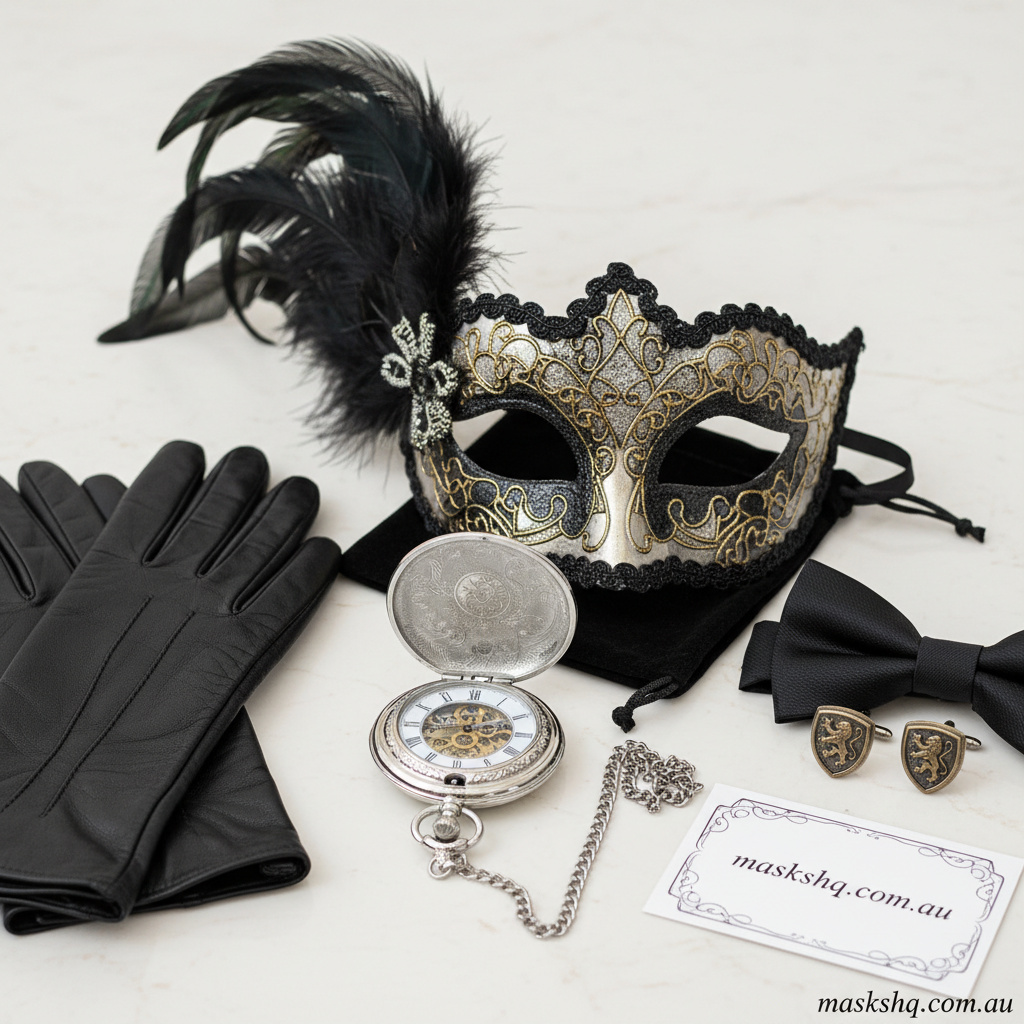
A final expert-level habit is to store the mask with a note about its needs. If one piece has fragile feathers, another has a painted finish, and another needs extra side support, write that down on the box. That way you or anyone else handling the collection later does not have to guess. It sounds small, but it prevents the common problem of well-meaning storage that slowly ruins a beautifully made piece.
If you want more ideas for choosing event accessories that age well, keep an eye on the Masks HQ blog and the about page. The more you understand how a mask is built, the easier it becomes to store it correctly.
FAQ
What is the best way to store a masquerade mask properly?
The best method is usually a sturdy box with soft, acid-free support that keeps the mask from being crushed or rubbed. If the mask has feathers or sculpted edges, give it extra space so the shape stays intact and decorative details do not get bent.
How do I know which storage method is right for me?
Start with the mask’s material, size, and embellishments, then think about how often you wear it. Simple masks can do well in a padded drawer or box, while more delicate pieces usually need a dedicated container with more support and less handling.
What should I look for when buying storage for a mask?
Look for enough depth, a clean interior, and materials that will not scratch or trap moisture. A good storage solution should protect the mask from pressure, dust, and light while still being easy enough to use regularly.
Are there budget-friendly ways to store masquerade masks?
Yes. A simple rigid box, clean tissue support, and a cool dry cupboard can work very well without a big spend. The key is gentle support and separation from heavy or sharp items, not expensive materials.