Planning a Masquerade Party: Masks, Dress Code and Details
What Masquerade Party Planning Means
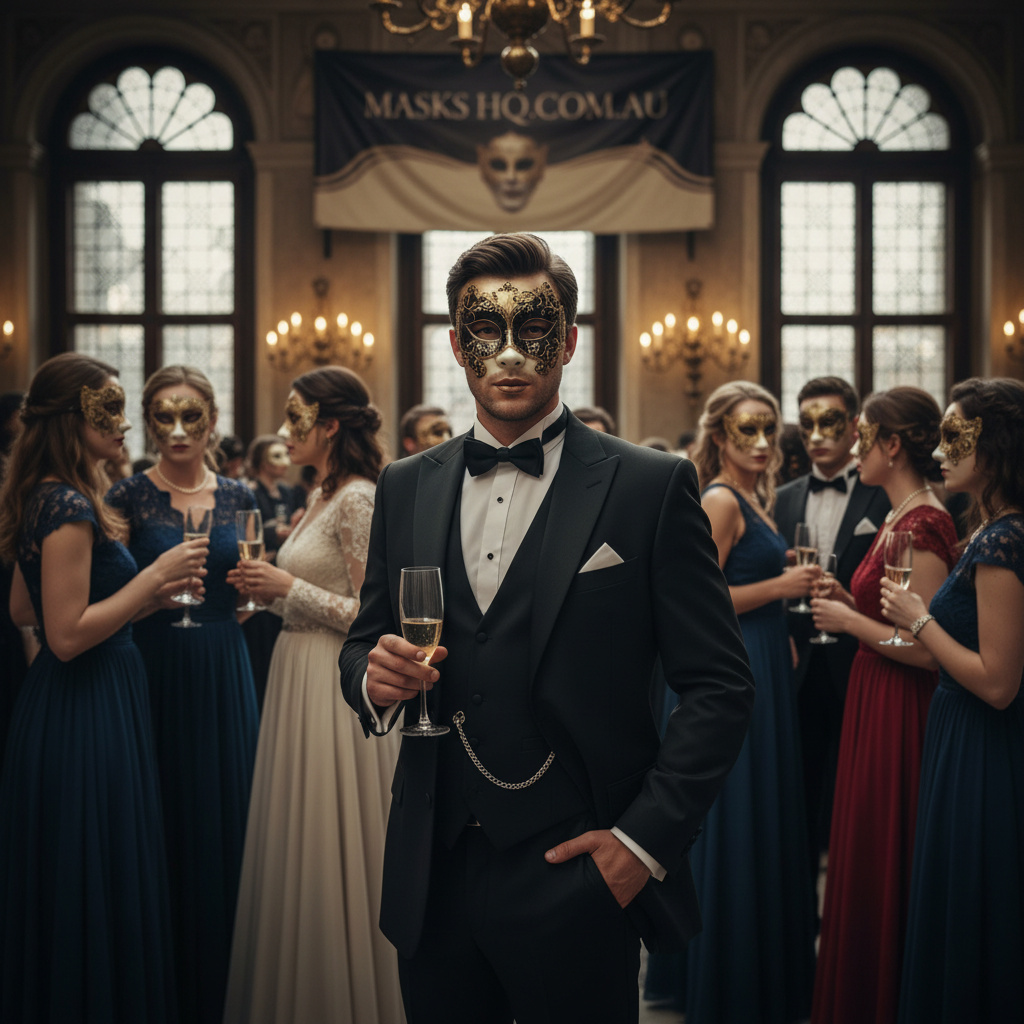
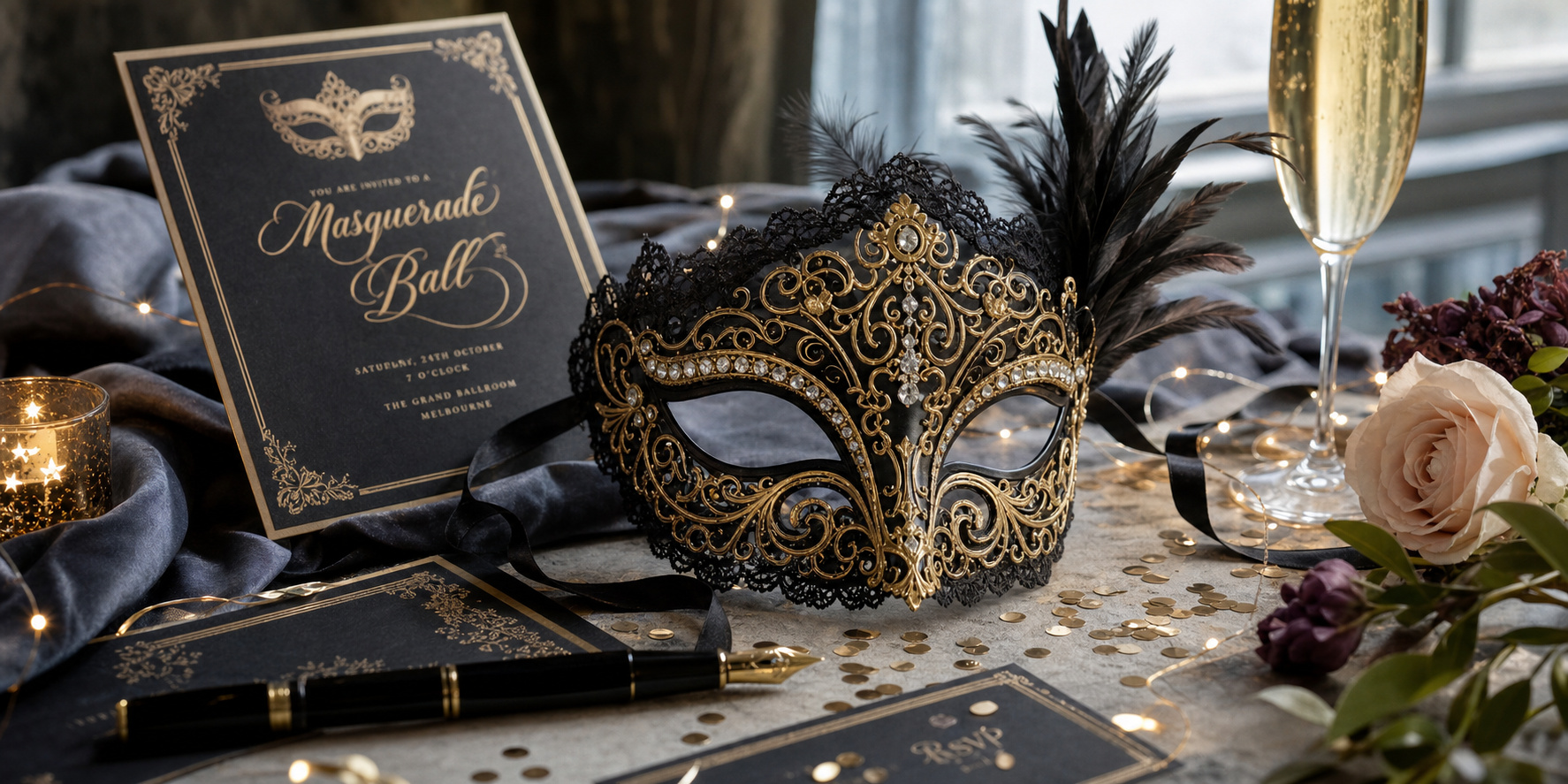
Masquerade party planning is really just event planning with one extra decision layered on top: what everyone’s face is doing for the night. That sounds simple until you’re the one running it, because the mask isn’t just an accessory here, it’s the dress code, the icebreaker and half the decor budget rolled into one item.
Where a normal cocktail party lives or dies on the venue and the playlist, a masquerade lives or dies on whether the masks actually look considered. Guests notice straight away if half the room is in a proper Bauta-style Venetian mask and the other half grabbed a $6 plastic eye mask from a party shop on the way over. It reads as mismatched, and it kills the atmosphere you’re going for.
The good news is that once you lock in a colour palette and a mask category, the rest of the planning (invitations, lighting, even the music) tends to fall into line behind it. We’ve had customers tell us the mask choice was the decision that unlocked everything else, which tracks. It’s the one prop every single guest wears, so it sets the tone before anyone’s said a word.
Choosing the Right Masks and Theme
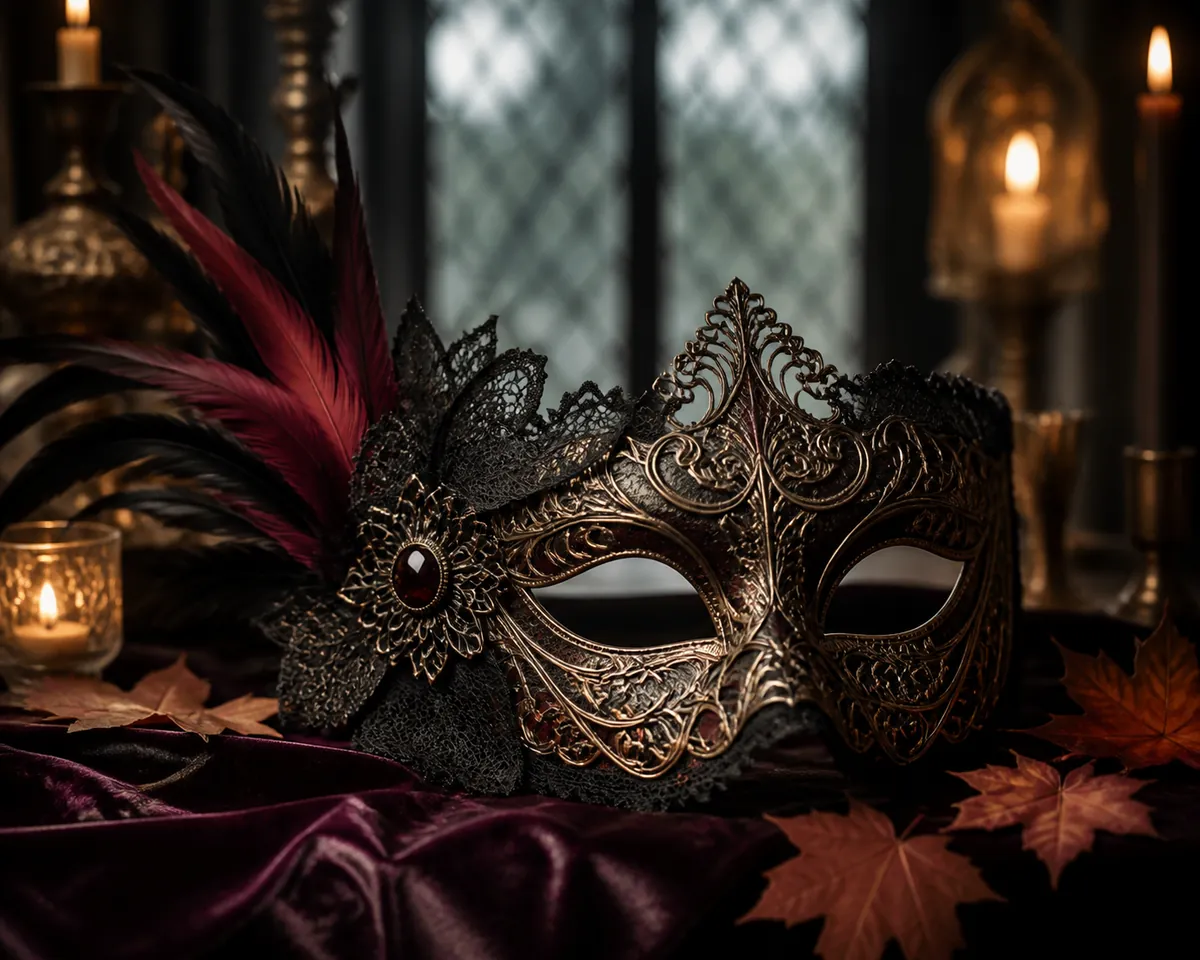
Start with the venue, not the masks. A ballroom with chandeliers and gold trim wants something ornate, think filigree metal masks with fine scrollwork that catches candlelight. A warehouse or industrial space with exposed brick reads better with something moodier, like a black leather mask that leans gothic rather than baroque.
Next, decide whether you’re running a strict colour dress code or leaving it open. Strict codes photograph beautifully (every group shot looks curated) but they mean ordering in bulk and giving guests real lead time to buy the right shade. If you’re going this route, our black masks and blue masks collections are the two easiest to coordinate around, because they pair with almost any formalwear colour a guest already owns.
If you’d rather guests pick their own style within a loose theme (say, “Venetian elegance” or “midnight garden”), give them three or four suggested categories rather than a free-for-all. Open slather sounds fun in theory but in practice you end up with someone in a superhero mask standing next to someone in hand-painted porcelain, and the contrast is jarring in photos.
One thing seasoned event planners agree on: decide the mask policy before you send invitations, not after. Retrofitting a dress code once people have already RSVP’d is where most masquerade nights go sideways, according to etiquette guidance from Brides on themed event planning, which stresses that guests need the “rules” up front to shop and plan around them.
Top Mask Styles and Options
There are really four buckets most masquerade guests end up choosing from, and it helps to know them before you brief anyone.
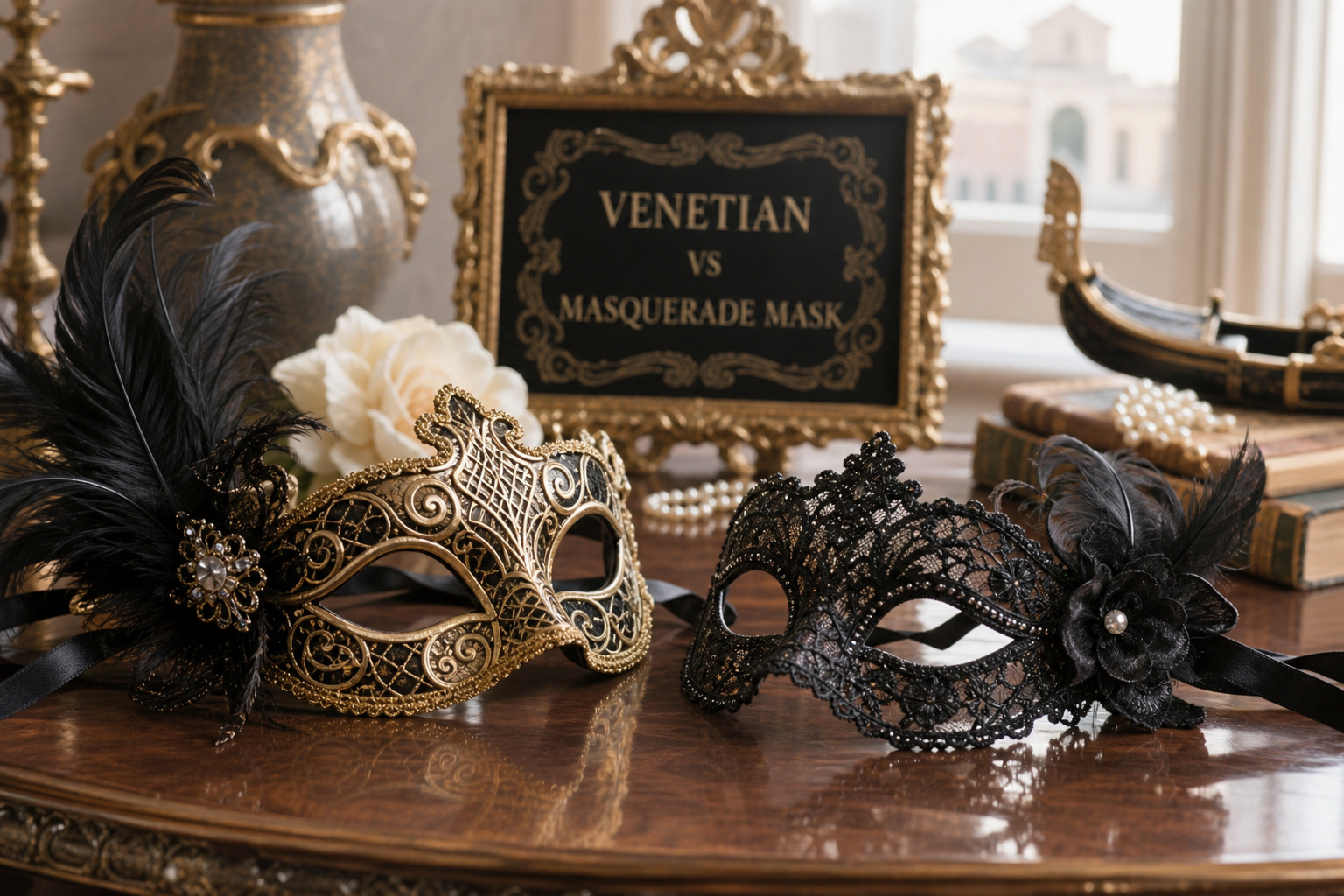
Venetian and Bauta styles are the classic full-face or half-face design historically worn during Venice’s Carnival season, often gilded or hand-painted. If you want that instantly recognisable “masquerade ball” look in every photo, the Venetian masks collection is the one to point guests toward, it’s the shape most people picture when they hear the word masquerade.
Filigree metal masks are the ornate, lace-like metalwork pieces that sit over the top half of the face. They photograph exceptionally well under warm lighting and work for both men and women. Our black filigree masks and blue crystal filigree masks are consistently the two best-sellers for formal events because the crystal detailing catches camera flash without looking gaudy in daylight photos too.
Leather masks suit a moodier, more masculine theme, or any event leaning steampunk or gothic-romantic. They’re also just more comfortable for guests who’ll be wearing a mask for three or four hours straight, since leather moulds to the face rather than digging in at the temples the way some rigid plastics do.
Neutral and clear styles are the safe middle ground when you can’t agree on a single colour scheme. Cream masks sit quietly against almost any outfit, and clear filigree crystal masks let the crystal detail do the talking without fighting with a guest’s dress or suit colour. We recommend these two ranges whenever a couple can’t settle on a single theme colour and needs something everyone can wear regardless of what they’ve already got in the wardrobe.
For a broader browse before you commit, the full masquerade masks range is worth a scroll, it’s easier to spot what actually suits your venue once you’re looking at the full spread side by side rather than guessing from a handful of thumbnails.
What to Consider Before Buying
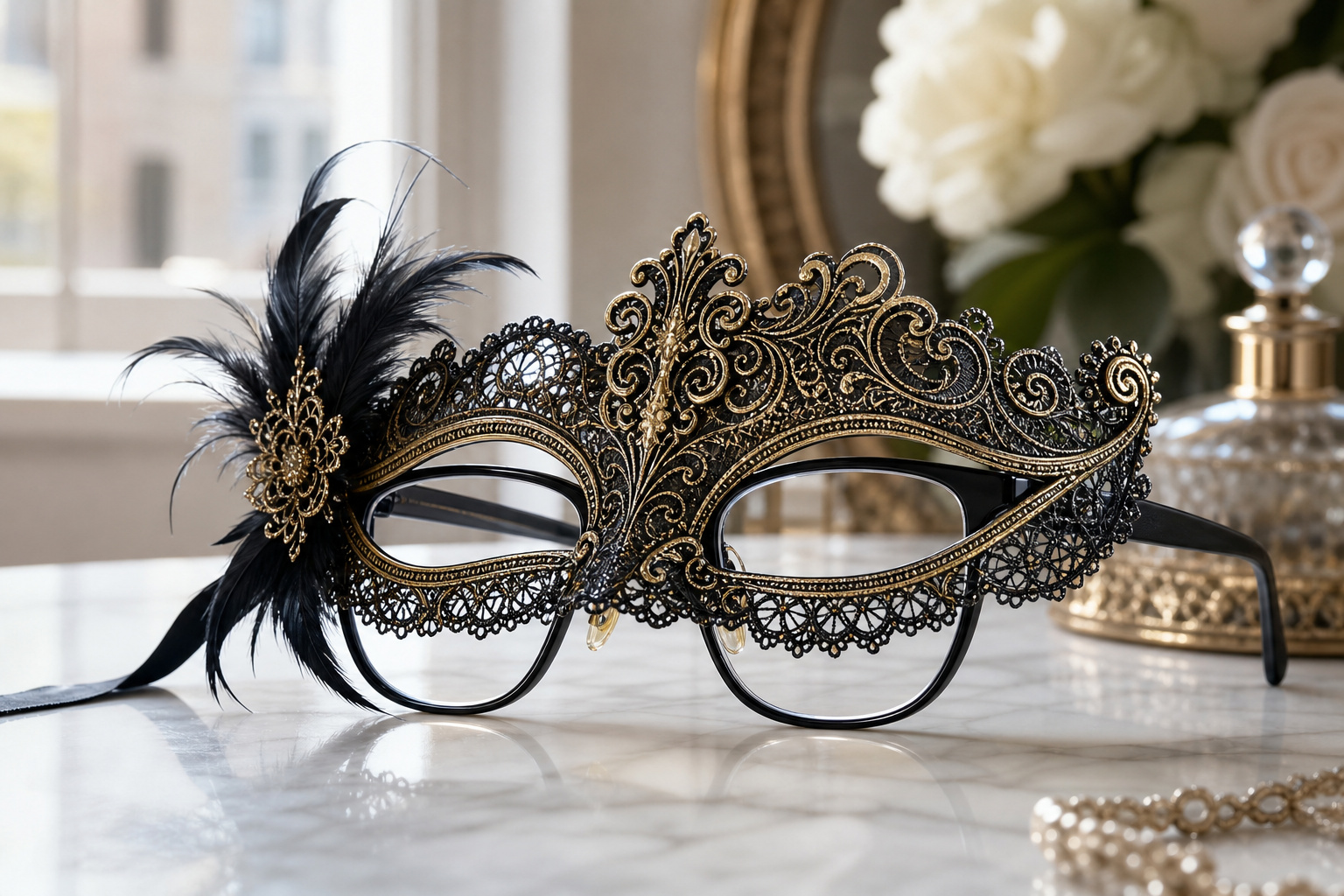
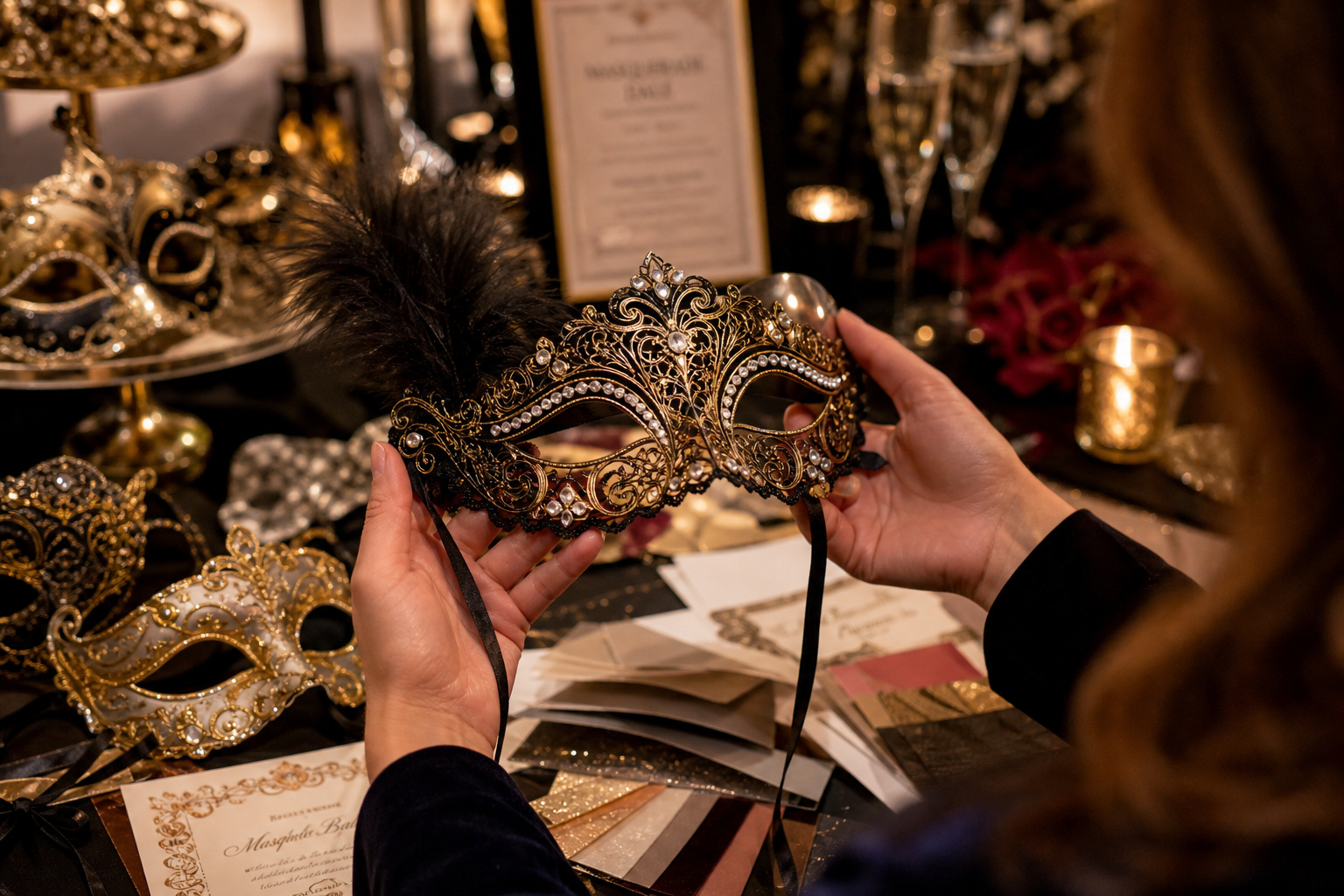
Comfort matters more than people expect. A mask that looks stunning in a mirror for thirty seconds can start to pinch after two hours of talking, eating and dancing in it. Check the strap style (elastic versus ribbon tie), the weight of the material, and whether there’s enough room around the nose for anyone wearing glasses.
Lead time is the other one people underestimate. If you’re ordering fifteen or twenty masks for a wedding or milestone birthday, don’t leave it to the week before. Order at least three to four weeks out so there’s buffer for sizing swaps, and so you’re not paying rush shipping fees on top of everything else the event’s already costing you.
Think about how the masks interact with makeup and hair too. Full-face masks can smudge foundation if guests are putting them on and off all night, and anything with feathers or a tall crown needs to be factored into hairstyling, particularly for anyone with an updo already booked in. It’s a small detail, but it’s the kind of thing that trips up otherwise well-run events.
Budget-wise, decide early whether you’re supplying masks for every guest or asking people to bring or buy their own. Supplying them costs more upfront but guarantees the cohesive look; asking guests to source their own is cheaper for the host but risks the mismatch problem we mentioned earlier. Most of our repeat wedding and corporate clients land somewhere in the middle: they supply masks for the wedding party or VIP table and let general guests choose within a stated colour range.
If you’re unsure where to start, the team behind MasksHQ can talk you through quantities and styles based on your venue and guest count, that’s genuinely faster than trying to eyeball it from product photos alone.
Tips from the Experts
Order one extra mask per fifteen guests. Someone always drops theirs, sits on it, or has a strap snap mid-photo, and having a spare on hand at the door saves you scrambling.
Brief your photographer on the mask colours in advance. A photographer who knows the palette beforehand will adjust lighting and composition to make gold filigree or crystal detailing pop, rather than blowing it out with flash they’d normally use for a mask-free event.
Stagger the mask reveal if you’re running a formal event with a “mask off at midnight” moment, it’s a genuinely fun structural beat for a party and gives guests something to look forward to rather than wearing the mask the entire night out of obligation.
Finally, keep a small repair kit at the venue: spare elastic, a hot glue gun, and safety pins. Feather and filigree pieces can shift in transit, and a two-minute fix at the coat check beats a guest going without for the whole night. According to general event styling guidance from Martha Stewart‘s entertaining resources, having a small “emergency kit” backstage at any styled event consistently comes up as one of the cheapest insurance policies a host can take out.
For more seasonal ideas and styling breakdowns, our blog covers specific event types in more depth, and the masks for women collection is the fastest way to compare styles once you’ve got a shortlist.
Frequently Asked Questions
What’s the best way to plan a masquerade party?
Lock in your venue and colour palette first, then choose one or two mask styles that match it rather than leaving the choice completely open. Order masks at least three to four weeks ahead so there’s time to sort sizing or swap styles if something doesn’t suit.
How do I know which masks are right for me?
Match the mask to both your venue’s formality and how long you’ll actually be wearing it. Ornate filigree suits a ballroom and a few hours of standing around chatting, while leather sits more comfortably for a longer night that includes dancing.
What should I look for when buying masks?
Check the strap type, the weight of the material against your face, and whether there’s clearance for glasses if you wear them. It’s also worth checking return or exchange policies in case a colour doesn’t match your outfit once it arrives.
Are there budget-friendly masquerade options?
Yes, neutral ranges like beige masks tend to be more affordable while still looking put-together in photos, since they don’t need the extra crystal or metalwork detailing to stand out. Buying in bulk for a wedding party or corporate event also usually brings the per-mask cost down.