How to Pick the Right Masquerade Mask
What a masquerade mask actually is
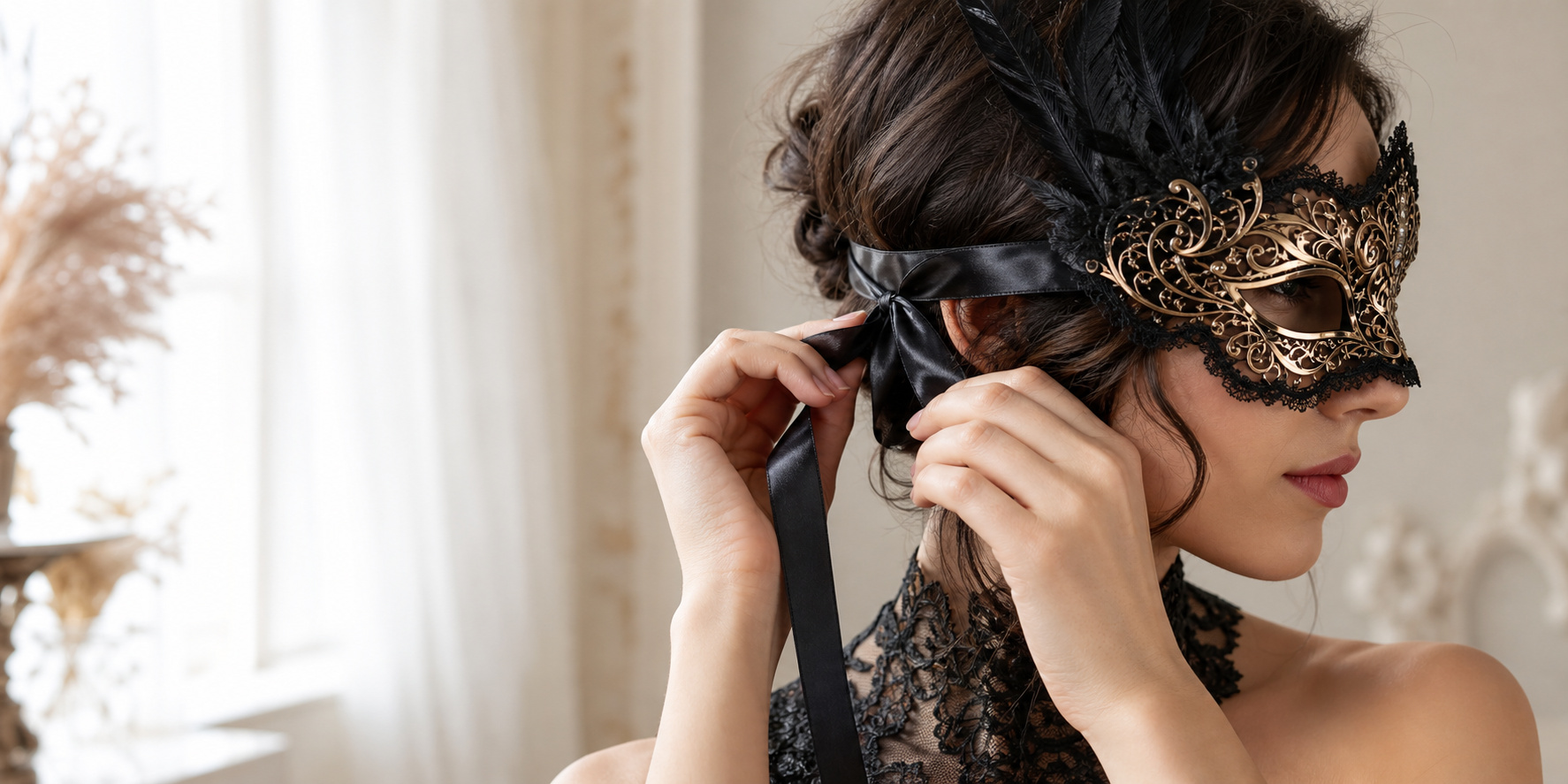
A masquerade mask is a decorative half or full-face covering worn at a masquerade ball, costume event, formal or themed gathering. It is designed to conceal enough of the face to create mystery while still letting you speak, eat, drink and see clearly. That working definition matters because it rules out two things masquerade masks are not: they are not everyday medical masks, and they are not full-head costume helmets. A proper masquerade mask leaves the mouth and lower jaw free and attaches via ribbons, a stick, a stretch band or — in some formal bridal styles — a thin elastic behind the ears.
The style traces back to 13th-century Venice, where masks were worn during Carnevale to blur the line between social classes. The Venetian tradition established the visual vocabulary we still use — high-cheek volto, quarter-face columbina, the beaked medico della peste (the plague doctor) — alongside flowing feathers, hand-pressed metal filigree, and hand-painted papier-mâché. A modern masquerade mask borrows the shape and spirit of those originals and applies contemporary materials for durability and price.
How to choose one that suits you
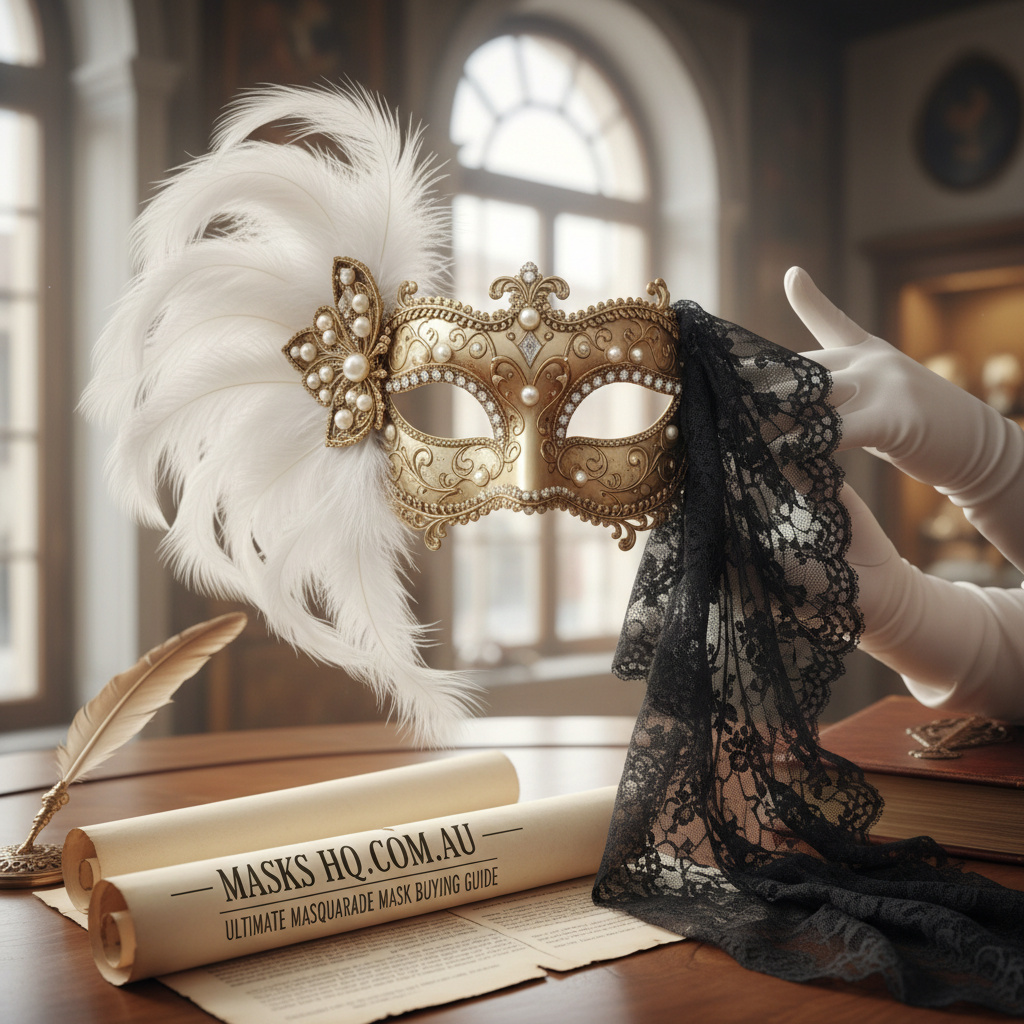
The best masquerade mask for you is the one that frames your eyes, complements your outfit and does not fight your face shape. Start by looking in a mirror and noticing whether your face is rounder (even width through the cheeks and jaw), oval (slightly longer than wide), heart-shaped (wider at the forehead) or square (strong jaw). Rounder and heart-shaped faces suit masks with angular detailing on the upper corners — sweeping filigree, winged metal points, or asymmetric feather plumes — which visually lengthen the face. Oval and square faces can carry rounder, more symmetrical designs like the classic columbina eye mask or full Venetian volto.
Colour is the second filter. A mask should sit in the same colour family as your outfit or intentionally contrast it. For jewel-tone gowns (emerald, sapphire, burgundy) a gold or bronze mask reads as classic black-tie; a silver mask leans cooler and more modern. Black masks are the true universal pick — they photograph crisply against skin and disappear if you prefer the outfit to lead. Ivory, blush and white are reserved for bridal and anniversary themes; they are harder to pull off at a general ball because they can wash out under warm lighting. Browse black masks, gold masks, or the masks-for-women collection if you want to filter by colour first.
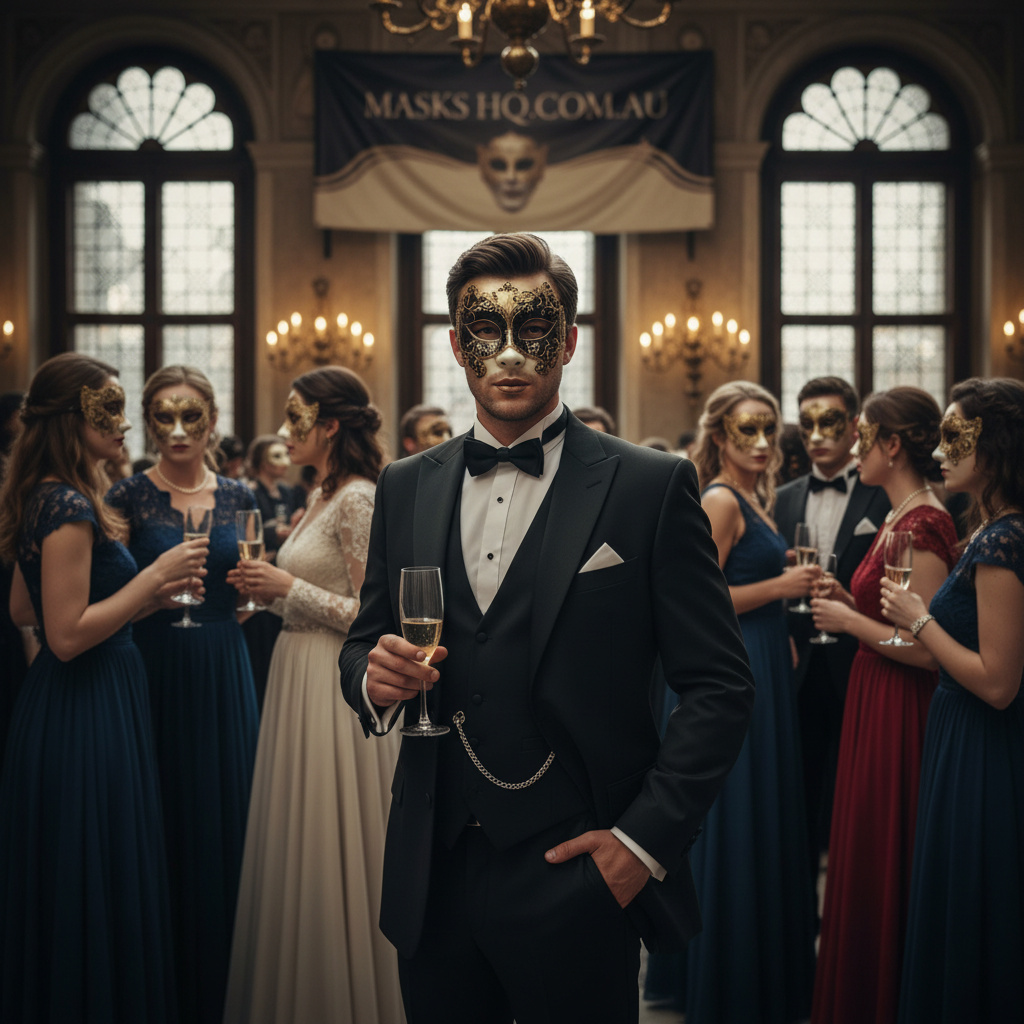
The third filter is context — what is the event actually asking of you? A formal ball at a hotel ballroom expects a structured Venetian or metal mask. A private costume party invites you to go bolder with feather or harlequin designs. A wedding-masquerade wants something refined and photo-friendly rather than theatrical. Stage performers and cosplayers can lean into full-face volto or character-led pieces. Matching the mask to the social register of the night is more important than matching it to your clothes — a mask that is too theatrical at a wedding looks costume-y; one that is too understated at a themed party disappears in the photos.
The main mask styles explained
Masquerade masks split into five broad families. Getting fluent with these names helps you shop faster and describe what you want to your stylist.
Venetian (columbina, volto, bauta)
The reference standard. Columbina is a quarter-face eye mask, usually held by a stick or tied with ribbons, often ornate in gold leaf, crystal and feathers. Volto covers the full face, traditionally plain white but modernised with gilt edging and metal detailing — best for stage or dramatic events where speaking softly under the mask suits the mood. Bauta is a chin-forward full-face design with a squared jaw that lets you eat and speak through the mask — historically a Venetian-Carnival essential. Shop the full Venetian masks range for traditional pieces.
Metal filigree
Laser-cut or hand-pressed metal scrollwork with almond-shaped eye openings. Metal filigree is lightweight, sits close to the face, and catches stage lighting beautifully — you will see them on front-row event photography constantly. They are forgiving to any face shape because the cut-outs create their own contour. Gold, silver, rose-gold and matte-black finishes are widely available; avoid novelty colours for formal events.
Feather
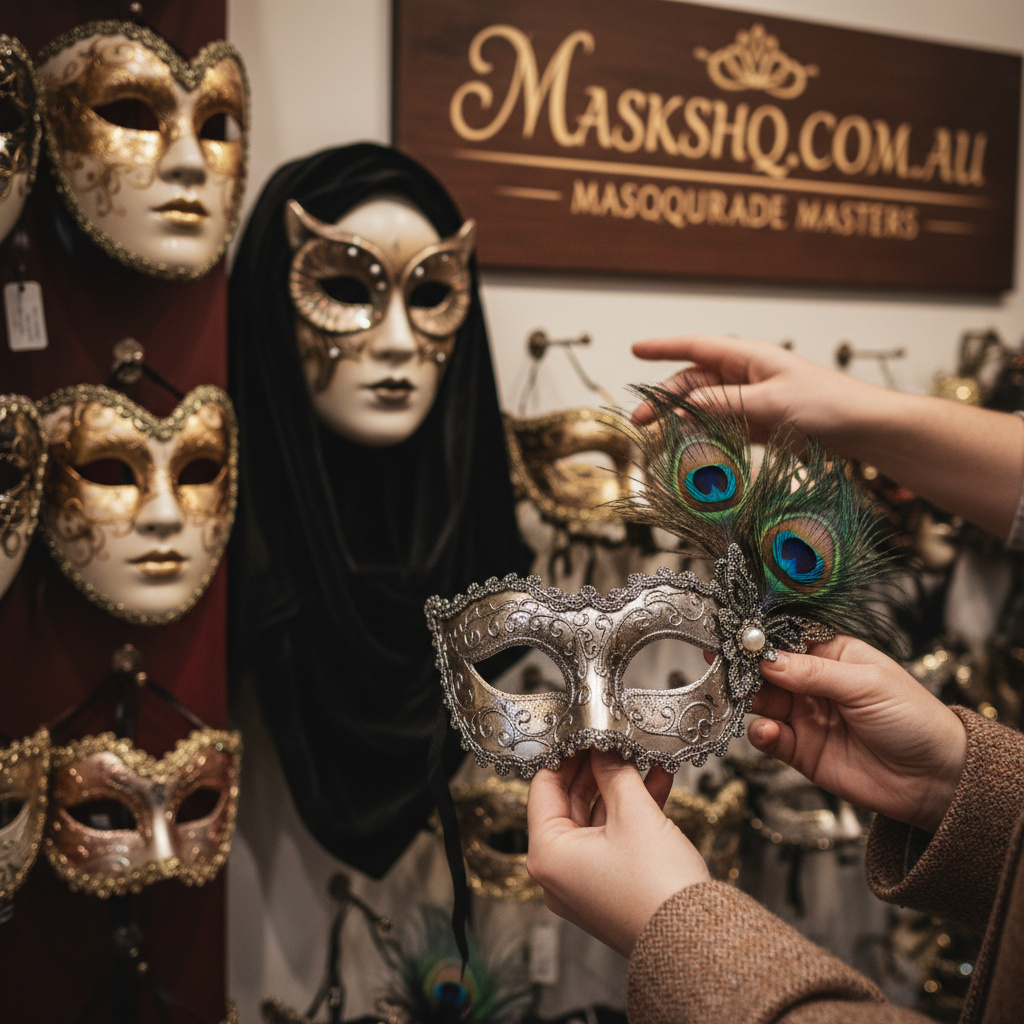
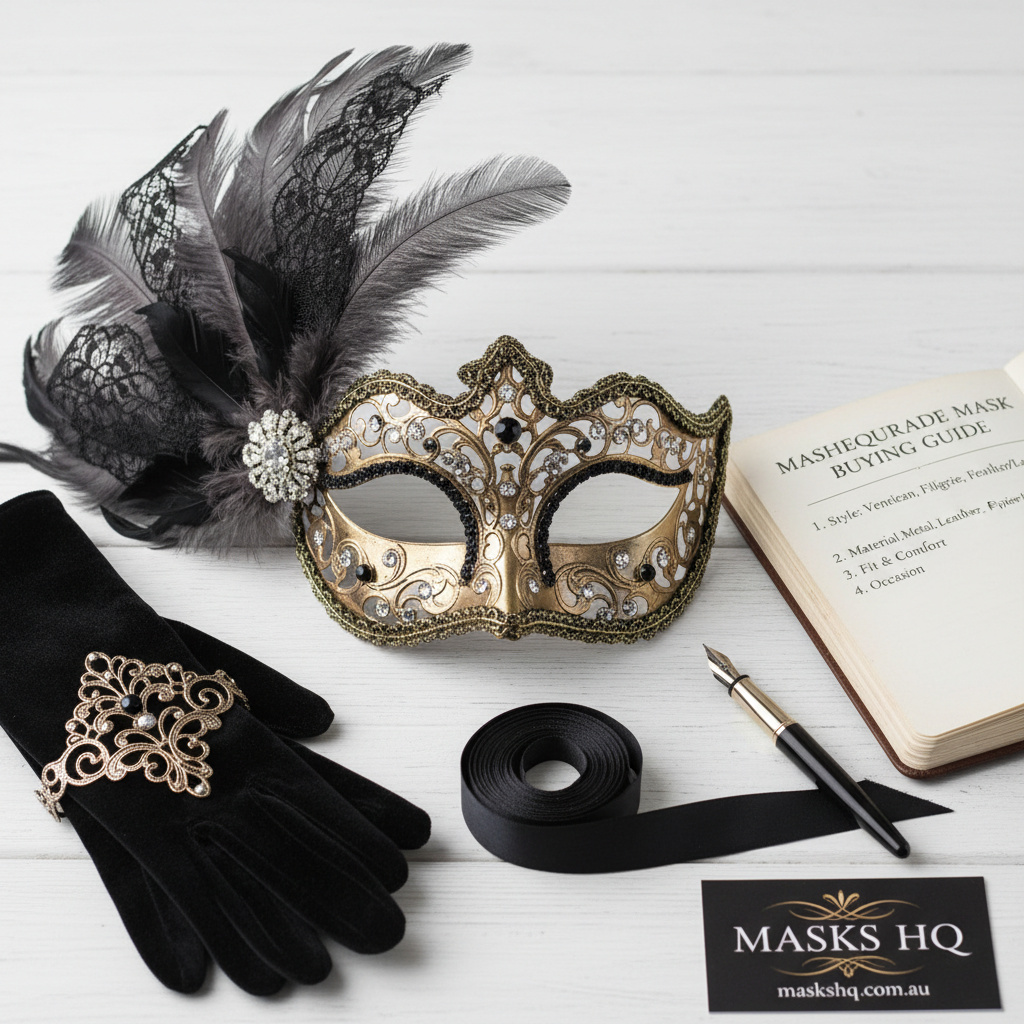
Feather masks frame the eyes with plumes extending upward, outward or along the temple. Read as romantic and statement-forward — ideal for Mardi Gras, costume balls, themed weddings. Choose real-feather masks over printed fabric; the depth and movement photograph differently. Be mindful of where feathers sit relative to your hair — some styles tangle with updos and extensions.
Lace
Soft, flexible, usually eye-area only. Lace masks are a go-to for bridal masquerade parties and engagement events because they read feminine and photograph softly. They conform to the face well but can distort if worn tightly — look for lace bonded to a thin plastic frame so the shape holds. Shop the cream masks range for bridal-appropriate lace options.
Leather and hard-shell
Moulded leather or resin masks in deep colours — oxblood, forest green, obsidian, bronze. Most dramatic of the five families; associated with theatrical and stage use (commedia dell’arte, Eyes Wide Shut-style events, immersive theatre). Less forgiving to change mid-night because they do not flex. See blue leather masks or the broader leather collection for current stock.
What to check before you buy
Shape, style and colour are the headline decisions. Before you check out, run through this short practical list:
- Eye spacing. Hold the mask up to your eyes and verify the cut-outs line up roughly with your pupils — too narrow and you’ll get tunnel vision all night, too wide and the mask looks mass-produced. Eye distance on adult masks varies from about 60 mm to 70 mm. If you wear glasses, get a cutaway-style or stick mask; over-the-ear frames do not sit well under ribbon ties.
- Nose bridge. Masks with a moulded nose cup sit more securely than flat cut-outs — but the cup has to match your nose profile. If the mask tips forward when you nod your head, the bridge is too flat. A quick bend or light padding on the bridge usually fixes this.
- Fastening. Ribbon ties are most authentic but slide on hair and don’t sit flat under updos. Stretch bands are fastest to put on and take off but can leave indentations in hair by the end of the night. A stick (lorgnette) is the best choice if you wear glasses, have a delicate hairstyle, or expect to remove the mask for dinner — you hold it to your face only when you want to.
- Edge finishing. Run your finger along the inside of the eye cut-outs and the outer edge. Raw-cut edges will scratch or rub after an hour; look for bound edges (fabric or ribbon), rolled leather, or deburred metal.
- Weight. For wear longer than two hours, under 60 g is comfortable, 60–120 g is noticeable but manageable, and over 120 g — typically large feather or full leather — is a statement that will need to come off during dinner.
- Packaging and shipping. Feather masks should ship in a box, never a plain mailer, or plumes will crush in transit. Metal filigree is robust. Ask about packaging if you are ordering close to an event date.
If you’re buying for a bridal party or a group, order one sample first, photograph it on the bride or group lead, and confirm colour-match to the dress fabric before ordering the rest. Monitor colour is not trustworthy for masquerade mask whites (there are a surprising number of “white” shades) so a physical check avoids disappointment.
Pro tips from our stylists
The best pieces of advice our Brisbane styling team hear themselves giving over and over:
- Buy slightly larger than you think. A mask that is marginally too big looks dramatic; one that is too small looks mass-produced. If you are between sizes, go up.
- Two ribbons beat one. If the mask arrives with a single ribbon pass, add a second tie — one above the ears, one below. This stops the mask sliding up when you laugh or take a sip.
- Touch-up kit. For formal events, carry a small emery board or nail file. Any sharp corner you missed pre-event can be filed down in seconds in the bathroom.
- Photograph at eye level, not from below. Masquerade masks photograph best with the camera slightly above the subject’s eyes, throwing light across the mask rather than under it. Brief your photographer or selfie-position accordingly.
- Hair goes up, not down. Loose hair catches on feathers and ribbons. A low chignon, structured bun or slick ponytail sits cleanly under every mask family.
- Don’t store flat. Store feather and lace masks upright on a shelf or face down on tissue. Storing flat crushes plumes and creases lace. Our help centre has a short storage guide.
Frequently Asked Questions
How do I know which masquerade mask is right for me?
Start with face shape (angular detail for round/heart faces, softer curves for oval/square), then match colour to your outfit family (gold for warm, silver for cool, black as a universal), then match style to the event’s formality — Venetian or metal filigree for a ballroom, feather or lace for themed parties and weddings, leather for stage. Hold the mask up to your eyes in good light before buying; if the eye cut-outs don’t sit naturally over your pupils, the mask won’t photograph well.
What should I check before buying a masquerade mask?
Eye spacing (around 60–70 mm for adults), nose bridge fit, fastening type (ribbon, stretch, or stick), edge finishing (bound or deburred, not raw-cut), and total weight (under 60 g if you’ll wear it longer than two hours). For feather masks, confirm the seller ships in a box, not a mailer, so plumes survive transit.
Can I wear glasses with a masquerade mask?
Yes — choose a stick mask (hand-held on a lorgnette) or a cutaway style with flat temples. Ribbon-tie and stretch-band masks sit uncomfortably over glasses arms and tend to push the frames into your cheeks over the course of a long event.
What mask is appropriate for a masquerade wedding?
For the bridal party, lace, soft feather, or pale metal filigree in white, ivory, blush or silver — refined rather than theatrical, so the gown stays the focal point. Groomsmen typically wear plain black leather, silver filigree or a subtle Venetian half-mask. Guests can go bolder with colour. Avoid full-face volto masks at weddings; they cover too much for the first-dance photographs.
How do I keep a masquerade mask comfortable for the whole night?
Pick a mask under 60 g, tie ribbons above AND below the ears (never through them), add a small foam pad on the bridge if the mask is front-heavy, and pick a style you can take off at dinner without ruining hair — a stick mask or a rigid half-mask with a single easy release are best. If the mask feels right in the first ten minutes, it will feel right at midnight.
Are budget-friendly masquerade masks worth it?
For a single event, yes — a well-made mask at the entry end of the range (around $31–$40) photographs nearly as well as a premium piece to the camera. What the entry price mostly gives up is embellishment: premium pieces carry heavier filigree work, crystal detailing, and finishes built to survive repeated wear. If it’s a keepsake or you plan to wear it multiple times, step up to metal filigree or authentic Venetian — our clearance collection often has premium styles at first-event prices.