How to Choose a Masquerade Mask That Fits Over Glasses
Why Fit Over Glasses Matters
If you wear glasses, you already know the drill at a costume party. You get the mask on, it looks fantastic in the mirror for about four minutes, then your temple arms start digging into your skull and the whole thing slides every time you laugh. That’s not a small annoyance at a three hour masquerade ball, it’s the difference between actually enjoying the night and spending it fiddling with your face.
A masquerade mask over glasses needs to solve two jobs at once: it has to look the part (ornate, dramatic, a bit theatrical) and it has to physically coexist with a pair of glasses that were never designed to share space with anything else. The eye openings need to be wide enough that your lenses aren’t smudged against the inside of the mask. The bridge of the mask can’t sit on the same spot as your glasses’ nose pads. And the strap or ribbon needs enough give that it isn’t clamping your glasses arms flat against your head for hours.
We get asked about this constantly at our full masquerade mask range, and honestly it’s one of the most common fit questions we hear, right up there with “will this fit a big head” and “can kids wear these”. The good news is you don’t need a special glasses-only mask category. You just need to know what to look for.
How to Choose the Right Fit
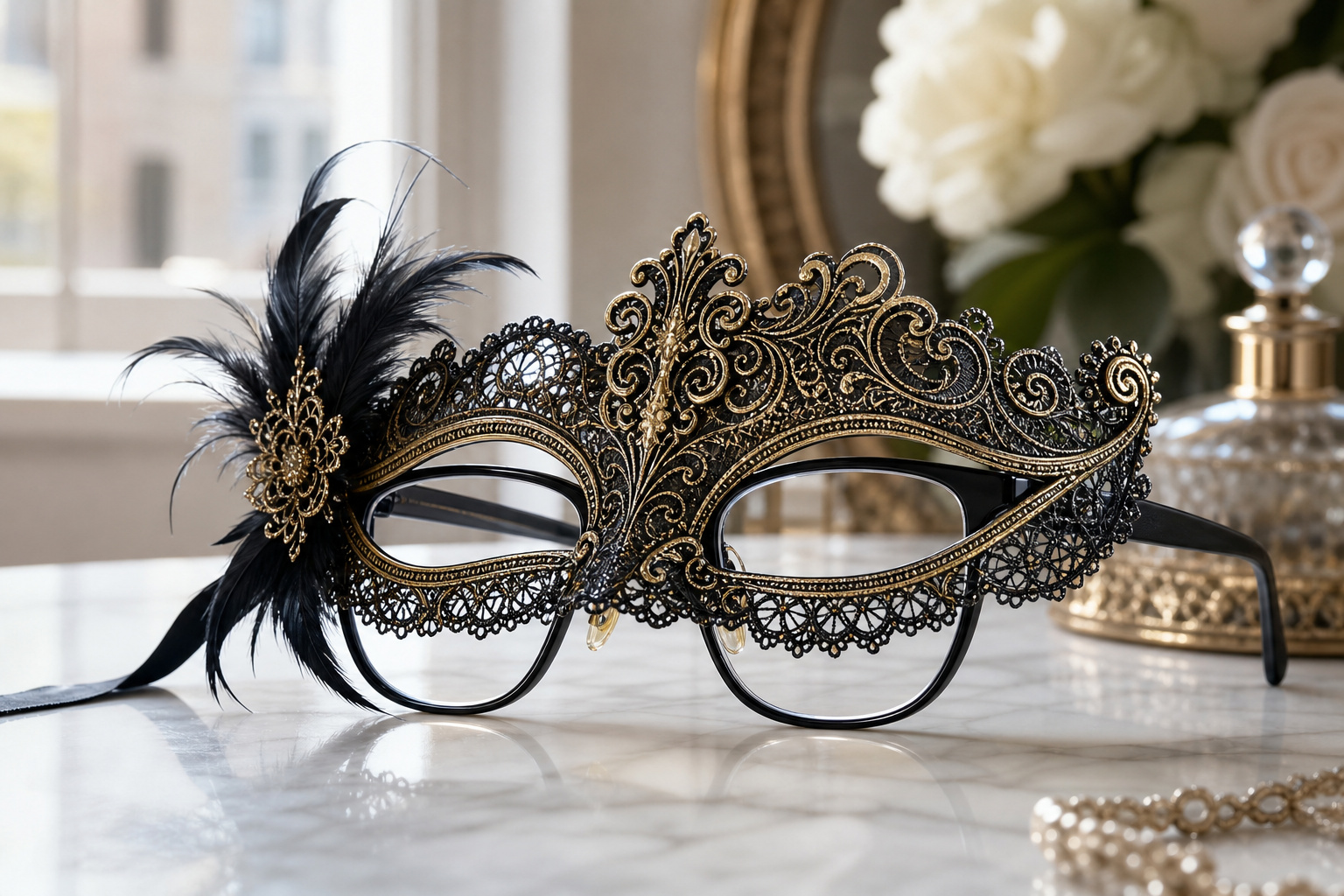
Start with the eye holes, not the colour or the feathers. This is the bit everyone skips and it’s the bit that actually determines whether you’ll wear the mask comfortably or spend the whole night pushing it up your nose. Look for eye openings that are noticeably taller than a standard mask, with at least a centimetre or two of clearance above and below where your glasses frame sits. A mask cut tight around the eyes will trap your glasses against your face and fog up faster too, especially if you’re dancing or standing near a bar.
Next, think about how the mask attaches. Ribbon-tie masks are the most forgiving because you can adjust the tension yourself, loosening it slightly to give your glasses arms room to breathe. Elastic-strap masks are quicker to put on but less forgiving if the elastic sits directly over your glasses arms, it’ll pull them tight against your temples all night. Stick masks (the ones on a handle you hold up) sidestep the whole problem entirely because nothing touches your glasses at all, which makes them a genuinely underrated option if comfort is your priority over hands-free wear.
Weight matters more than people expect. A heavy resin or full-coverage mask pulling down on your nose bridge is uncomfortable enough without glasses, add a pair of specs underneath and that weight has nowhere good to go. Lighter constructions, like the pieces in our filigree metal mask collection, distribute weight more evenly because the open lattice design means there’s simply less material sitting on your face.
Finally, check the nose bridge shape. A mask with a low, flat nose bridge will often sit right on top of where your glasses already rest, creating a pressure point within the first half hour. Masks with a slightly raised or open nose bridge give your glasses somewhere to sit underneath without a second point of contact fighting for the same real estate.
Top Styles and Options
Not every masquerade style plays equally nicely with glasses, so it helps to know which categories tend to work best before you fall in love with a design that’s going to fight you all night.
Filigree metal masks are our top recommendation for glasses wearers. The open, decorative cut-out work means there’s less solid material pressing against your face, and the eye openings on most filigree designs are already generous because the whole point of the style is showing more of your face, not less. Browse the black filigree masks if you want something that goes with everything, or the blue crystal filigree masks if you’re dressing for a specific colour theme. There’s also a clear filigree crystal option that pairs surprisingly well with clear or rimless glasses frames.
Leather masks are the other strong contender. Good leather softens and moulds slightly to your face shape over the course of an evening, which means the pressure points you’d get from a rigid plastic mask tend to ease off rather than get worse. Leather also breathes better than resin, so you’re less likely to get the fogged-up, sweaty-glasses problem after an hour on the dance floor. Have a look through the black leather masks or the blue leather masks for something with a bit more structure and a genuinely different texture to the typical satin-and-sequin look.
Bauta-style masks, the classic squared-off Venetian shape with the jutting chin line, are trickier. They’re gorgeous and unmistakably Venetian, but the traditional design sits close around the whole face including the temples, which is exactly where your glasses arms want to be. If you love the look, check the Venetian mask range and specifically look for versions with a wider strap and more room around the temple area rather than a snug, close-fitting cut.

What to Consider Before Buying
Colour matching still matters, glasses or no glasses, so don’t let the fit conversation completely take over your decision. If you’re building an outfit around a specific palette, our black masks and blue masks collections cover most formal-wear combinations, while the cream masks range works well for anyone going for a softer, more neutral Venetian look rather than high-contrast black and gold.
Think honestly about how long you’ll actually be wearing it. A two hour dinner event is a very different comfort test to an eight hour ball where the mask barely comes off. For longer nights, prioritise adjustability over anything else, a mask you can loosen slightly as the evening wears on (literally, as your face warms up and swells a touch) will outperform a fixed-fit design every time.
Frame width is worth actually measuring rather than guessing. Lay your glasses flat and measure the total width across the temple arms where they’d sit under the mask. Anything under about 14cm across generally fits comfortably under most masquerade designs. Wider or chunkier frames, the kind with thick acetate arms, need a mask with more generous side clearance, which points you back toward filigree and leather over tight resin styles.
Budget-wise, don’t assume comfort means expensive. Some of the most glasses-friendly masks in our range are also among the simpler, lower-cost designs, because a lighter, less embellished mask naturally has less bulk to get in the way in the first place. It’s the heavily layered, feather-and-crystal-stacked designs that tend to cost more and fit less comfortably over specs, not the other way round.
Tips From the Experts
Costume and theatre mask makers deal with this exact problem constantly, actors wear glasses too, and a few of their tricks are worth stealing for a night out. First, add a small strip of soft foam or moleskin to the inside of the nose bridge if you find a mask you love that sits slightly too low. It’s the same fix theatrical costumers use on tight character masks, and it takes thirty seconds with a bit of self-adhesive foam from any craft shop.
Second, always do a proper fitting with your actual glasses on, not your sunglasses, not someone else’s frames. Put both on together and move your head the way you would on a dance floor before you commit. Vision and eyewear specialists consistently note that pressure points from added headwear tend to show up only after sustained wear, not in the first thirty seconds, which lines up with what we hear from customers too (American Academy of Ophthalmology).
Third, if you’re travelling to the event or won’t have a mirror handy, practise putting the mask on and off at home first. Masquerade masks with ribbon ties in particular can be fiddly one-handed, and doing it once in a rush at a venue with your glasses already on is asking for a bent frame. Bridal and event styling guides often recommend a full trial run for exactly this reason, whether it’s a veil, a hat, or a mask (Brides).
Fourth, choose stick masks or looser tie-back styles over tight elastic if you already know your frames are on the wider or heavier side. It’s a small style trade-off for a much more comfortable night, and plenty of the fanciest looks at any masquerade are the ones being held rather than strapped on anyway. Event planning specialists covering costume parties tend to agree that adjustable attachment methods outperform fixed elastic for any guest wearing additional eyewear or headpieces (The Knot).
Frequently Asked Questions
What is the best masquerade mask to wear over glasses?
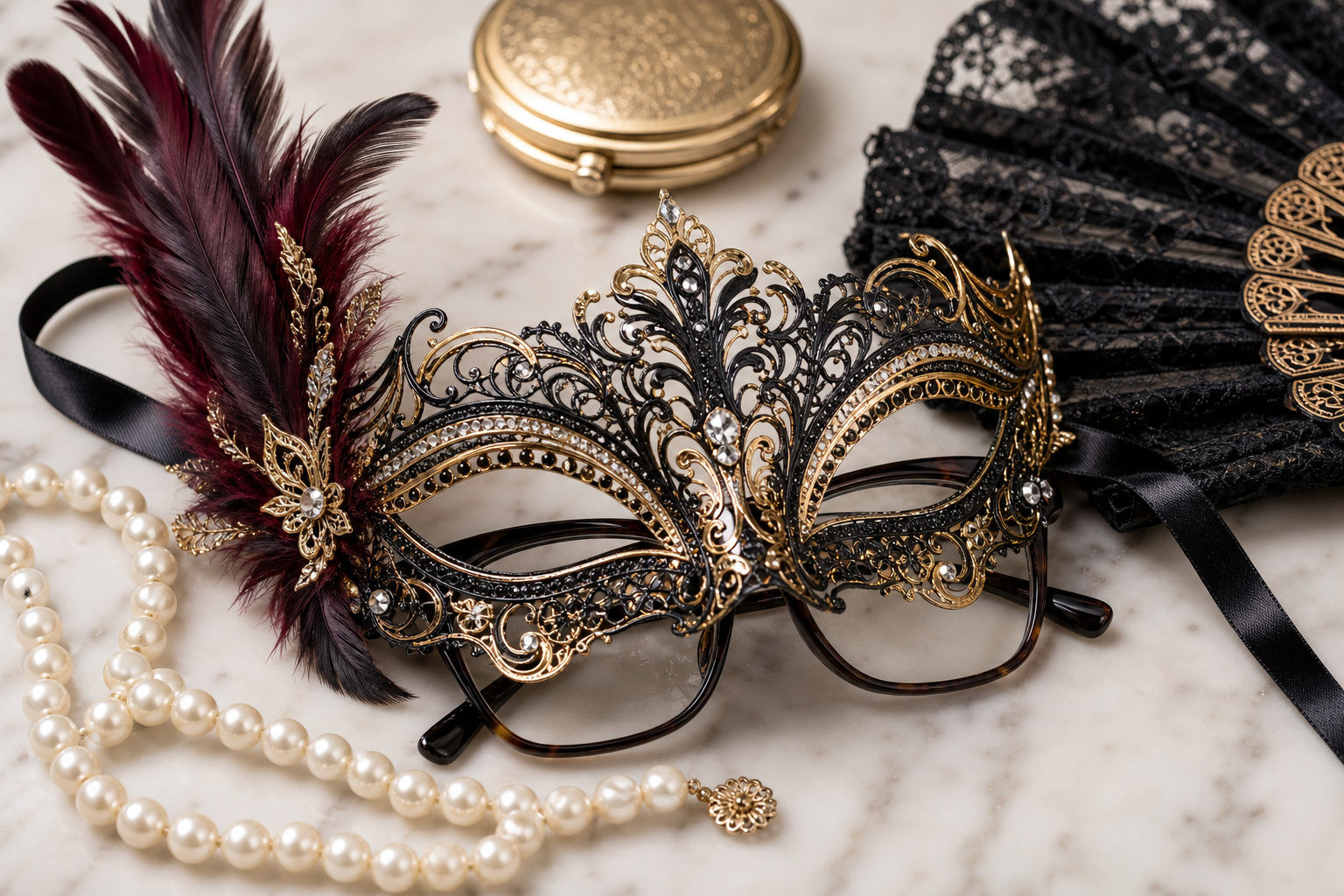
Filigree metal masks are generally the most comfortable option for glasses wearers because the open lattice design is lighter and gives your frames more room around the temples. Leather masks are a close second, since the material softens slightly with wear and breathes better than rigid resin. Both tend to outperform heavily layered or tight-fitting Bauta styles for all-night comfort.
How do I know which masquerade mask will fit over my glasses?
Measure the width of your glasses across the temple arms and try the mask on with your glasses already on, not off. If you feel pressure at the nose bridge or temples within the first minute, look for a design with a wider strap, an open nose bridge, or larger eye cut-outs rather than assuming you’ll just get used to it.
What should I look for when buying a masquerade mask to wear over glasses?
Prioritise generous eye openings, a lightweight construction, and an adjustable ribbon tie over fixed elastic. A raised or open nose bridge helps avoid double pressure points where your glasses already sit, and stick masks are worth considering if you want to remove the fit issue altogether.
Are there budget-friendly masquerade masks that fit over glasses?
Yes, and comfort doesn’t actually require spending more. Simpler filigree designs with less embellishment are often cheaper than heavily layered feather masks and tend to fit better over glasses too, since there’s less bulk and weight sitting on your face in the first place.