Venetian vs Masquerade Masks: What’s the Difference?
Venetian vs Masquerade: The Real Difference
People use these two terms like they’re interchangeable, and honestly, most of the time it doesn’t matter. But if you’re buying for a specific event, or you just want to know what you’re actually putting on your face, there’s a real distinction worth understanding.
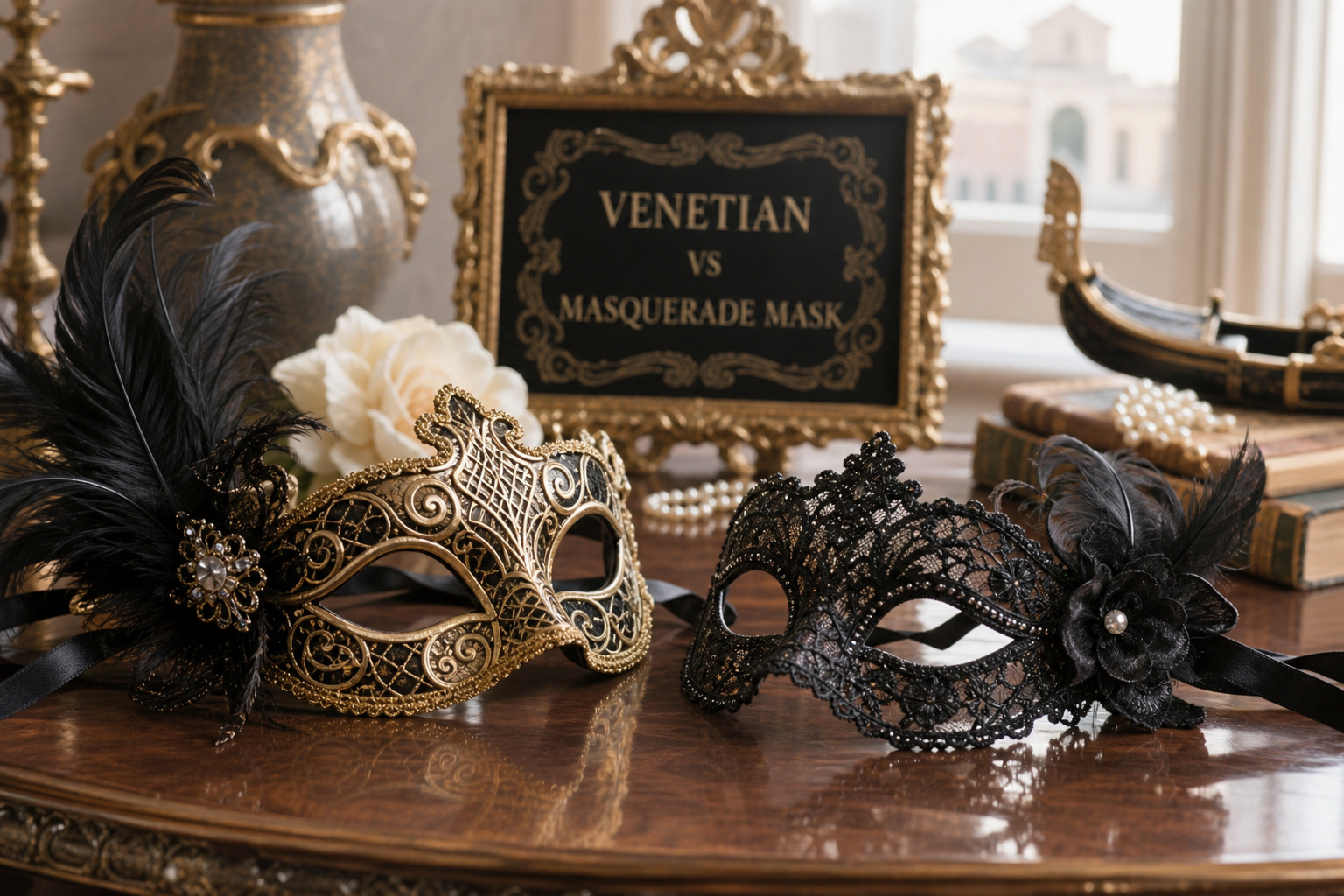
A Venetian mask is a specific thing. It comes out of the Carnival of Venice, a tradition stretching back to at least the 13th century where Venetians wore masks in public for weeks at a time, partly for celebration and partly so that class distinctions disappeared behind the disguise. That history produced a fairly fixed set of shapes: the full-face Bauta with its jutting chin, the plain white Volto (sometimes called larva), the ornate half-mask Colombina, and a few others we’ll get into below. These aren’t just “a mask that looks fancy.” They follow recognised patterns that have barely changed in centuries.
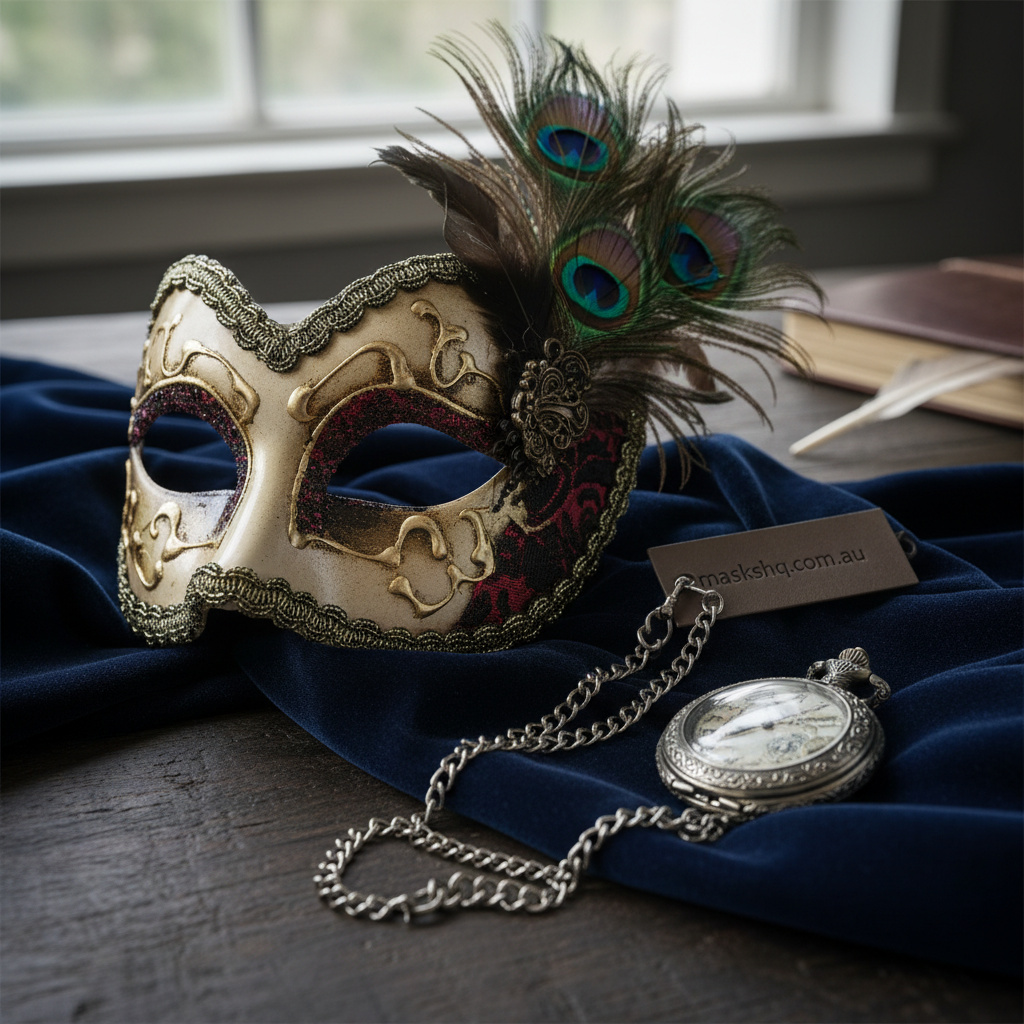
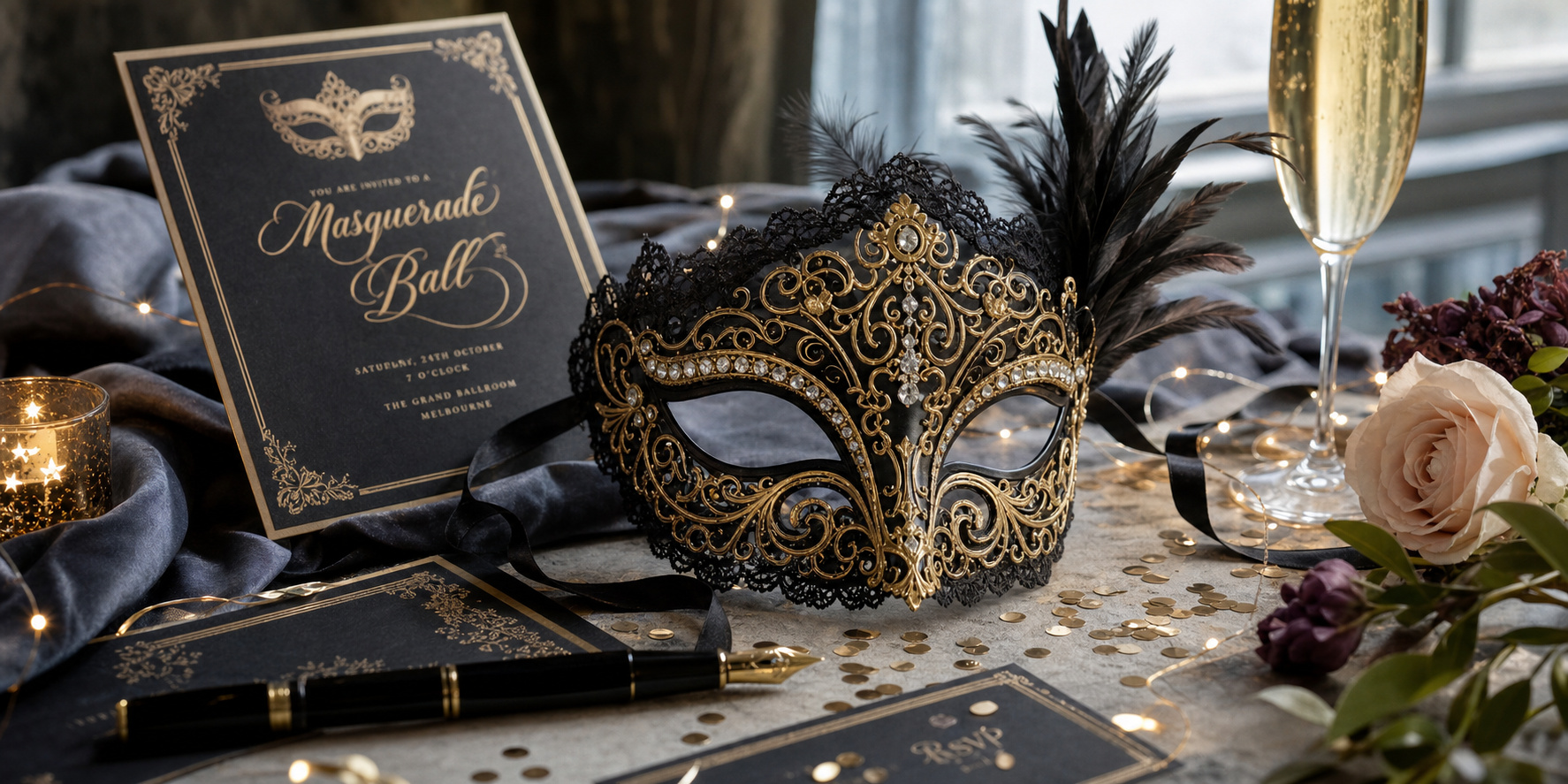
“Masquerade mask” is the looser, more modern term. It grew out of the 17th and 18th century masquerade balls that spread from Italy through France and into England, where guests wore masks to formal costume events. Today, when someone says “masquerade mask,” they usually mean any decorative half-mask worn to a themed party, a wedding, a ball, or a Melbourne Cup marquee. It might borrow Venetian shapes, or it might be entirely its own thing made from lace, feathers, or crystal-studded filigree metal.
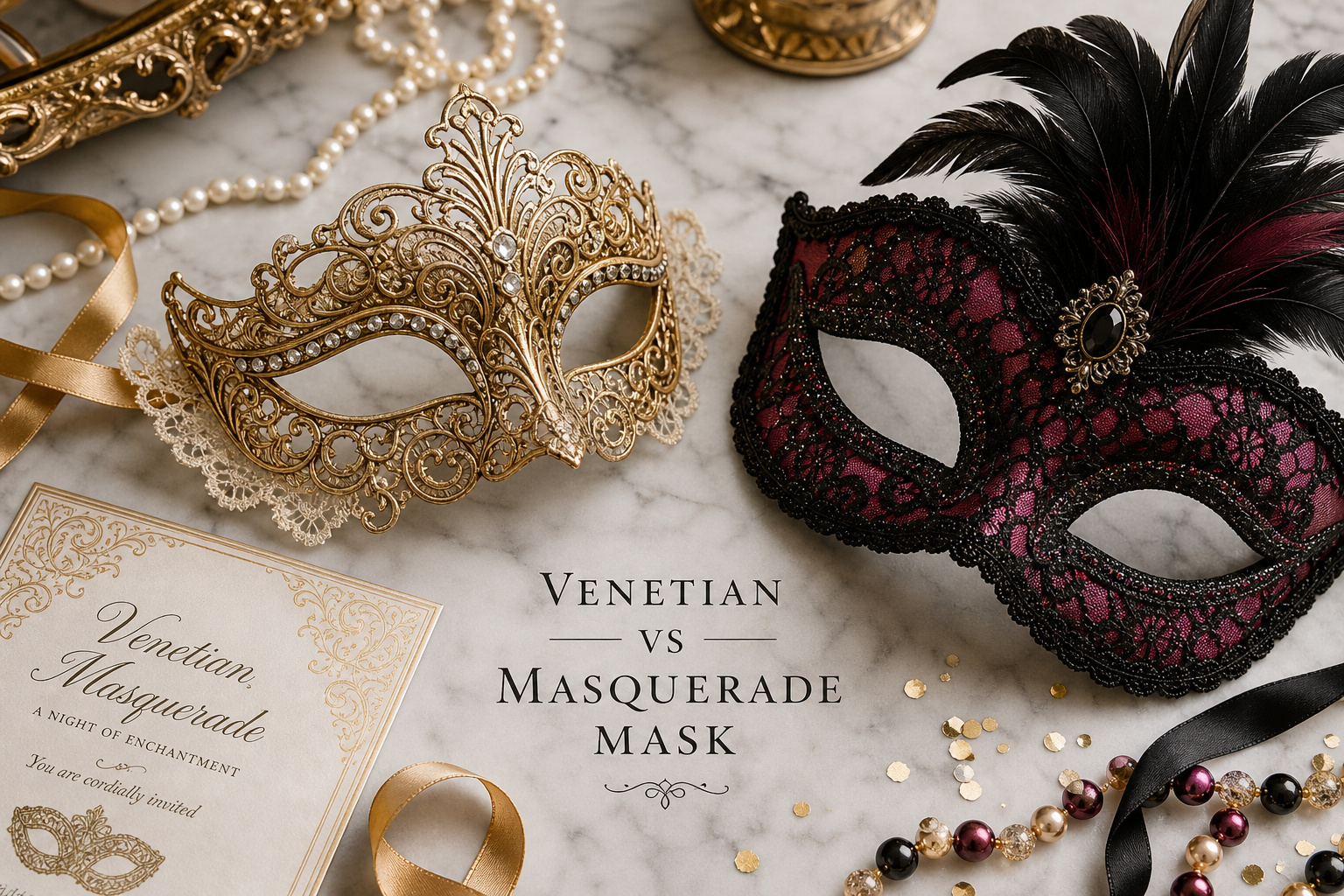
So the short version: every Venetian mask can be worn to a masquerade, but not every masquerade mask is Venetian. If you want the specific history and the classic silhouette, look for the word “Venetian” on the listing. If you just want something that looks the part for a costume party, “masquerade” covers a much wider range of styles, colours, and price points.
Choosing the Right Mask for You
The first question isn’t style, it’s coverage. Full-face masks like the Bauta hide your entire face and let you eat and drink without taking them off (that beaky chin shape wasn’t decorative, it was functional). Half-masks cover the eyes, nose, and upper cheeks, leaving your mouth free, which most people find more comfortable for a night of talking and dancing. If you’re planning to wear a mask for three or four hours straight, coverage matters more than you’d think.
Second, think about who’s wearing it. Men’s masks tend to run a touch larger through the brow and cheek, with squarer jaw lines on full-face styles, while women’s masks are usually cut higher at the cheekbone to sit comfortably alongside jewellery and hairstyles. Browse the full range of masquerade masks and you’ll notice the fit differences pretty quickly once you’re comparing a few side by side.
Third, match the mask to the event, not just the outfit. A black-tie ball calls for something closer to an authentic Venetian mask, gold or black, minimal feathers, a bit of restraint. A hens’ night or costume party gives you more licence to go bold with colour and embellishment. We get asked constantly whether one mask can do both jobs, and the honest answer is: pick the simpler, more classic piece if you’re only buying one, because it’s easier to dress up with jewellery or a mask ribbon than it is to dress down something covered in three inches of feathers.
Top Styles Worth Knowing
A handful of styles cover almost everything you’ll see at an Australian masquerade or ball, so it’s worth knowing them by name before you shop.
Bauta
The classic full-face Venetian shape, originally stark white, now usually seen in gold or black with a defined, slightly beaked chin. It’s the most historically accurate option if authenticity matters to you, and you can see the traditional shape in our Venetian mask collection.
Colombina
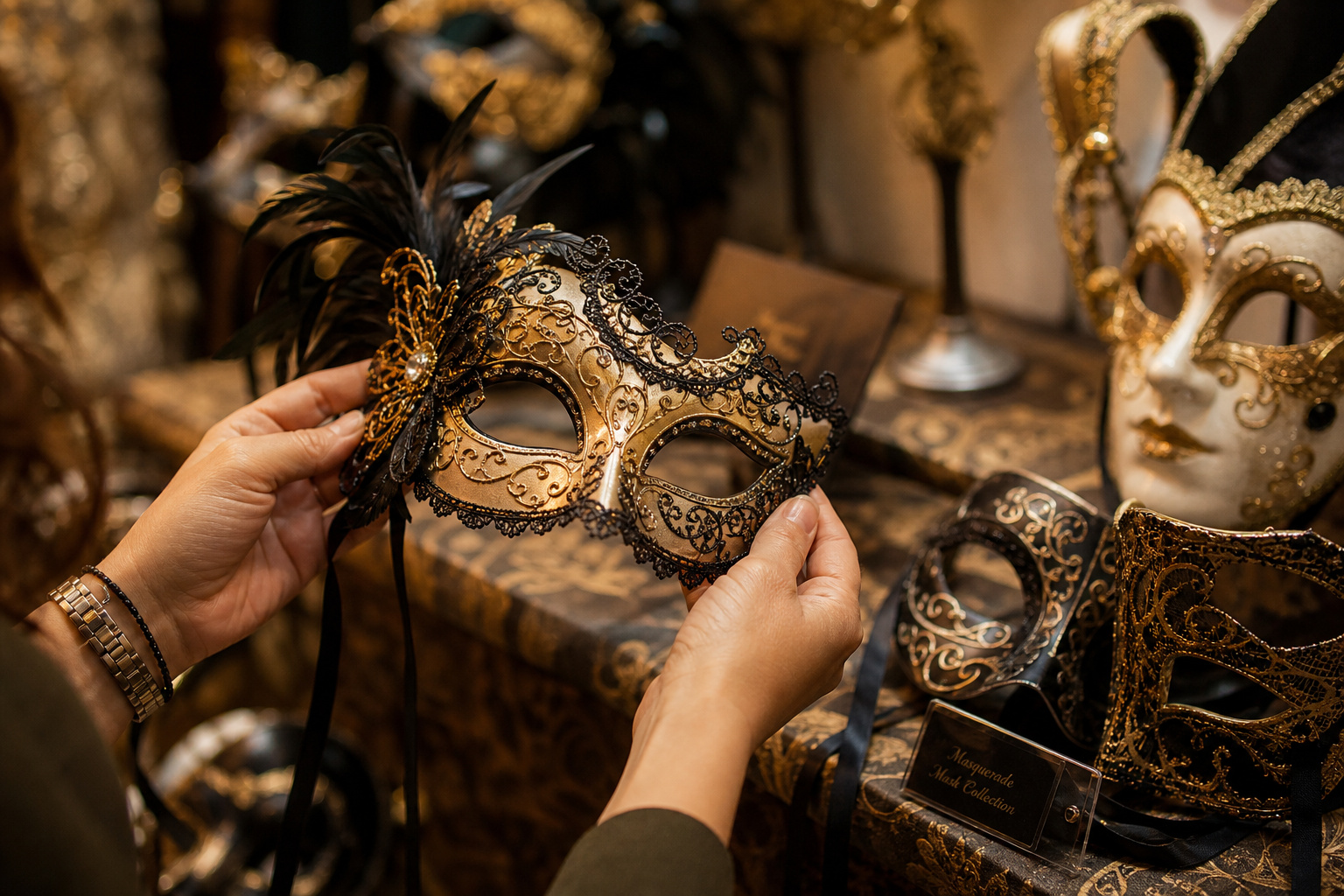
A half-mask covering the eyes and upper face, often heavily decorated with crystals, lace, or feathers. This is the shape most people picture when they hear “masquerade mask,” and it’s the easiest to wear for a full night out since your mouth stays free.
Filigree metal masks
Instead of the traditional papier-mâché base, these are cut from thin metal, laser-etched into lace-like patterns and often finished with crystals along the brow line. They photograph beautifully and hold their shape better than fabric masks over a long night. Have a look through the filigree metal masks range if you want something with a bit more structure, including the black filigree styles and the blue crystal filigree option if you’re matching a specific colour palette.
Leather masks
A completely different look, more medieval or steampunk than baroque Venice, built from moulded or tooled leather rather than lacquered paper. They suit a costume party with an edgier theme far better than a formal ball. The leather mask collection covers everything from the black leather designs through to blue leather styles for something less traditional.
What to Check Before You Buy
Material is the first thing to check, and it tells you a lot about how the mask will feel after two hours. Traditional Venetian masks are built on a papier-mâché or plastic base and finished by hand with paint, gesso, and gold leaf or gilding. They’re light, but cheaper versions can feel brittle at the edges. Filigree metal masks are heavier through the frame but distribute weight more evenly across the brow, which some people find more comfortable for long events. Leather sits somewhere in between, flexible but with more structure than fabric.
Second, check how it attaches. Ribbon ties give you an adjustable, secure fit and tend to look more authentic, but they can tangle in longer hairstyles. A stick handle (holding the mask up rather than tying it on) is common for photos and shorter appearances but gets tiring if you’re wearing it all night. Elastic is the most practical for actually dancing and moving around, though it’s the least “authentic” looking option.
Third, think about colour matching before you order rather than after. If your outfit is already set, browse by shade first, whether that’s the black masks that go with almost anything formal, the blue masks for a jewel-toned gown or suit, or the softer cream masks for a more neutral, understated look. It’s a lot easier to match a mask to a dress you already own than to match a dress to a mask after the fact.
Finally, be realistic about how many times you’ll actually wear it. If this is a one-off costume party, a mid-range masquerade mask does the job fine. If you’re someone who goes to a masked ball most years, or you’re building a genuine Carnevale-style collection, it’s worth spending more on a properly finished Venetian piece that’ll hold its paint and shape over several outings rather than one season.
Tips From the Experts
A few things we’ve picked up after years of fitting these for weddings, formal balls, and the odd very enthusiastic hens’ party. First, try before the big night if you can, or at least check the measurements against your face shape. A Bauta that sits perfectly on a narrow face can feel tight and pinch at the temples on a broader one, and there’s no fixing that on the night.
Second, don’t skip the mount. A mask that looked flawless in a product photo can sag if it’s only backed by thin card, so check whether the listing mentions a reinforced or double-layered base, especially for anything with heavier crystal or feather work sitting near the brow.
Third, feathers and lace need a little care between wears. Store the mask flat or upright in its original box rather than stacked under other costume pieces, and keep it away from direct sun so the paint and gilding don’t fade. A well-made Venetian mask can genuinely last a decade of Carnevale nights if you look after it; a cheap plastic novelty mask usually doesn’t survive its first wash of hairspray.
Last thing, and this one surprises people: buy the mask before you finalise the rest of the outfit if the mask is the statement piece. It’s far easier to pick jewellery, a tie, or a wrap to match an existing mask than to hunt for a mask that matches a very specific dress colour after the fact. Head over to our full collection or check the blog for more styling guides if you’re planning an outfit around a mask rather than the other way round.
Frequently Asked Questions
Venetian or masquerade mask — which is best?
There isn’t one “best” option, it depends on the event. For a formal ball or anything Carnevale-themed, an authentic Bauta or Volto style gives you the traditional look. For a costume party or hens’ night, a Colombina-style half-mask in filigree metal or feathers is usually more comfortable and easier to wear for hours at a time.
How do I know whether a Venetian or a masquerade mask is right for me?
Start with how long you’ll be wearing it and whether you need to eat, drink, or talk easily, since that rules full-face styles in or out straight away. From there, match the mask’s colour and material to your outfit rather than the other way round, and pick a fixing (ribbon, elastic, or stick) based on whether you’ll be dancing or mostly posing for photos.
What should I look for when buying a Venetian or masquerade mask?
Check the base material and how it’s reinforced, especially if the mask carries heavier feather or crystal work near the brow. Also check the fixing method (ribbon, elastic, or stick handle) against how you’ll actually be using the mask that night, since a stick handle is fine for photos but tiring if you’re wearing it for hours.
Are there budget-friendly Venetian and masquerade masks?
Yes, filigree metal and simpler Colombina-style half-masks are generally the most affordable entry point while still looking well made. If you only need a mask for one event, there’s no need to spend up on a hand-gilded traditional piece, save that for if you end up wearing one every year.
References & Sources
Browse by style: see the live Venetian masks collection when traditional Venetian forms are what you want. For all mask types, return to the main masquerade range.