Full-Face vs Half-Face Masquerade Masks: Which Should You Choose?
Full-Face vs Half-Face Masks: What’s the Difference?
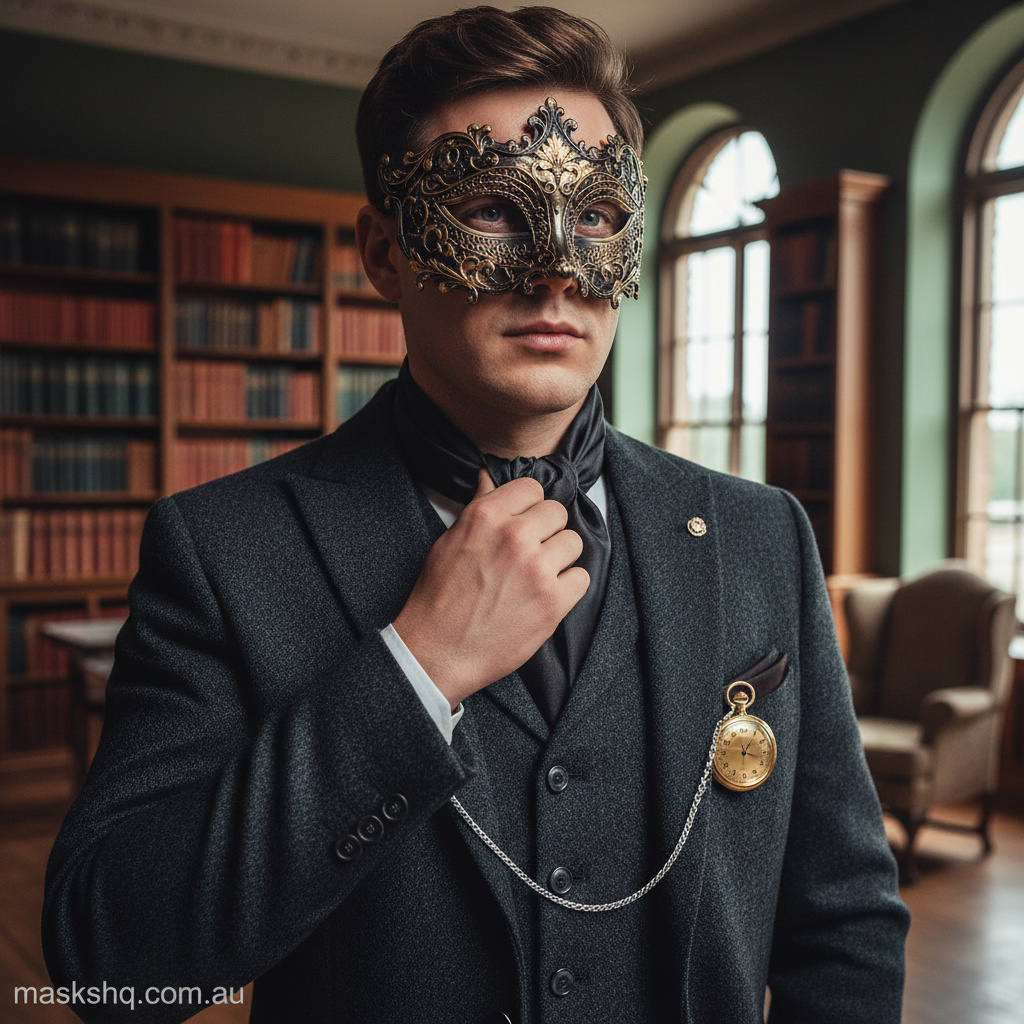
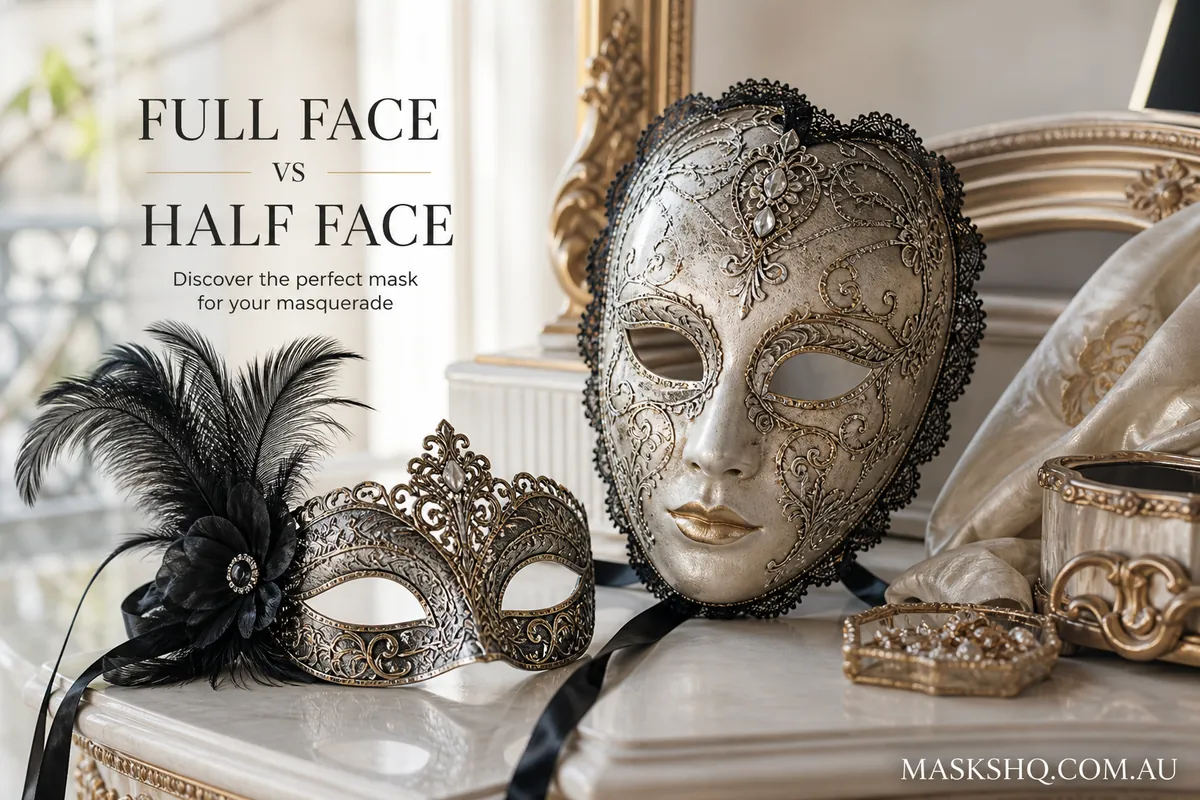
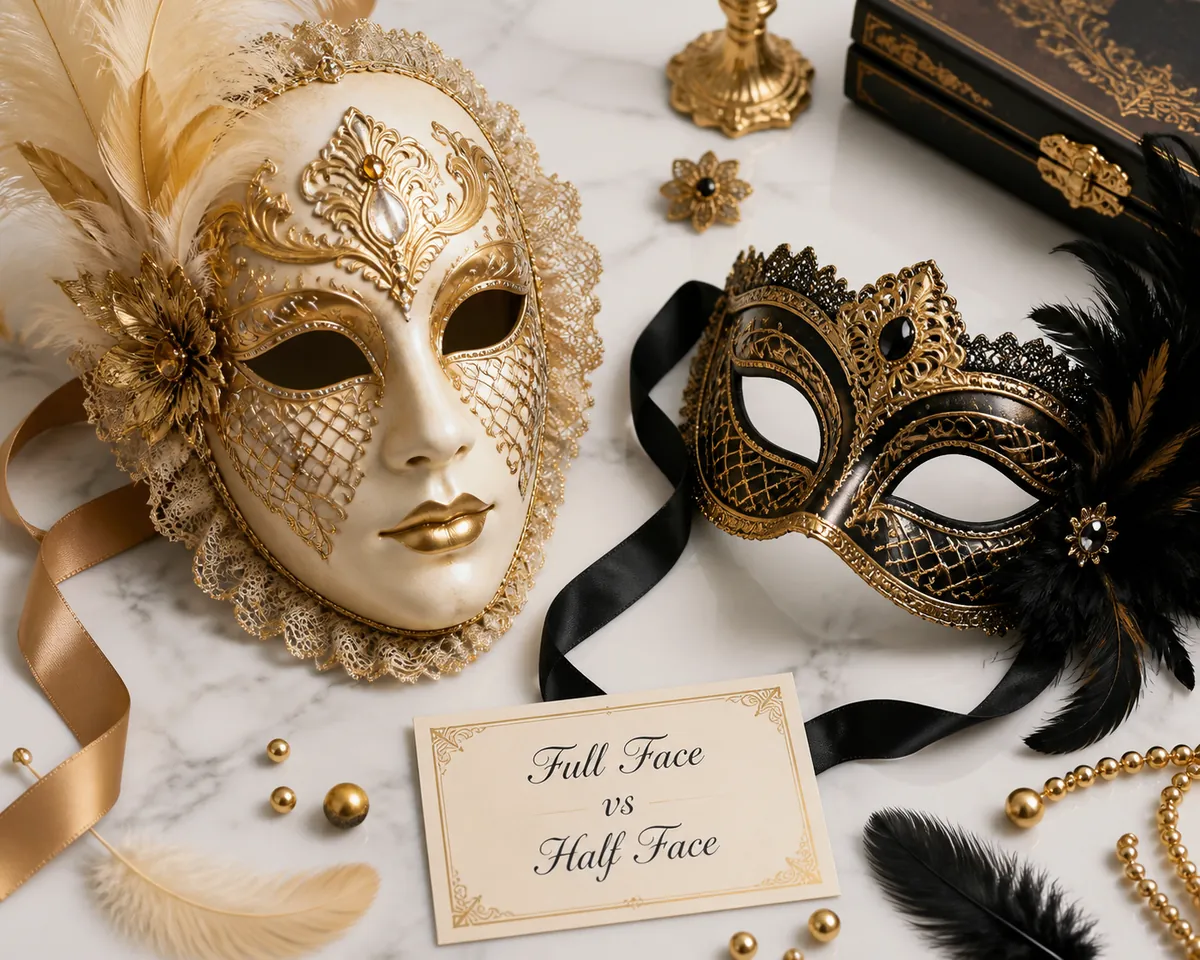
A half-face mask covers the area from your forehead down to just above your lip, sometimes with a slight extension over the cheekbones. It’s the classic Colombina shape you see at most Venetian-style events, and it’s what most people picture when they hear the word “masquerade.” A full-face mask covers everything, jaw included, and either has no opening for your mouth or a small slit or grille to talk and breathe through.
The difference sounds cosmetic until you’ve actually worn one for four hours at a wedding reception. Half-face masks let your natural expressions show through your mouth and jaw, so people can still read you when you’re laughing at a joke or mid-conversation. Full-face masks hide the lot, which is exactly the point if you want full anonymity or a dramatic, otherworldly look, but it does mean everyone at the bar is squinting trying to work out if you’re smiling or scowling.
Weight and fit differ too. A well-made half-face mask in leather or filigree metal usually sits comfortably on elastic or a ribbon tie and barely moves once you’ve adjusted it. Full-face designs need to clear your nose, mouth and chin without pinching, so the strap tension and internal padding matter a lot more. We’ve had customers order a stunning full-face piece for a formal ball and then spend the night holding it slightly away from their face because the fit wasn’t quite right for their bone structure.
How to Choose the Right Style
Start with what you’re actually doing at the event, not what looks best in the mirror at home. If there’s a sit-down dinner, speeches, or any amount of wine involved, a full-face mask is going to become a nuisance within the first hour. You’ll be lifting it to take a sip, adjusting it after every laugh, and by 9pm it’s probably sitting on top of your head. For that kind of night, browse the full range of masquerade masks and filter toward half-face styles.
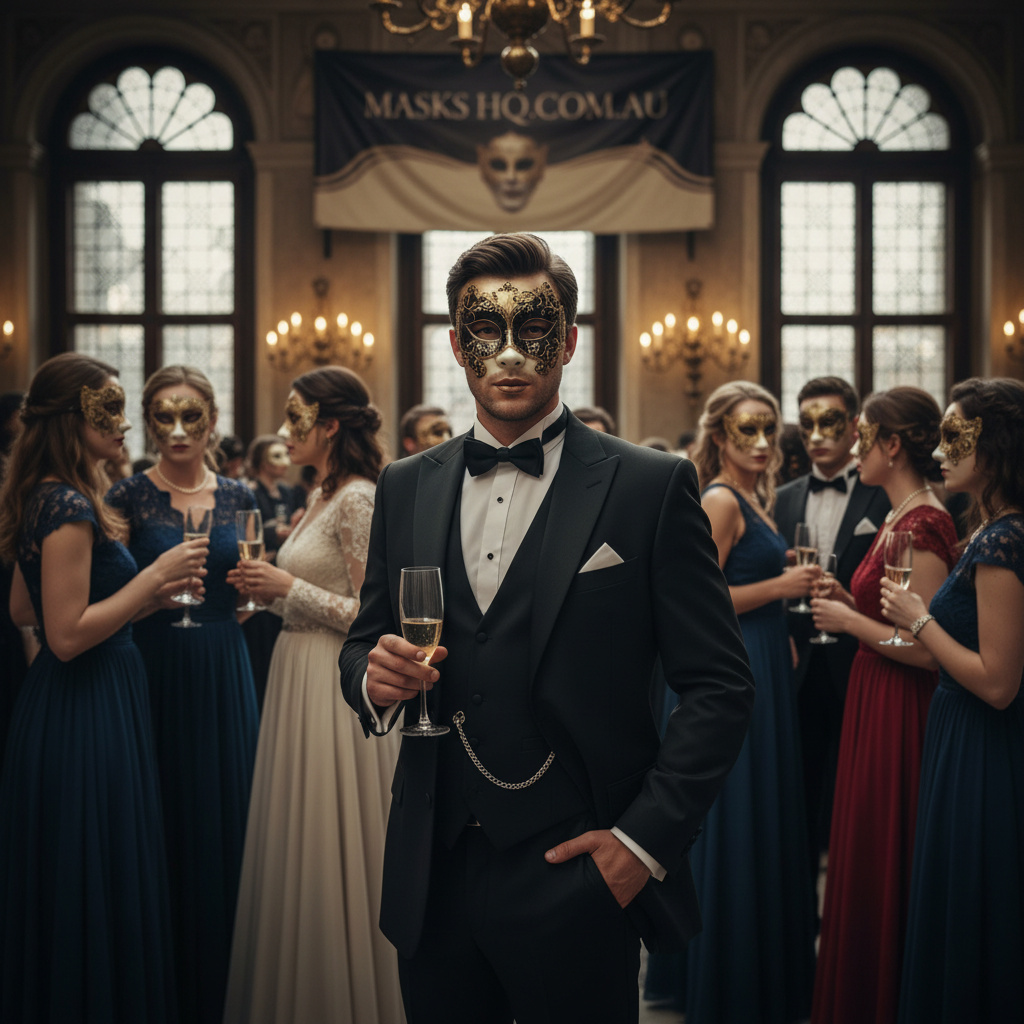
If the event is more about spectacle, a themed entrance, a photo booth, a costume competition, or a Venice Carnival-style parade, full-face is where the drama lives. Think Bauta or Volto-style masks with strong jawlines and minimal facial openings. They photograph brilliantly under event lighting because there’s no skin breaking up the mask’s silhouette.
Face shape matters more than people expect. Full-face masks with fixed jaw contours can sit awkwardly on rounder or fuller faces, pressing on the cheeks in a way that gets uncomfortable fast. Half-face masks are far more forgiving because they only need to match your forehead and cheekbone width, not your entire jaw profile. If you’re buying for a partner or a group and can’t try before you buy, half-face is the safer bet size-wise.
Glasses wearers should think this through too. Full-face masks that wrap in around the eyes can clash badly with spectacle arms, whereas most half-face designs leave enough clearance at the temple for glasses to sit underneath without digging in.
Top Styles and Options
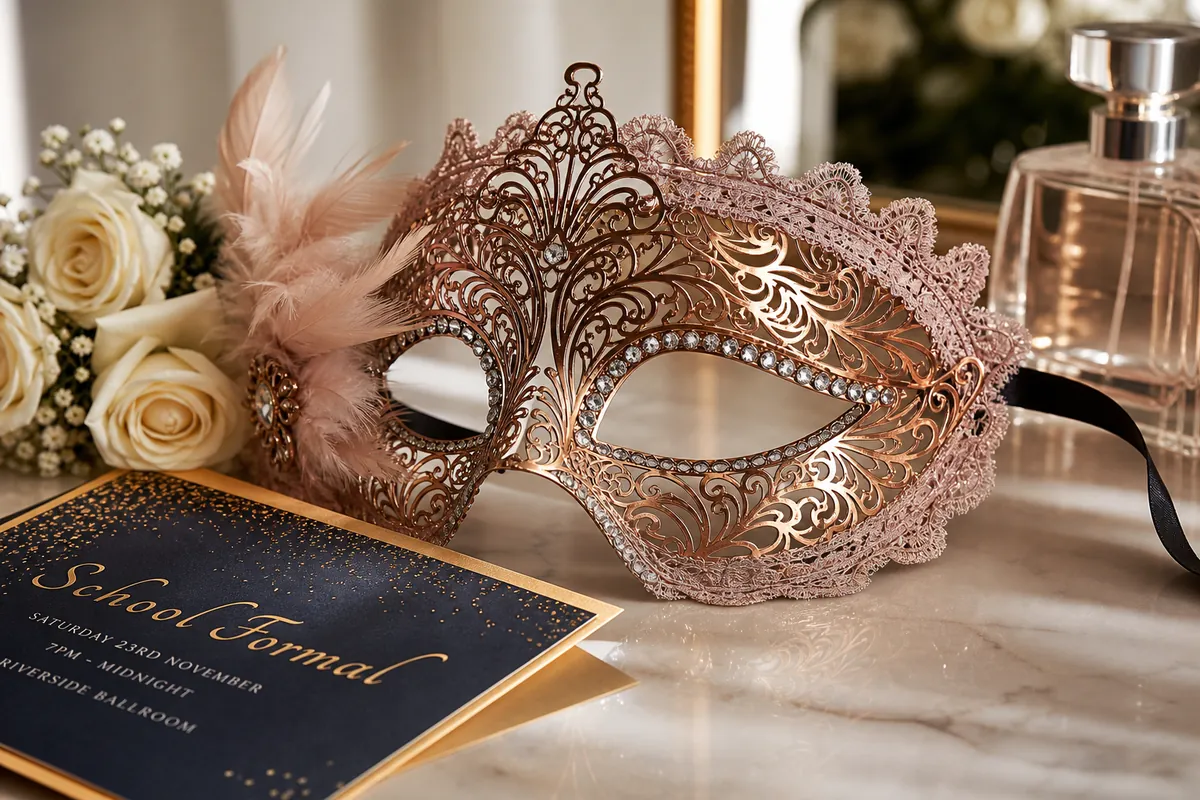
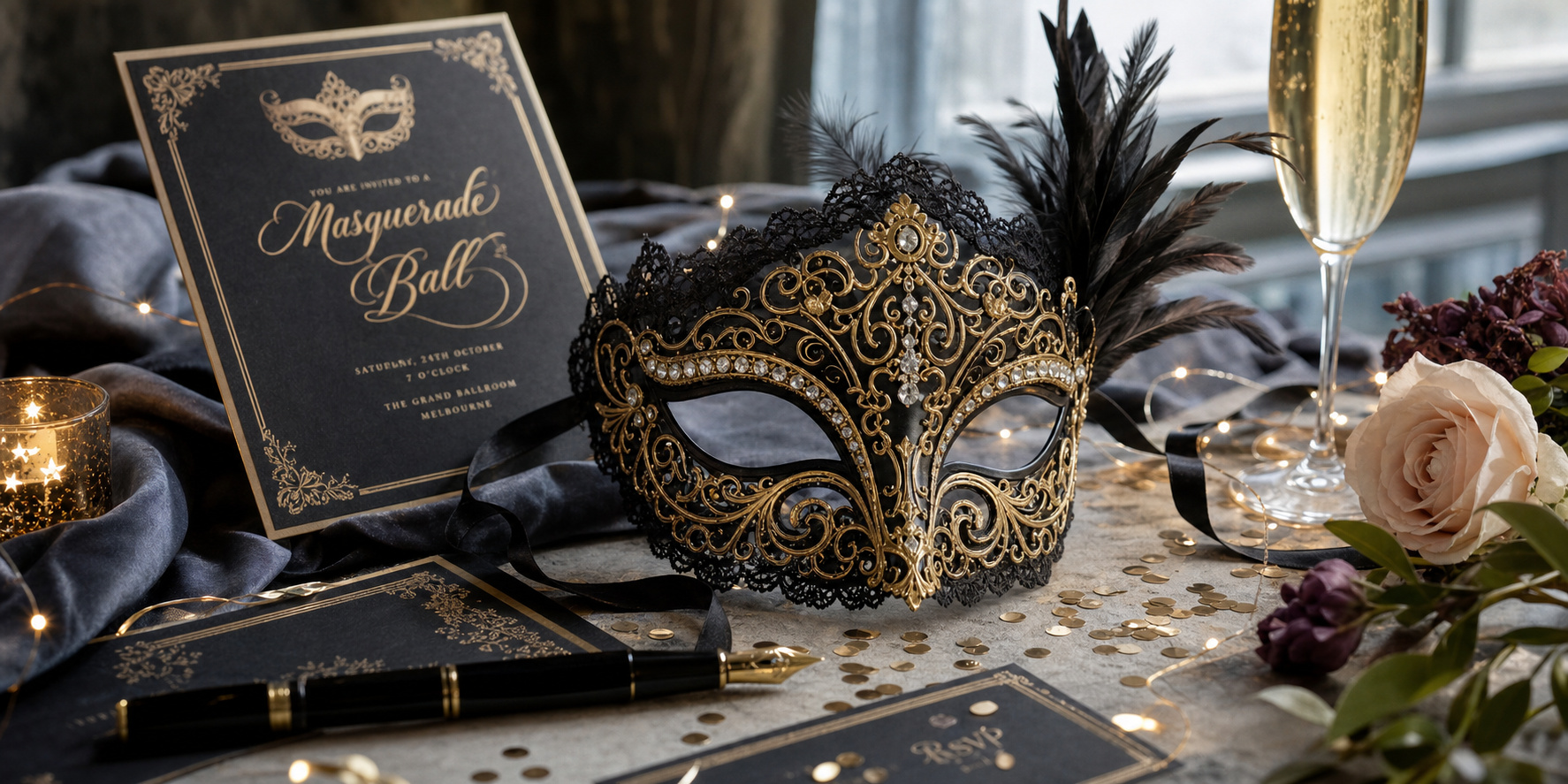
Filigree metal masks are the standout choice if you want a half-face piece with real presence. The open metalwork catches light beautifully and reads as elegant rather than costumey, which is why they’re a favourite for weddings and corporate galas. Have a look through the filigree metal mask collection if that’s the direction you’re leaning, and the black filigree masks in particular go with almost any formalwear.
Leather masks sit at the other end of the texture spectrum, softer looking, warmer in tone, and generally more comfortable for longer wear because the material moulds slightly to your face over the evening. The leather mask range covers both half and full-face cuts, and the black leather masks are a genuinely versatile pick if you’re not sure what else is on the dress code.
For colour-matching an outfit, we get asked constantly what pairs with what. Navy and midnight blue gowns work well against the blue crystal filigree masks, while neutral or champagne tones sit nicely with the cream masks. If your outfit is already busy or heavily patterned, a plain black mask keeps the whole look from fighting itself.

What to Consider Before You Buy
Breathing room is the thing nobody thinks about until they’re wearing the mask. Full-face masks need either a mouth slit, a light grille, or genuinely generous nose clearance, otherwise you’ll be pulling it away from your face to talk within twenty minutes. If you’re buying a full-face style, check the product photos for the mouth area specifically before you order.
Strap type is worth a second look too. Elastic is quick to put on and forgiving if you’ve got a wider head, but ribbon ties give a more secure, adjustable fit for a full night of dancing since they won’t slip when you’re moving around. Half-face masks generally handle either strap type fine; full-face masks do better with ribbon ties because there’s more weight to secure.
Think about how the mask travels too, not just how it looks on the night. Filigree metal holds its shape well in a bag but can bend if it’s squashed, so a rigid case or a soft cloth wrap is worth having. Leather is more forgiving of a knock but can pick up scuffs if it’s tossed in loose. If you’re on a tighter budget or buying multiples for a group, it’s worth checking the clearance range before paying full price, since styles rotate through there regularly and the quality doesn’t drop just because the price has.
Lastly, factor in how the mask reads under different lighting. A lot of masquerade events run on warm, low light, and the clear filigree crystal masks genuinely sparkle under that kind of lighting in a way that photographs poorly under harsh daylight. If your event has photography as a big part of the night, ask the venue what the lighting plan is before you commit to a finish.
Tips from the Experts
After years of fitting people for balls, weddings and Halloween parties, the pattern is pretty consistent: people who buy full-face masks for comfort-heavy events regret it, and people who buy half-face masks for high-drama entrances wish they’d gone bigger. Match the mask to the actual hours you’ll be wearing it, not just the entrance photo.
Try the mask on with your hair styled the way you’ll actually wear it on the night. Updos change how a half-face mask sits against your temples, and a lot of “it doesn’t fit right” complaints are really just a strap adjustment issue discovered too late. Adjust it at home first, not in the car park.
If you’re buying for a couple or a group and want a coordinated but not identical look, mixing a full-face piece for one person with half-face for the rest tends to photograph better than everyone matching exactly. It gives the group shot some visual hierarchy instead of everyone blending into one block of colour. The blue mask range in particular has enough tonal variation across pieces to do this without looking mismatched.
One more thing worth knowing: masquerade balls have always leaned on the mask to level the social playing field for the night, hiding rank and identity so people mixed more freely than usual. That history is part of why the half-face Colombina became so dominant in the first place, it hid enough to feel anonymous while still letting people actually talk to each other (source).
Frequently Asked Questions
What is the best full face vs half face mask?
There’s no single winner, it comes down to how long you’re wearing it and what you’re doing. A half-face filigree metal or leather mask suits most events because you can still eat, drink and talk comfortably, while a full-face mask suits shorter, photo-focused moments like an entrance or a themed costume competition.
How do I know which style is right for me?
Think about the event schedule first: if there’s a dinner, drinks, and hours of mingling, go half-face. If the mask is mainly for photos or a grand entrance and you’ll be taking it off soon after, full-face gives you the bigger visual impact without the practical downsides.
What should I look for when buying a mask?
Check strap type and adjustability, mouth and nose clearance if it’s full-face, and how the material holds up to travel. Filigree metal looks striking but needs careful packing, while leather is more forgiving and moulds to your face over the night.
Are there budget-friendly options available?
Yes, the clearance range regularly rotates in quality half-face and full-face styles at a lower price point without cutting corners on materials. It’s worth checking there first, especially if you’re buying for a group and need several masks at once.