Masquerade Masks for Wide Faces: How to Find a Flattering Fit
Why Fit Matters
Finding masquerade masks for wide faces is less about hiding your face and more about giving its proportions some room. A mask that is too narrow can stop short of the temples, tug at the ties and make the centre of the face look crowded. It can also leave you with that familiar headache-by-dessert feeling, which is not the mood for a ball, wedding reception or themed party.
A good fit sits evenly across the bridge of the nose, clears the outer corners of the eyes and rests without digging into the cheeks. Width is the starting point, but shape matters just as much. Faces with a broader forehead, prominent cheekbones or a wider jaw often suit masks that travel slightly outward at the sides. Think of the silhouette as a frame: it should echo the width of your face, not shrink it.
That is why a well-chosen half mask can look more polished than a heavily decorated design that is technically beautiful but too small. The aim is a deliberate line from temple to temple, with enough open space around the eyes to keep your expression visible. Masquerade style is theatrical by nature; discomfort does not need to be part of the performance.
For a useful starting point, browse the full range of masquerade masks and compare the outline of each design before focusing on colour. Product photos can make a mask appear larger or smaller than it feels in person, so use the shape, fastening and material details together.

Choosing the Right Mask
Start with a simple measurement. Use a soft tape measure from one temple to the other, passing across the point where a half mask will sit. You are not looking for a rigid rule or an exact mask width, since masks curve around the face. You are looking for a practical comparison point. If most novelty masks feel tight or leave the outer eye area exposed in an awkward way, a wider profile should be your priority.
Choose width before decoration
It is tempting to begin with feathers, crystals or a dramatic colour. Resist that for five minutes. First look for a mask with side points, gentle wings or a broad eye line. These shapes distribute visual weight across a wider face and avoid the “tiny mask in the middle” effect. A mask can be ornate later; it cannot become wider after the party has started.
Eye openings deserve a proper check. They should reveal your eyes rather than slice across the outer corners. Wider-set openings often feel more natural on a broad face, and a slightly upward sweep can add lift without being costume-shop exaggerated. If you wear glasses, test the nose bridge and eye opening carefully. A low, thick bridge may clash with your frames, while a lighter, more open design gives you more options.
Prioritise an adjustable fastening
Ribbon ties are usually the friendliest option because you can set the tension yourself. Tie them securely but not tightly, then move your jaw, smile and turn your head. Elastic can work well when it has enough give, though a short elastic band is one of the quickest ways to turn a promising mask into a pressure point. Adjustable straps are useful for longer events, especially if you expect to dance or mingle for several hours.
Material changes the fit too. Lightweight metal filigree can offer a broad, airy outline with less visual bulk. Browse filigree metal masks if you like defined detail but want to keep the eye area open. Soft leather has a different advantage: it can sit closer to the contours of the face and often feels less fussy than a stiff moulded mask. The range of leather masks is worth considering for a more relaxed, comfortable look.
Top Styles and Options
The best style depends on whether you want the mask to blend with the outfit or become the main character. For wide faces, the strongest choices tend to share one trait: they carry their design outward rather than piling it into a narrow central point.
Filigree masks with extended lines
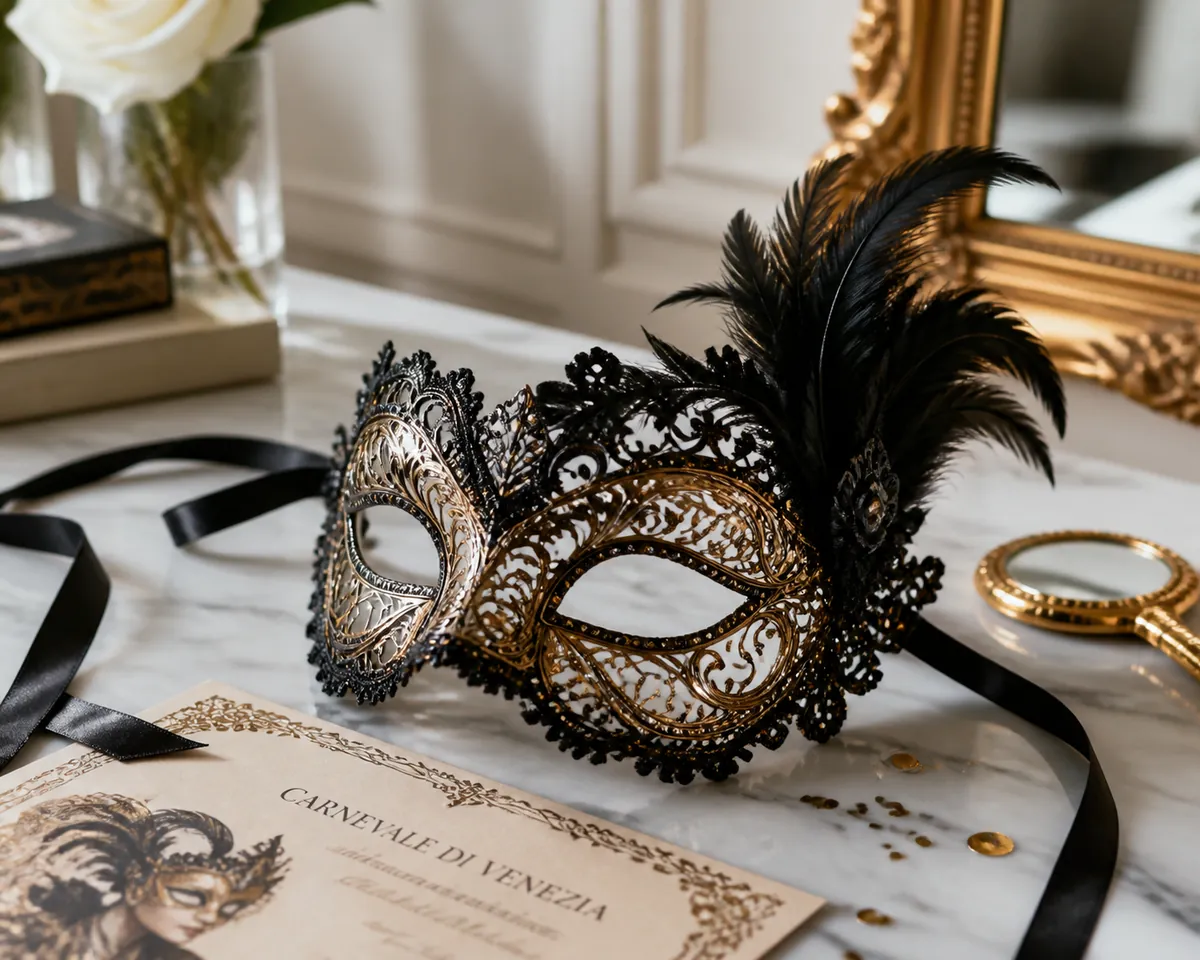
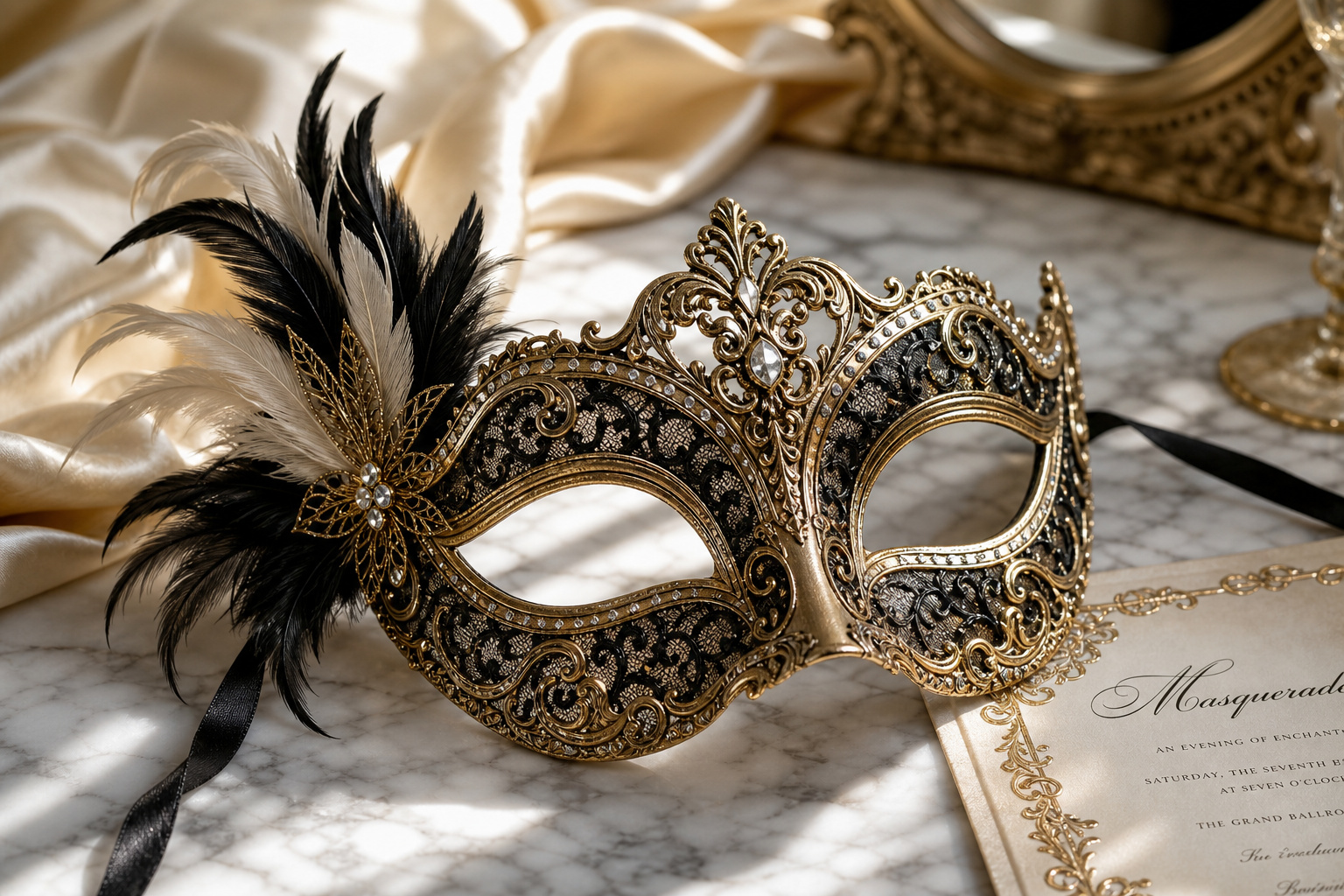
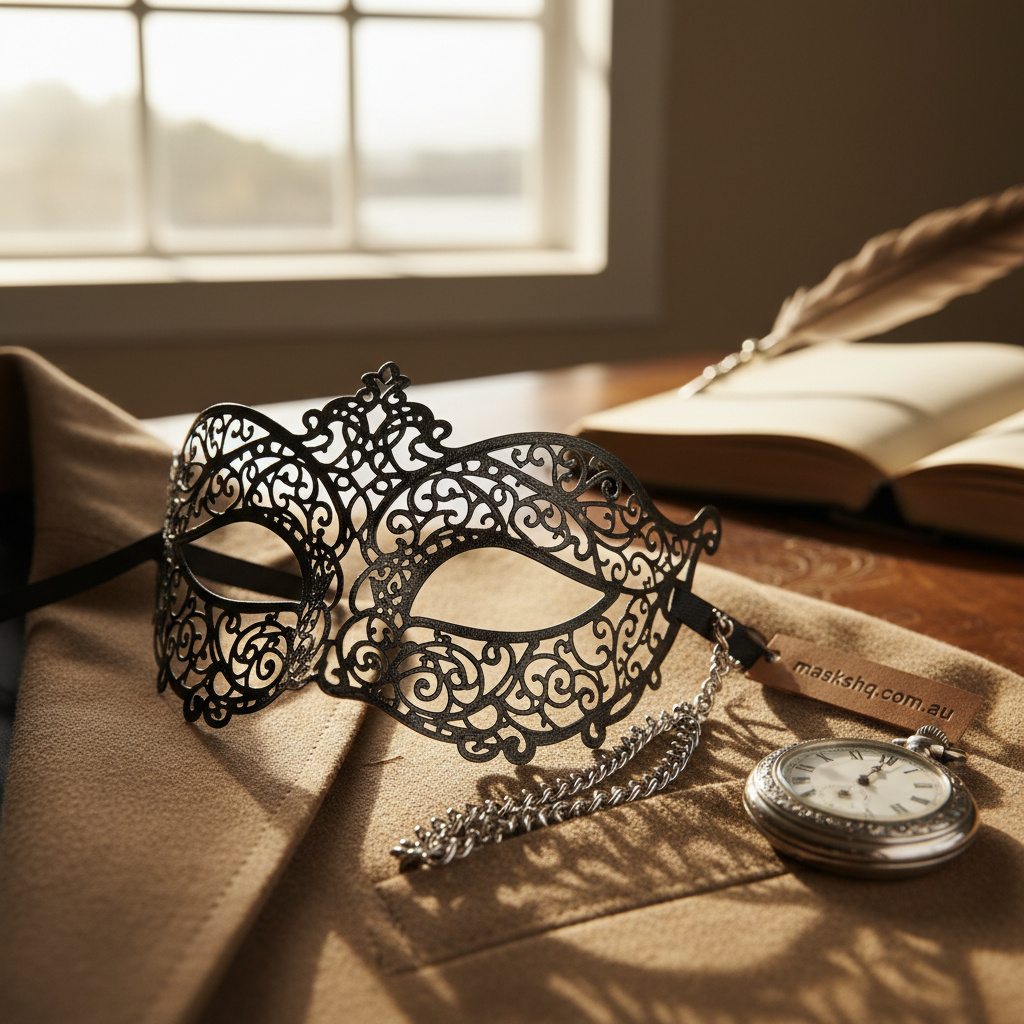
Filigree works beautifully because the negative space keeps it light. Look for designs with an outward curl at the temples, a broad upper edge or side flourishes that extend beyond the eye opening. They create width without making the mask feel heavy. Black is especially reliable for evening events, and black filigree masks pair easily with tuxedos, black dresses, jewel tones and metallic accessories.
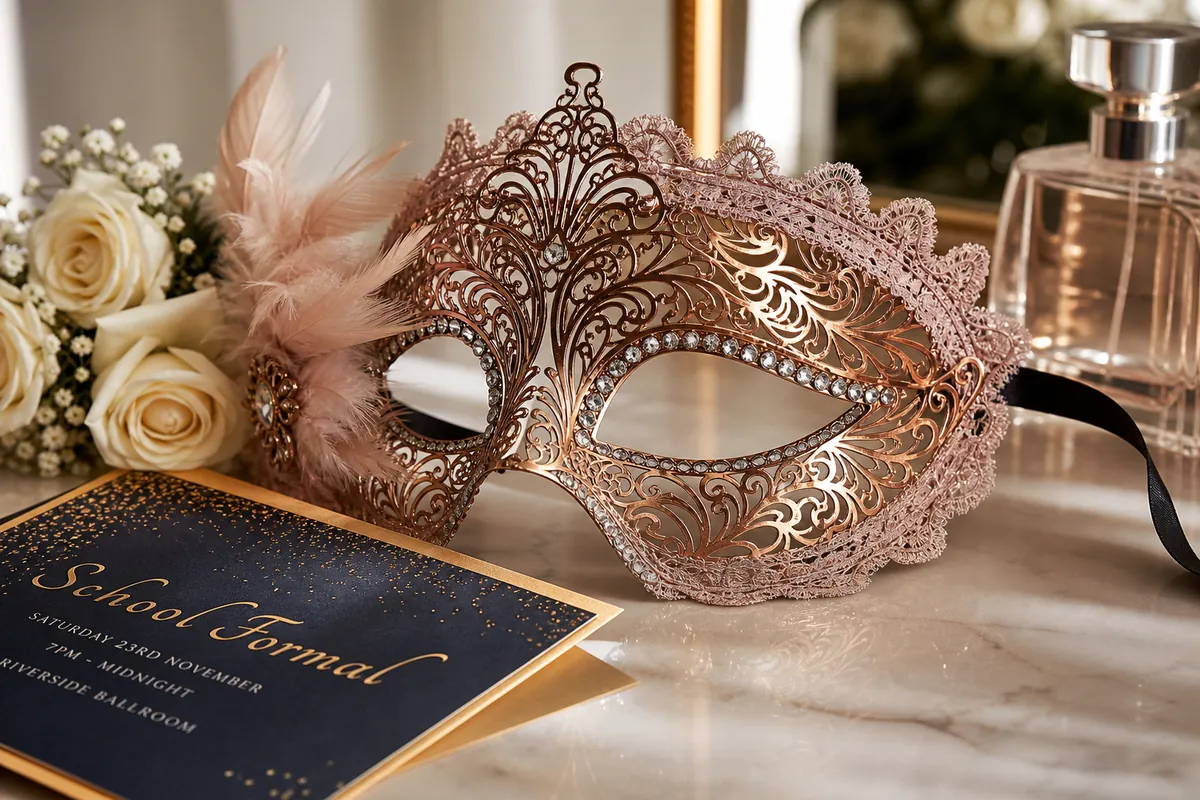
For a brighter formal outfit, crystal filigree can catch candlelight and photographs nicely. A mask from the clear crystal filigree selection gives sparkle without adding a solid block across the face. Keep jewellery simple if the mask is doing this much work. Earrings, one ring and done.
Leather masks with a softer shape
Leather masks are a strong choice for people who dislike the hard edge of plastic or metal. A well-shaped leather design often follows the brow and cheek area more naturally, which can make a wider face feel balanced rather than boxed in. Black leather has a clean, classic look, so black leather masks are a sensible pick for a formal masquerade, a Gothic theme or a sharp monochrome outfit.
Blue leather is less expected but remarkably wearable with silver, charcoal, white and deep navy. If your outfit already has cool undertones, blue leather masks can bring colour to the face without competing with a bold dress or jacket.
Balanced colour choices
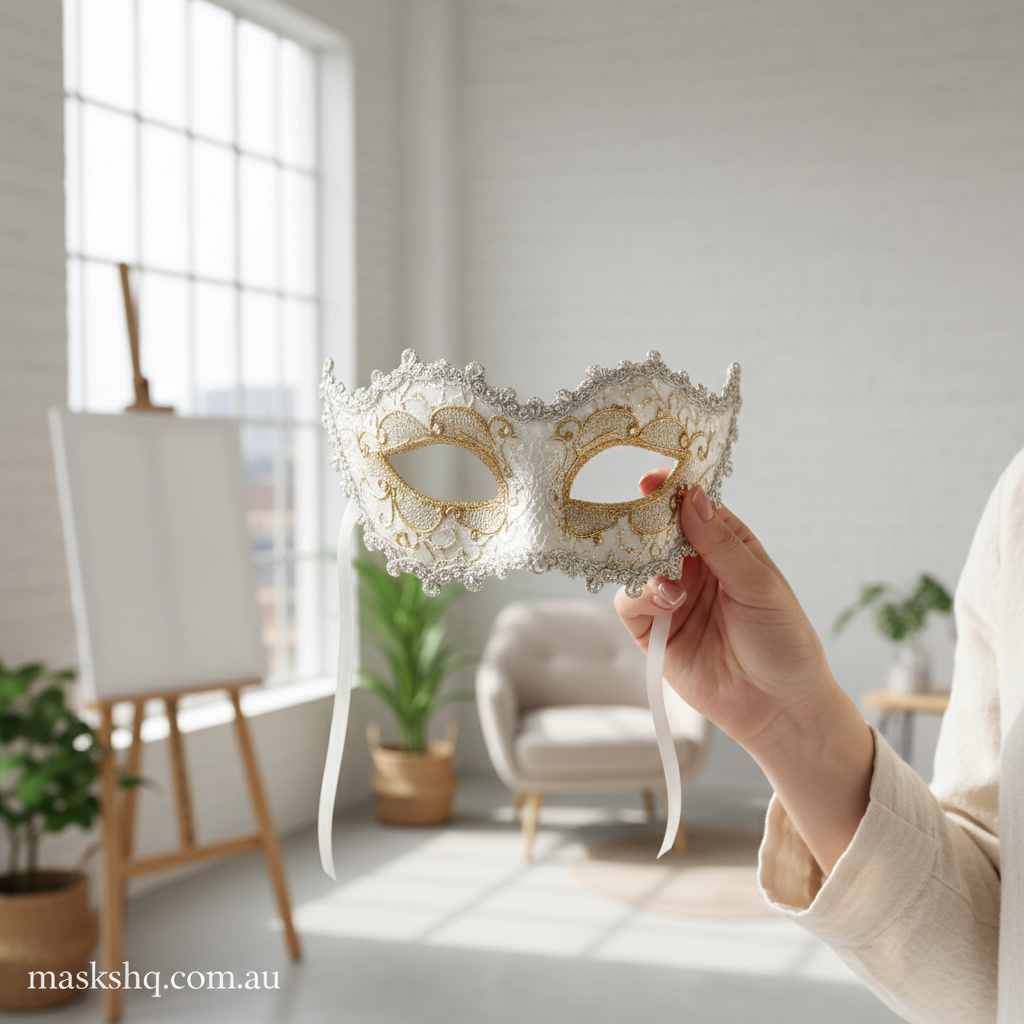
Colour does not alter the physical width of a mask, but it changes where people look. Dark masks tend to define the eye area strongly, while lighter masks can soften the overall effect. A beige or champagne mask works well with warm neutrals and softer wedding palettes; explore beige masks if you want a more understated finish.
Blue is a particularly useful middle ground. It has more personality than black but is easier to wear than bright red or gold. The collection of blue masks offers options for navy suits, satin dresses and cooler-toned formalwear. For a bolder, clean-lined choice, a black mask from the wider black mask range rarely looks out of place after dark.
Before You Buy
Buying online calls for a little more thought than grabbing a mask from a party table. Read the description for material, fastening and the coverage of the mask. If the design is described as compact, petite or narrow around the eyes, it may not be your best bet. That does not mean a broad face needs an oversized costume piece. It simply means the outer edges should reach far enough to look intentional.
Consider the length of the event. A 45-minute photo session and a six-hour masked ball are different jobs. For the longer one, choose a lighter mask and a forgiving tie. Test it at home before you leave: wear it for 15 minutes, read a few lines aloud, drink water and look down at your phone. Those ordinary movements reveal more than standing still in front of a mirror.
Also consider hair. A high bun, thick curls or an elaborate updo can change where the ties sit. Ribbon ties give more flexibility than fixed elastic when hair volume is part of the equation. If you are booking a professional stylist, take the mask to the trial appointment. Wedding planners commonly recommend coordinating accessories early because small details affect the finished look, as noted in advice from Brides.
Photographs are another reason to choose carefully. Masks with a very narrow centre can make a wide face appear broader by contrast. A wider upper line, an asymmetric flourish or open filigree creates a more even visual rhythm. For formal event inspiration, Vogue’s black-tie guidance is useful for judging how accessories should support rather than overwhelm formal clothing.
Finally, buy for the event you are actually attending. A Venetian-inspired ball, a charity gala and a themed birthday may all say “masquerade”, but their dress codes can be miles apart. For a more budget-conscious option, check the clearance selection. A lower price is fine; a mask that hurts after half an hour is not a bargain.
Tips from the Experts
Make fit checks in this order: nose bridge, eye clearance, temple reach, then fastening. People often begin by tightening the ribbon, but that can hide the real problem. If the bridge is sitting too high or the mask is too narrow, pulling it tighter only makes it less comfortable.
Keep the brow line in mind. A slightly wider, lifted brow shape is flattering on many wide faces because it draws attention up and out. Avoid a mask that drops sharply at the outer eye corners unless you want a deliberately severe effect. It can make the face look shorter and wider, particularly in flash photography.
If you are choosing between two sizes or silhouettes, choose the one with more outer reach and less central bulk. A wide face usually benefits from a mask that has breathing room at the sides, not a larger lump over the nose. The difference sounds subtle, but it shows in photos.
For events with dancing, add a practical test: secure the mask, shake your head gently and smile broadly. If it slips, adjust the tie placement before tightening it. Ties anchored a little higher toward the crown often hold better than ties pulled straight back at ear level. For ideas about mask history and classic Venetian forms, the Encyclopaedia Britannica overview of masks gives helpful cultural context.
Most importantly, trust the mirror and your comfort level. The right mask should make you feel sharper within the first minute. If you are constantly touching the edges, squinting through the eye holes or wondering whether it is sliding, it is the wrong mask for that night.
FAQ
What is the best masquerade mask for wide faces?
The best masquerade mask for a wide face has a broad eye line, gentle extension toward the temples and an adjustable fastening. Open filigree styles and softly shaped leather masks are usually safer choices than narrow, rigid masks with small eye openings.
How do I know which masquerade mask for wide faces is right for me?
Check that the mask sits evenly on your nose, clears your outer eye corners and reaches naturally toward the temples without pulling. A 15-minute trial at home will tell you far more than a quick mirror check, especially if you smile, talk and move around.
What should I look for when buying masquerade masks for wide faces?
Look for adjustable ribbons or straps, a lightweight material and a silhouette with width at the sides. Pay close attention to the eye openings and nose bridge, since these areas determine both comfort and how balanced the mask appears in photographs.
Are there budget-friendly masquerade masks for wide faces options?
Yes. Budget-friendly masks can still fit well if you prioritise shape and an adjustable tie over extra decoration. Check clearance options, then choose a design with a wider outline and enough room around the eyes rather than simply choosing the cheapest mask.