Masquerade Masks for Small and Narrow Faces: Finding the Right Fit
Why Fit Matters
Shopping for masquerade masks for small faces can be oddly frustrating. A mask may look beautifully detailed in a product photo, then arrive and seem to take over your whole face. Eye openings sit too far apart, the upper edge crowds your brows, and the corners reach halfway to your ears. It is not a confidence issue. It is simply proportion.
A well-fitted mask should frame your eyes instead of swallowing them. For a smaller or narrower face, that usually means choosing a shorter overall width, a lower-profile nose bridge and eye openings that are not excessively wide. The right fit also matters after the first five minutes. A gala, wedding reception or costume party often involves several hours of talking, laughing, eating and posing for photos. A gorgeous mask that pinches at the temples will become annoying remarkably quickly.
Masquerade traditions have always balanced decoration with wearability. The Encyclopaedia Britannica overview of masquerade notes the long social history behind masked celebrations, but the practical modern question is more modest: can you see clearly, breathe easily and keep your mask in place? If the answer is yes, you will look more natural in every photo.
At the masquerade mask collection, focus first on silhouette rather than colour. You can always choose black, blue, crystal or beige after you have found a shape that works with your facial width. A narrow face benefits from definition, not extra bulk.
Choosing the Right Mask
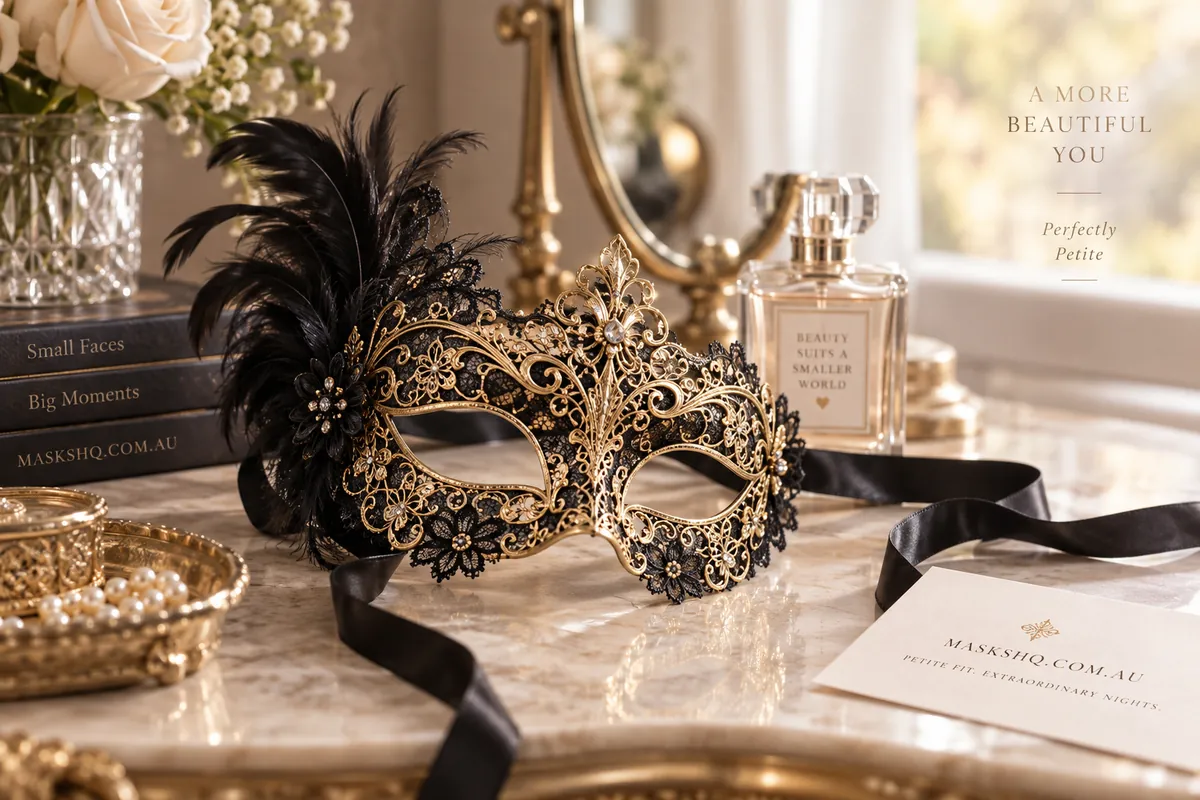
Begin with three checks: width, eye placement and weight. Width is the obvious one. Hold a mask in front of your face and look at where its outer points finish. Ideally, they should stop around your outer cheekbone or just beyond it. Dramatic wings can work, but only if the central section remains narrow. A very broad mask with huge side flourishes tends to make a petite face disappear behind costume jewellery.
Next, assess the eye openings. They should follow your eye line, with enough room to blink comfortably and no hard edge pressing into the inner corner of your eye. If the openings are too widely spaced, the mask can look as though it is sitting low and broad even when the ribbon is tied tightly. For small faces, closer-set, almond-shaped openings are usually the safer pick.
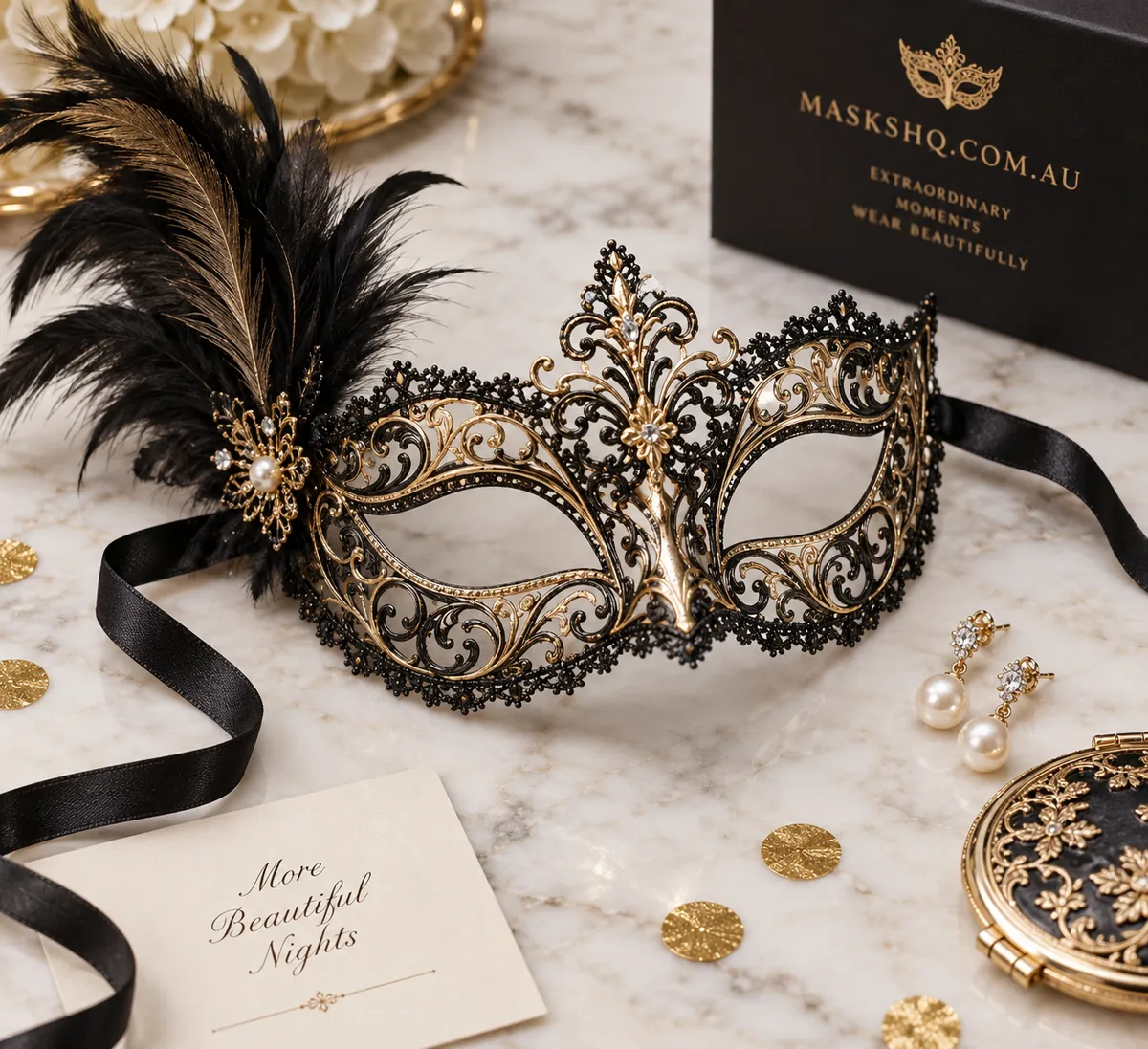
Weight is the quiet deal-breaker. Heavy metal, dense beads and oversized crystal arrangements can pull down on a narrow nose bridge. Fine filigree is often a better route because it gives you detail without a solid, mask-like slab across the face. Browse filigree metal masks for openwork styles that feel visually lighter, or consider leather masks if you prefer a softer material that can sit close to the contours of your face.
Don’t assume a “women’s” label automatically means small. Some women’s designs are made for a broad, theatrical look, while a compact men’s half-mask may suit a narrow face beautifully. Ignore the label and assess the actual shape. A half mask is usually easier to fit than a full-face design, particularly if you have a short forehead or high cheekbones.
Choose a shape that follows your features
Oval and softly curved masks are forgiving on most smaller faces because they echo natural facial lines. A neat butterfly or cat-eye shape can also work well, provided the tips are restrained. The goal is a mask that adds interest around the eyes, not one that creates a horizontal line wider than your face.
If your face is narrow and long, avoid masks with a very tall centre peak unless the lower edge is shallow. If your face is petite and round, skip thick, rounded designs that cover most of the cheeks. A slim filigree outline or a delicate eye mask gives structure while leaving enough face visible.
Styles for Smaller Faces
There is no single “small face mask”, but several styles consistently make fitting easier. The first is the classic narrow eye mask. It covers the eye area, usually has a short nose contour, and keeps the cheeks exposed. This style is especially useful for formal events because it looks polished with eveningwear without competing with a hairstyle, earrings or a detailed neckline.
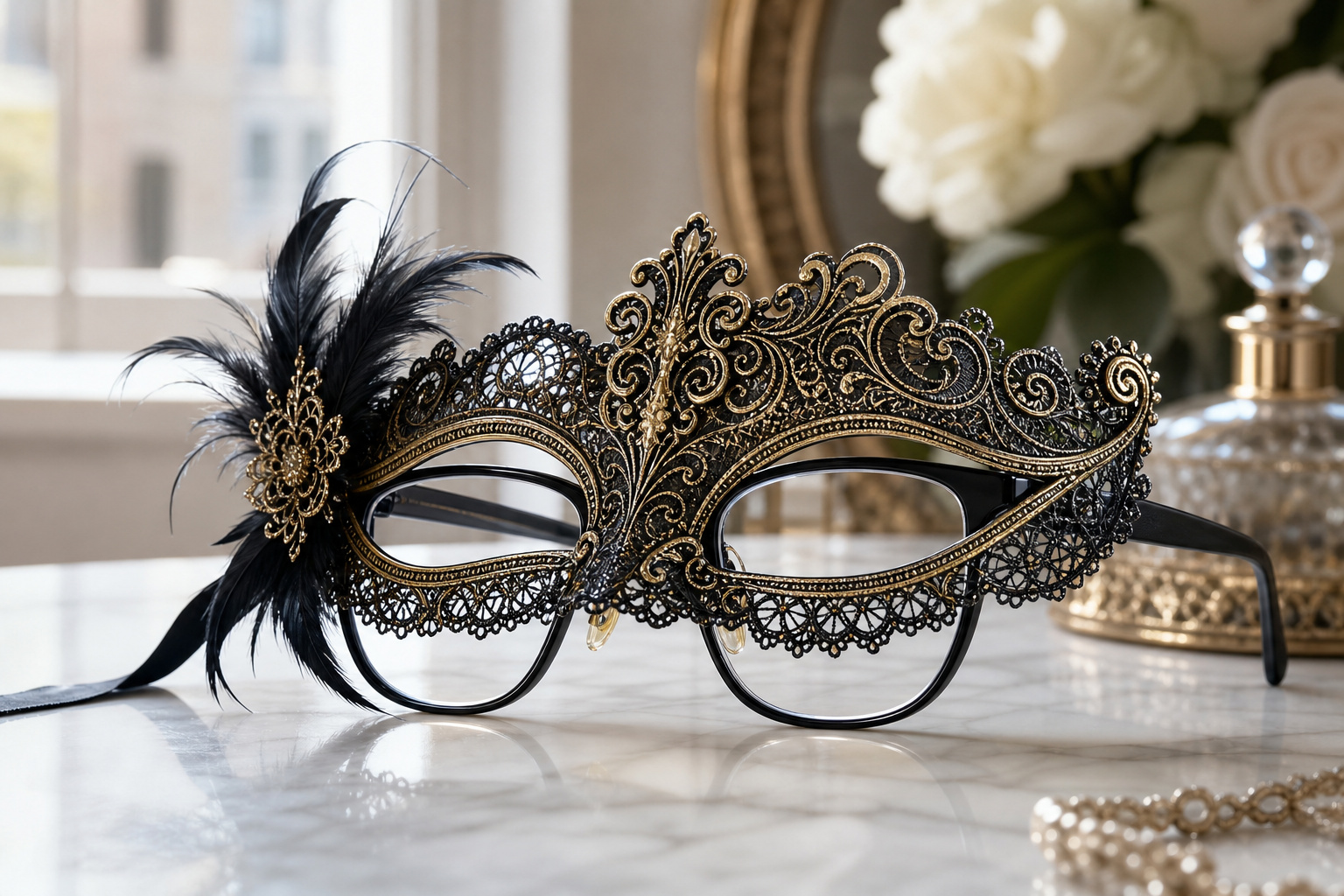
Fine metal filigree is another strong option. Its cut-out pattern gives a decorative Venetian feel while keeping the mask airy. For a dark formal look, black filigree masks can create contrast without adding visual weight. Black also photographs reliably under ballroom lighting, though matte detailing is often kinder than a fully glossy finish if flash photography is expected.
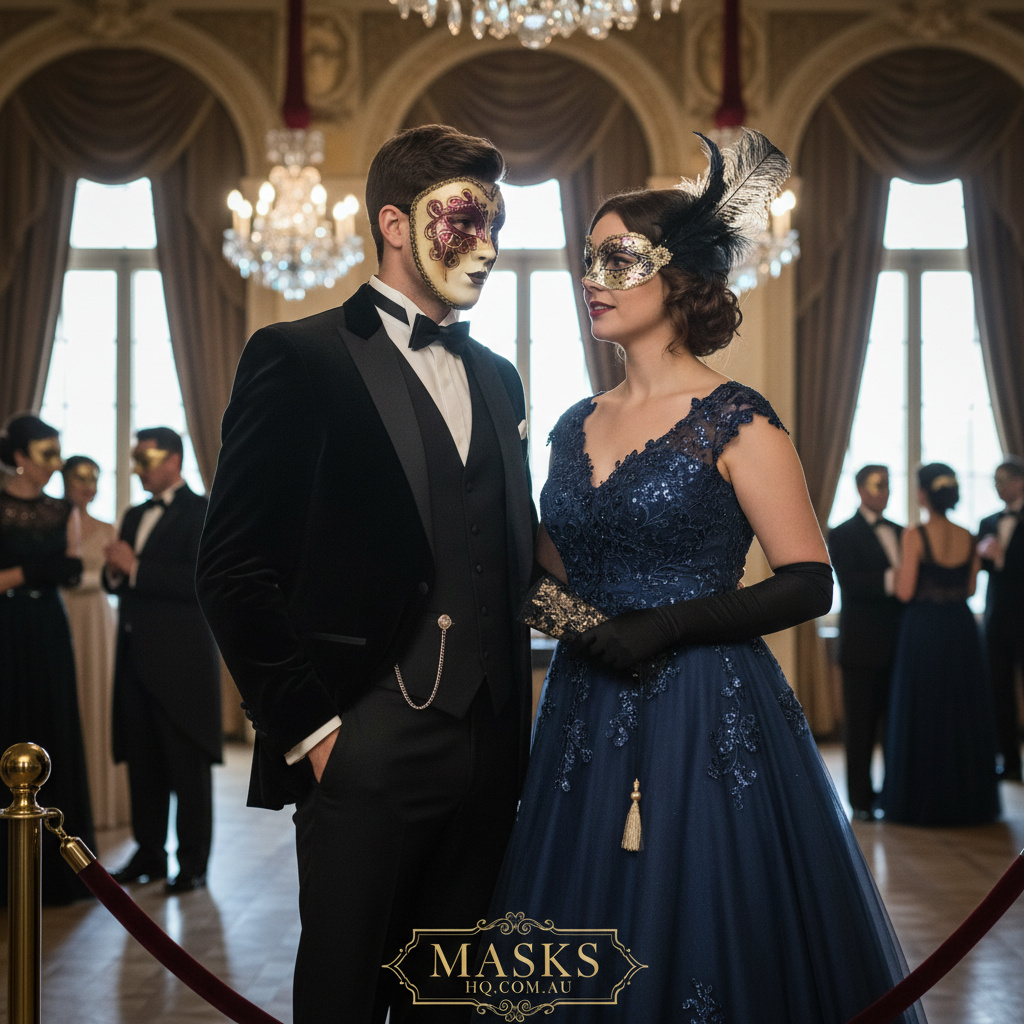
Leather masks suit people who want a close, understated fit. They are often less fussy than a heavily embellished design and can feel more stable for dancing. A selection of black leather masks is worth considering for a black-tie masquerade, especially with a sharp suit, jumpsuit or simple gown. The mask should be the accent, not a second outfit sitting on top of the first.
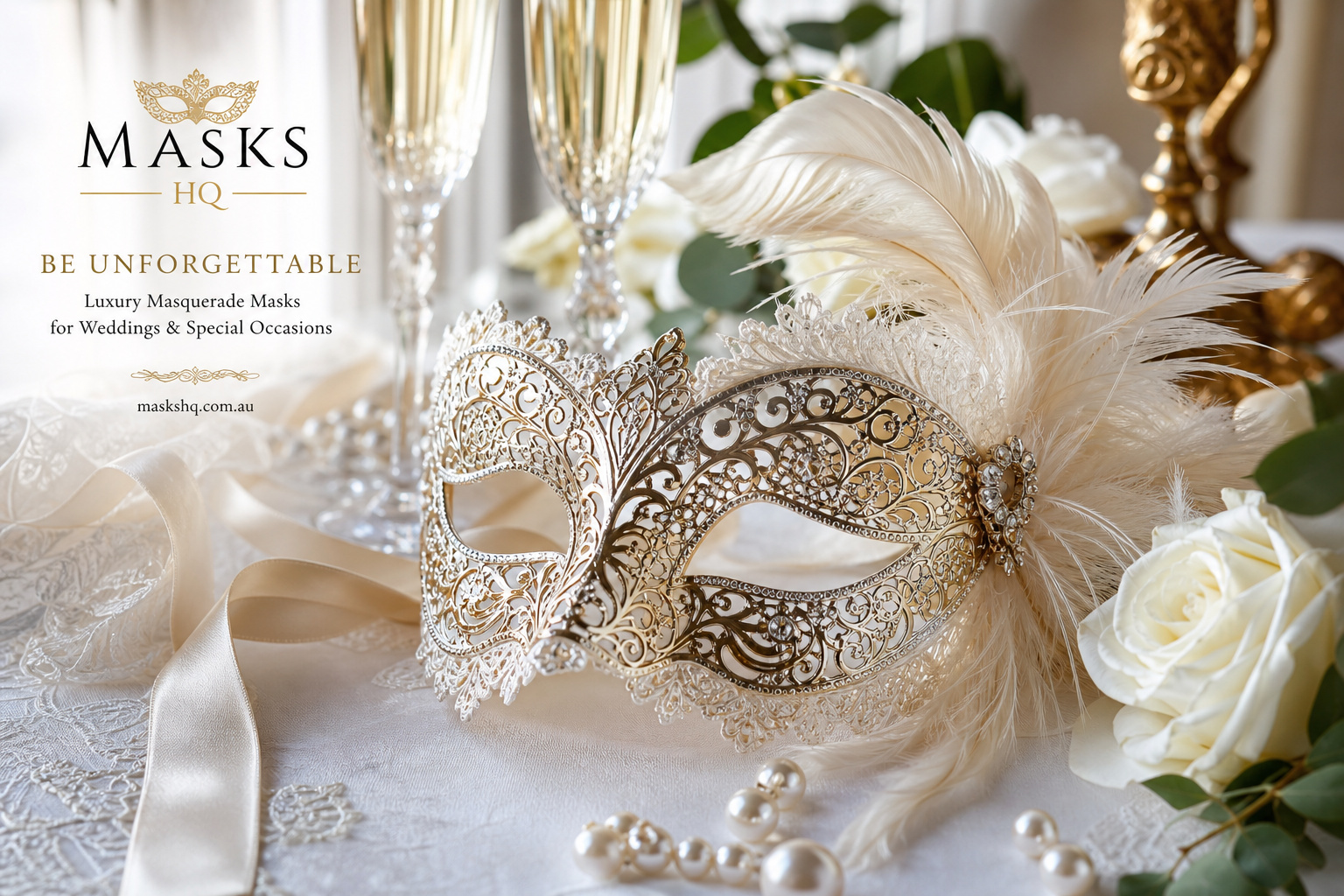
Crystal masks can work on small faces too, but keep the embellishment concentrated near the eyes. A clear or silver-toned design reads as light and reflective rather than bulky. The clear filigree crystal mask range is useful for someone wearing champagne, ivory, silver or pale metallic clothing.
Colour matters more than people expect. A beige or nude-toned mask blends gently into lighter complexions and can make the overall shape feel less dominant. For that softer approach, see beige masquerade masks. If you are wearing navy, cobalt or sapphire, a blue accent can look intentional without being as severe as black, and blue masks offer a practical place to compare tones.
Before You Buy
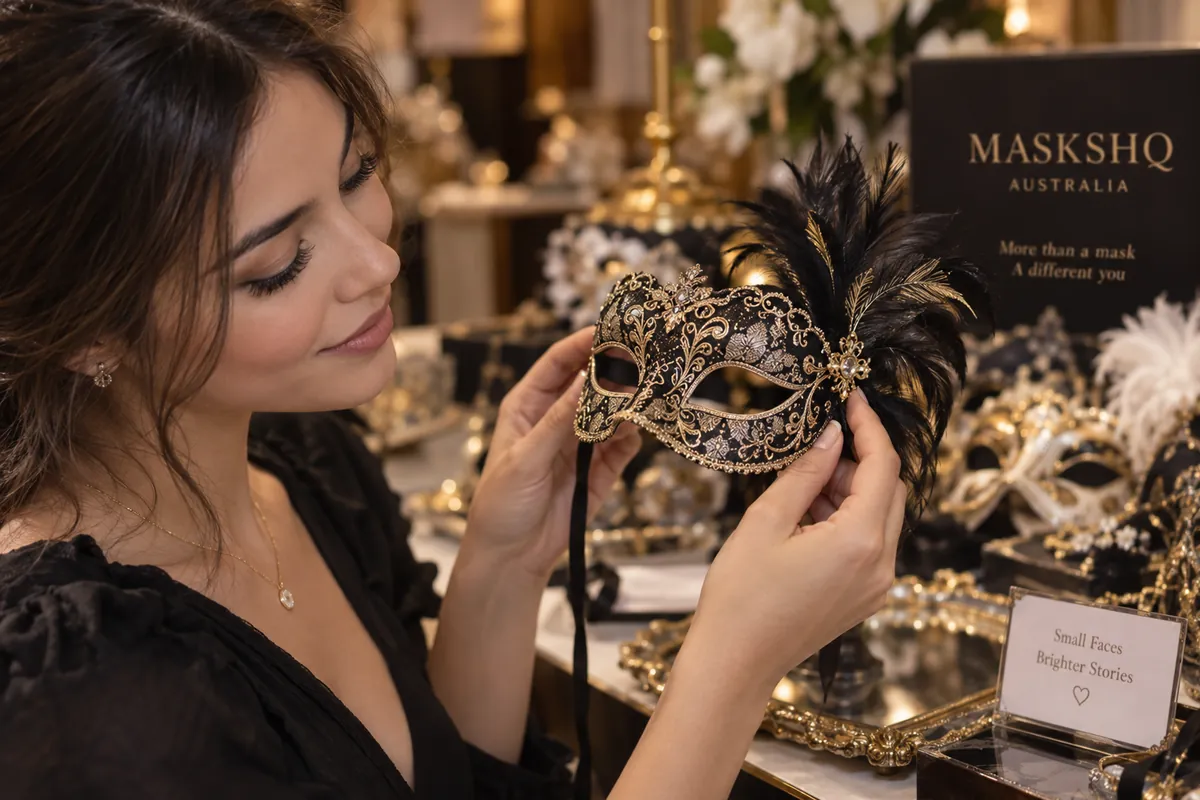
Measure the part that matters. Stand in front of a mirror and measure across from one outer eye corner to the other. You do not need surgical precision, but this number helps you judge whether a mask is likely to feel oversized. Then measure from the bridge of your nose to the point where you would like the lower edge to finish. On a small face, even an extra 15 millimetres of cheek coverage can change the look completely.
Read the mask description for construction details, especially the fastening. Ribbon ties are flexible and can be adjusted to your head shape. Elastic is fast and handy, but check that it is neither so loose that the mask slips nor so firm that it presses the eye openings inward. A hand-held mask can avoid fit concerns altogether, although it is less practical if you want both hands free for a drink, canapés or a dance.
Think about your hairstyle before ordering. A high bun, slicked-back hair or a close crop gives ribbons a clean place to sit. Loose curls can hide the ties nicely, though hair may catch in elaborate metalwork. If you are planning an updo, take the mask to your hair trial. Wedding and event stylists regularly use accessories to balance a look, and guides from Brides show how much hairstyle changes the way face-framing accessories read in photographs.
Finally, set a sensible budget. An affordable mask can look excellent if the proportions are right and the finishing is tidy. If you are buying for one event, it makes sense to compare clearance masks for a design that suits your outfit and face shape. Save the intricate, statement piece for an occasion where you know you will wear it again.
Test it before the event
Once your mask arrives, wear it at home for 20 minutes. Look down at your phone, turn your head, smile broadly, and read something out loud. If the nose bridge shifts, the ribbon needs adjustment or the design is not the right shape. This simple test is far better than discovering a problem in the back of a rideshare on the way to the venue.
Expert Fitting Tips
The most flattering fit usually sits a touch higher than people expect. Position the mask so the top edge follows your brow line without covering it. Then secure the tie gently and check that the lower edge clears the tops of your cheeks. If you pull it down to cover more face, the eye openings often become misaligned and the mask starts to look too large.
Use your make-up strategically, but don’t try to paint your way out of poor fit. Defined brows and lashes help your eyes remain visible through delicate filigree. A little highlighter on the upper cheekbones can also work beautifully with metallic masks. For inspiration on classic Venetian costume details, the Metropolitan Museum of Art collection is a useful reminder that ornament has always been about focal points, not covering every available surface.
For photos, turn your face slightly rather than staring straight into the camera every time. A three-quarter angle lets the mask’s shape show while preserving your features. If one side of the mask has a crystal spray or a raised flourish, angle that side towards the camera. Little adjustments like this make a greater difference than buying the biggest, flashiest option in the room.
One final rule: if you are repeatedly tightening the ribbon, stop. A good mask stays put because it suits the curve and width of your face, not because it has been tied like a parcel. Comfort looks relaxed, and relaxed nearly always looks better.
FAQ
What is the best masquerade mask for small faces?
A narrow half mask with well-positioned eye openings is usually the best choice for a small face. Lightweight filigree or close-fitting leather designs tend to give detail without extending too far across the cheeks and temples.
How do I know which masquerade mask is right for me?
Compare the mask width with the distance across your outer eye corners, then check where the eye openings sit against your own eyes. Choose a design that follows your brow and cheekbone line, and test the fastening at home before the event.
What should I look for when buying a small-face mask?
Look for a compact silhouette, adjustable ties, comfortable eye openings and a light construction. Avoid unusually broad wings, thick cheek coverage and heavy decoration concentrated at the outer edges of the mask.
Are there budget-friendly masks for small faces?
Yes. A simple, well-proportioned mask often looks better than an inexpensive design overloaded with decoration. Check clearance options, prioritise fit and choose a versatile colour you can wear to more than one event.