How Much Should You Pay for a Masquerade Mask? A Buyer’s Price Guide
What Drives Masquerade Mask Prices
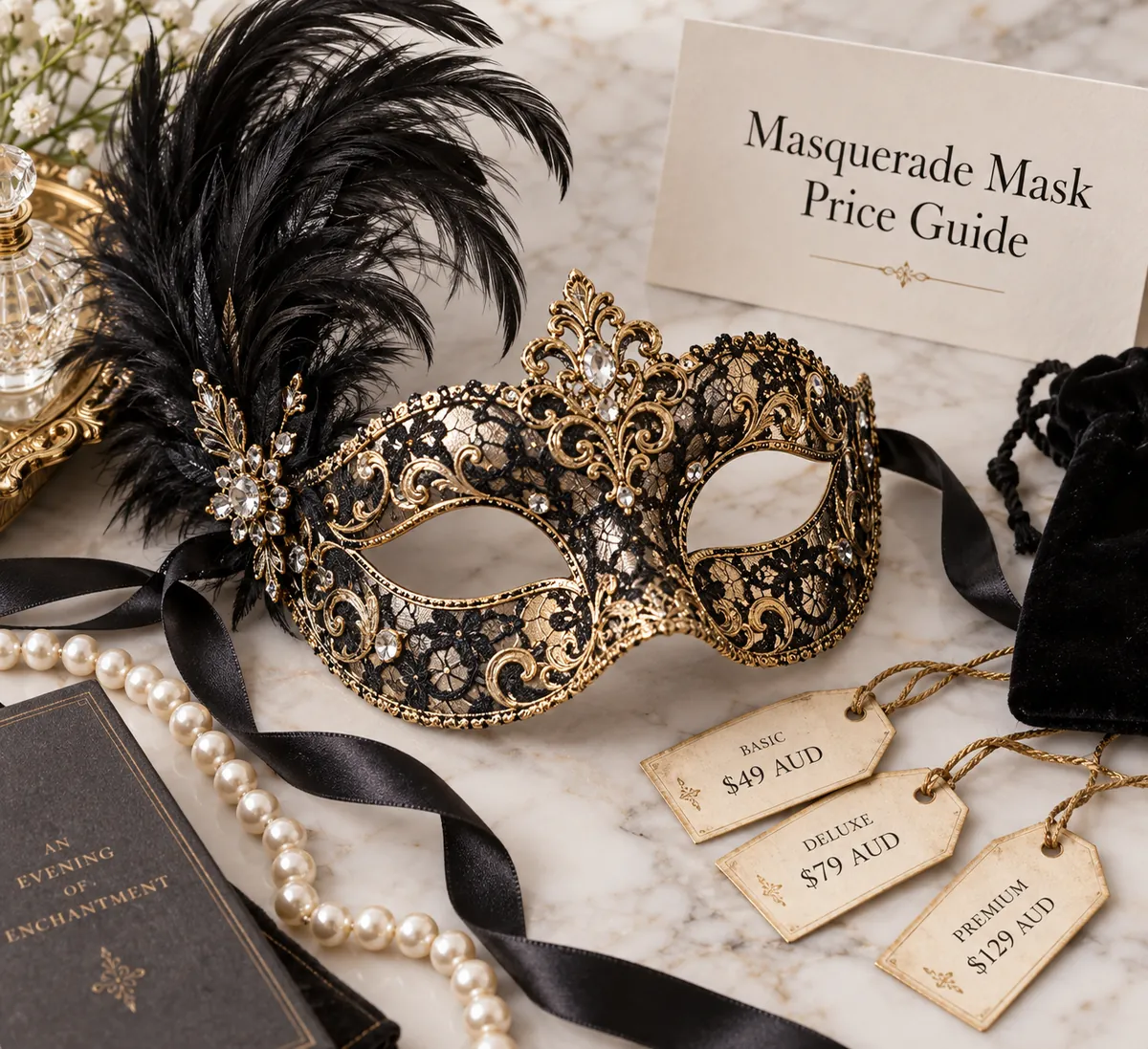
Walk into any costume shop before Melbourne Cup week or a masquerade-themed wedding and you’ll see the same mask shape sold at three wildly different prices. A plain moulded plastic domino might be $12. A leather half-mask with hand-tooled edges could be $65. A full filigree metal piece dripping in crystal can run past $300. It’s not marketing fluff, it’s genuinely three different products wearing the same silhouette.
The biggest cost driver is material. Injection-moulded plastic is cheap to produce at scale and it shows, thin walls, a slightly shiny finish, elastic that perishes after a few wears. Vegetable-tanned leather costs more per mask because each piece is cut, moulded wet over a form, and dried by hand, which takes days rather than minutes. Filigree metal masks sit at the top because the lattice work is either laser-cut and then hand-filed smooth, or in rarer cases still hand-pierced, and then finished with paint, antiquing, or crystal setting.
Labour is the second driver and it’s easy to underestimate. A $20 mask took someone about ninety seconds of machine time. A $150 mask might represent two to three hours of a person’s actual working day: cutting, shaping, painting layers, letting each layer cure, gluing feathers or stones by hand, then packing it so it survives shipping without crushing. When you’re comparing two masks that look similar in a product photo, ask what happened in between the raw material and the finished piece.
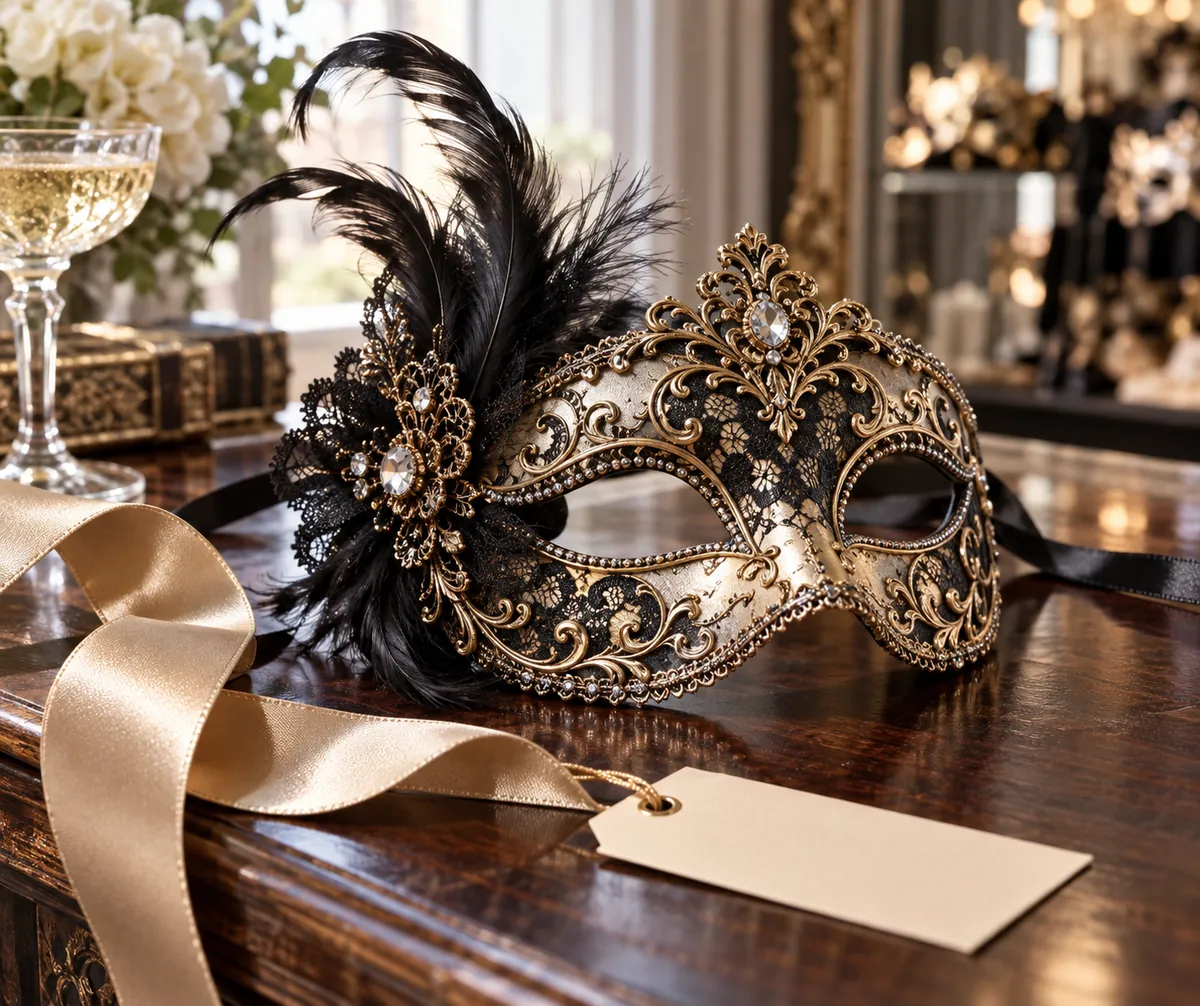
Then there’s finishing detail, which is where a lot of buyers get caught out. Eye holes that are hand-bevelled so they don’t dig into your cheekbones, elastic or ribbon that’s properly anchored rather than glued, a lining that won’t leave paint transfer on your skin after two hours of dancing. None of that shows up clearly in a thumbnail photo, but it’s exactly what separates a mask you wear once and bin from one that comes out every year for the next decade.
How to Pick Your Price Bracket
Before you start browsing, work out which of three brackets actually fits your event, because buying above or below it is the most common mistake we see.
Under $30: one-night, low-stakes wear
This bracket suits hens’ nights, themed pub crawls, or a kids’ costume party where the mask needs to survive one evening and maybe a photo or two. Expect basic plastic or lightweight card, simple elastic, and minimal hand-finishing. Don’t expect it to survive being sat on in a handbag.
$40 to $120: the sweet spot for most people
This is where genuine leather half-masks and mid-range filigree pieces live, and it’s what we’d recommend for a wedding, a corporate gala, or an annual masquerade ball you’ll actually attend more than once. You’re paying for real material and proper construction without the premium of heavy crystal work or rare finishes. Browse the full masquerade mask range to see how much variety sits in this bracket alone.
$150 and up: statement pieces and collectors
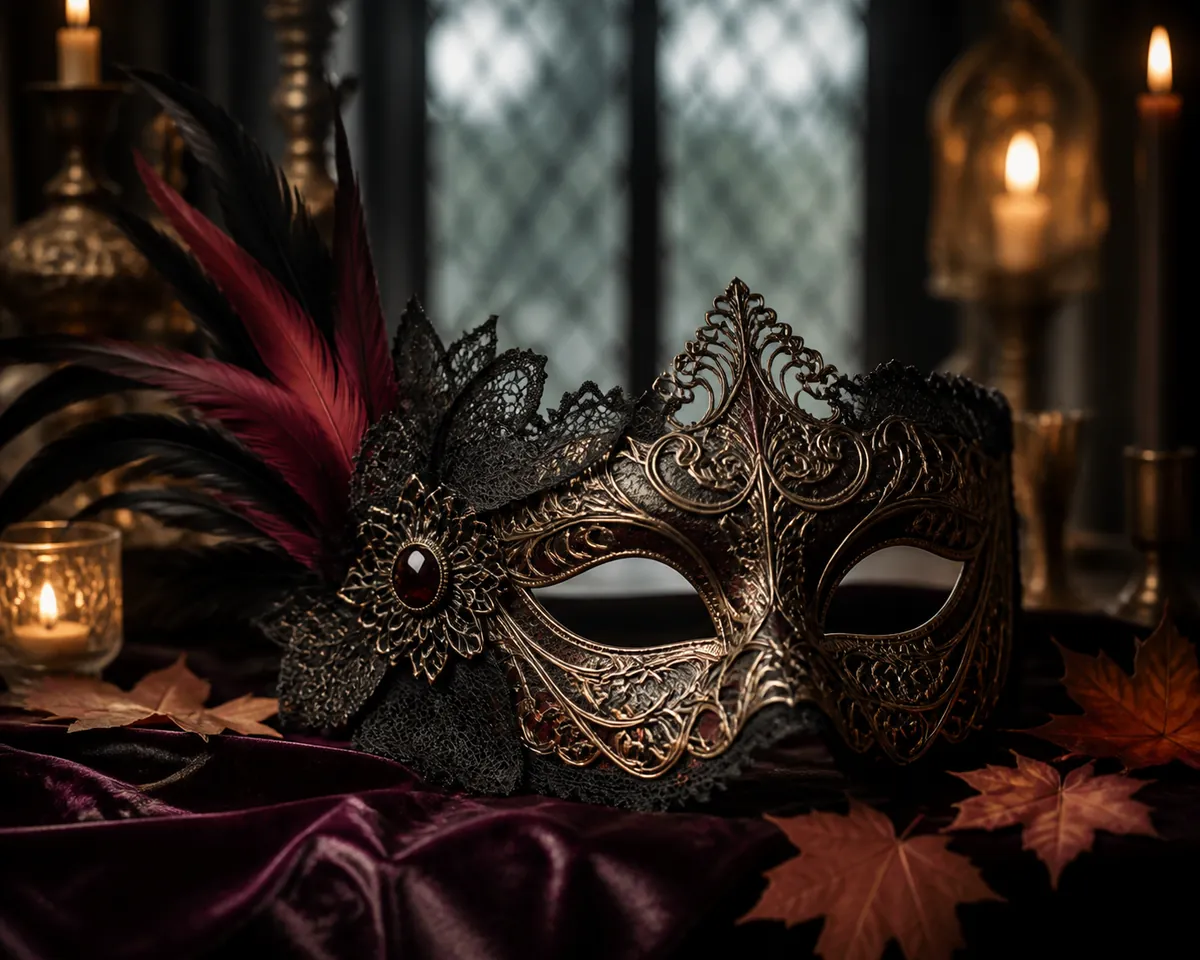
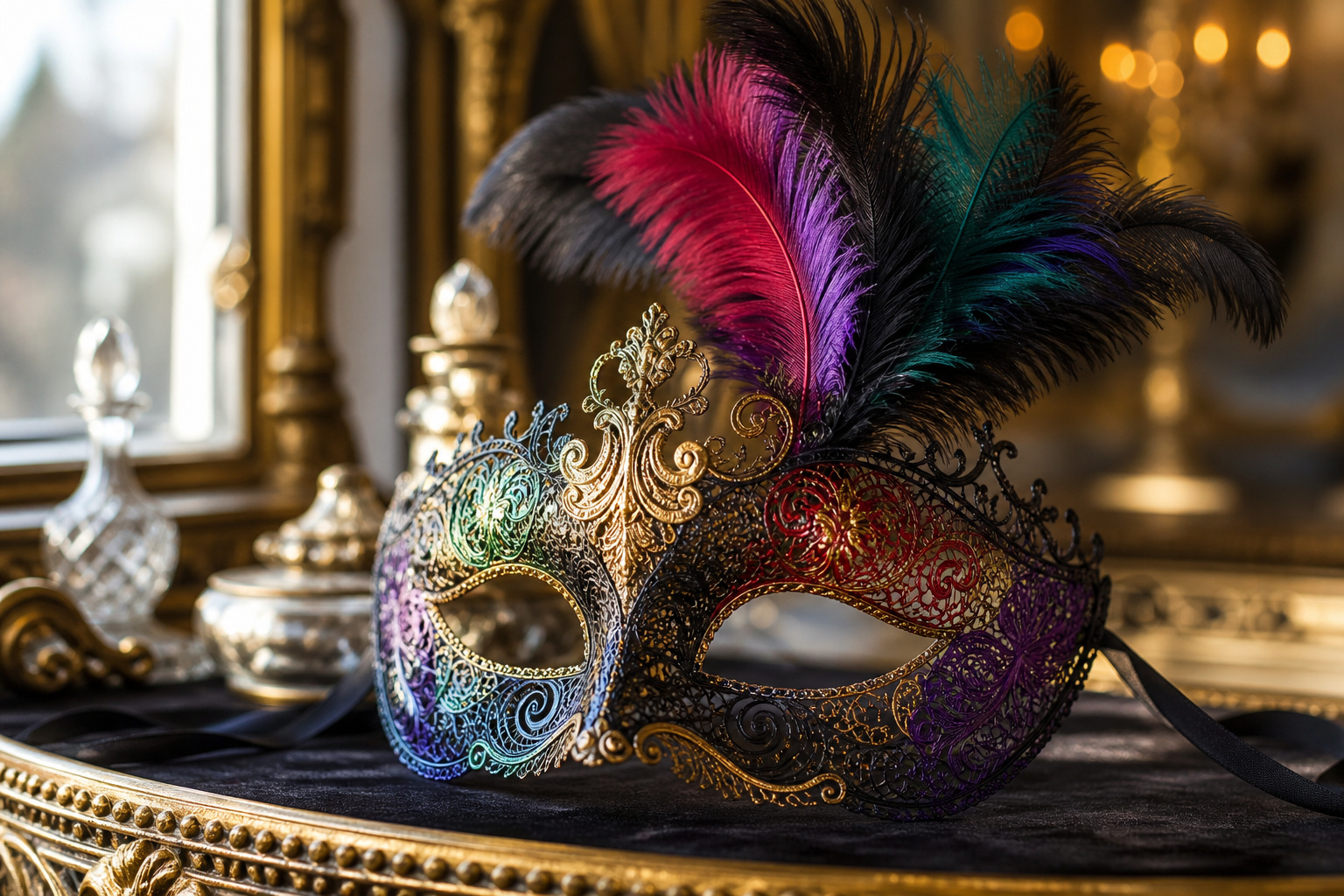
Here you’re buying for impact, a bridal party centrepiece, a themed photography shoot, or a genuine collector’s item you’ll display between events. Heavy Swarovski-set filigree, oversized Venetian-style pieces, and fully hand-painted leather sit in this range. It’s a fair price if the workmanship holds up under close inspection, which is worth checking before you commit.
Top Styles and Their Price Tags
Four styles account for most masquerade mask sales in Australia, and each has its own typical price ladder.
Filigree metal masks
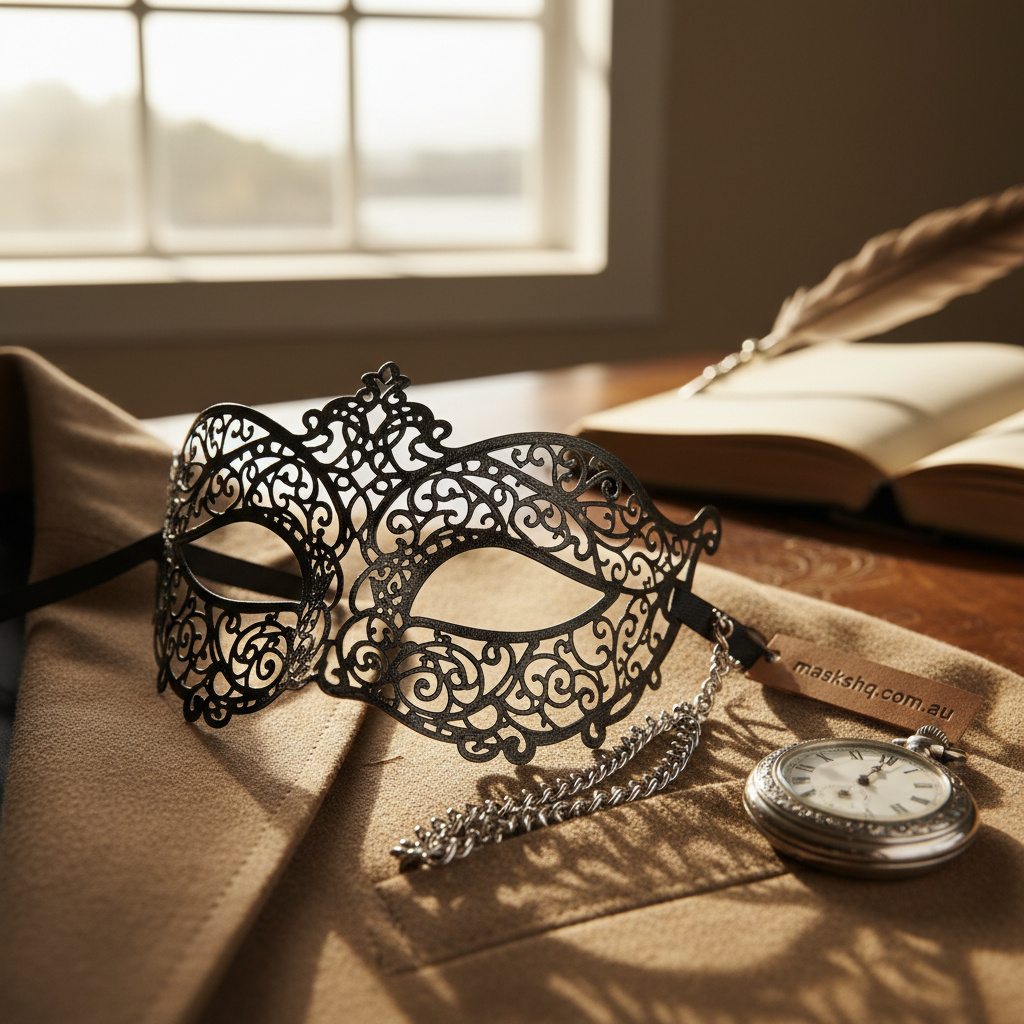
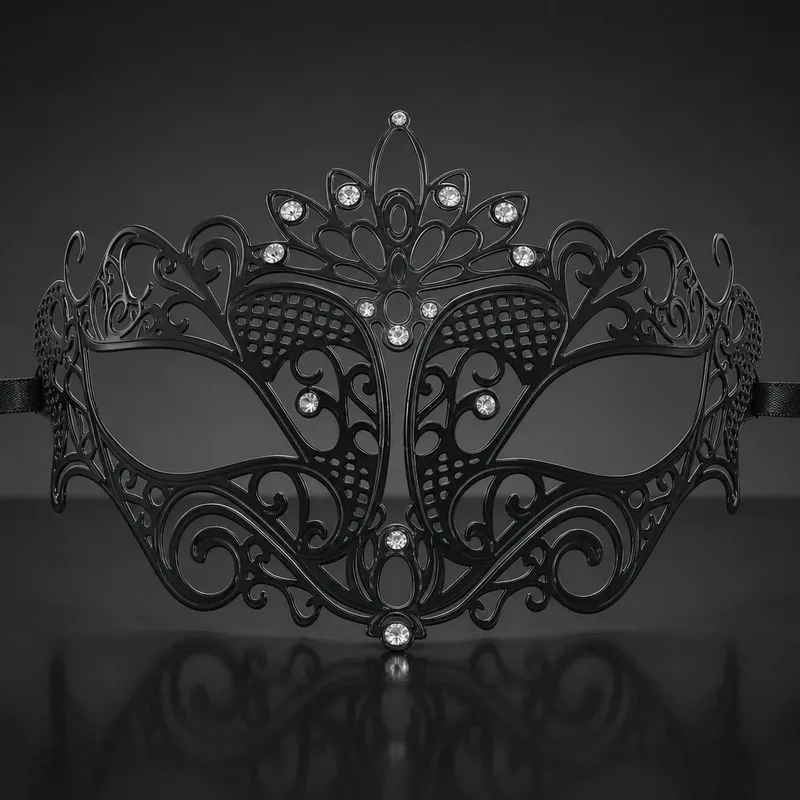
These are the lattice-cut pieces that read as “Venetian” at a glance. Simple painted filigree starts around $35 to $50. Add crystal detailing and the price climbs fast, expect $90 to $200 for a piece with proper stone setting rather than glued-on rhinestones. The filigree metal masks collection is the easiest way to compare finishes side by side, including the black filigree options that tend to suit formal black-tie events, and the blue crystal filigree styles for a more colour-forward look.
Leather masks
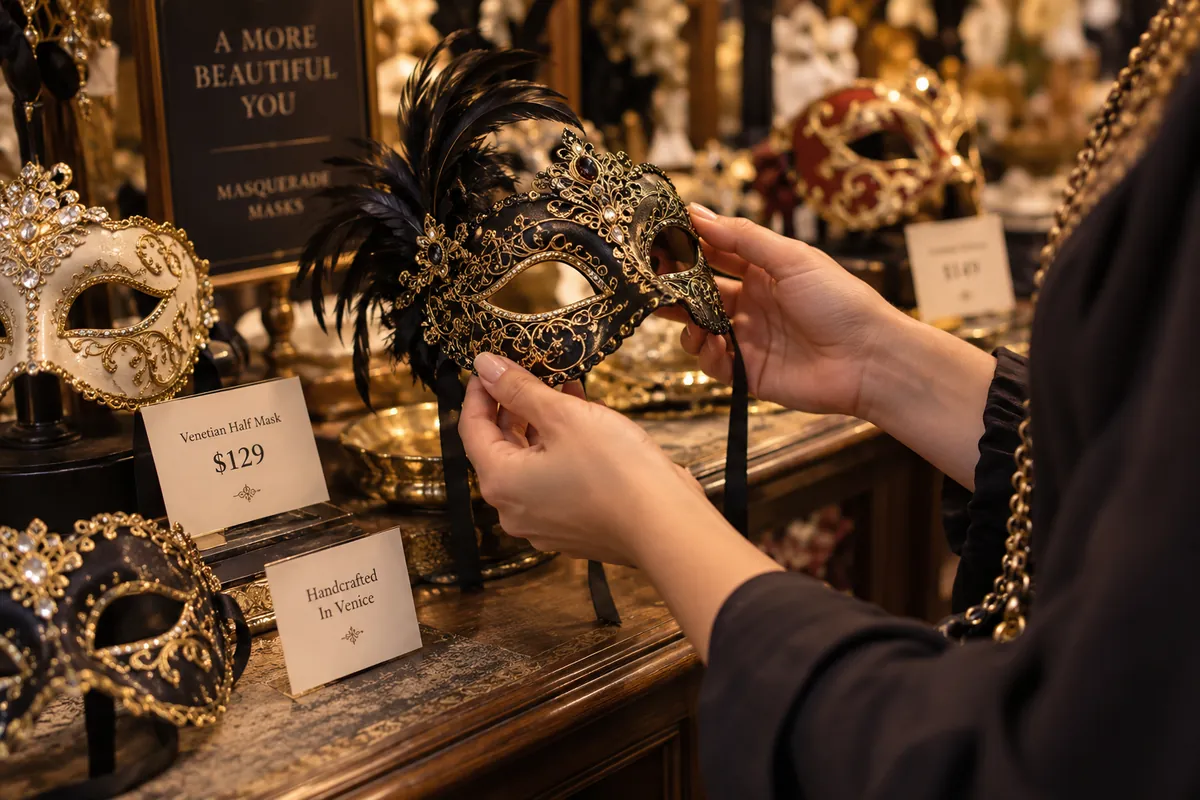
Genuine leather half-masks sit in the $50 to $150 range depending on tooling complexity and whether they’re hand-dyed or hand-painted. They’re the most durable option for repeat wear because leather doesn’t crack or yellow the way cheap plastic does over a couple of years in storage. The leather masks range covers both plain and heavily tooled pieces, with the black leather styles being the most requested for menswear and the blue leather masks a good option if you’re matching a specific colour palette.
Colour-matched masks
If you’re building an outfit around a specific colour rather than a specific style, expect to pay a small premium for exact colour matching, roughly 10 to 15% above the equivalent plain black piece, because dye runs have to be done in smaller batches. The black masks and blue masks categories are the two most popular starting points, and beige masks have become a strong third choice for anyone matching a neutral formalwear palette.
Clear crystal and clearance pieces
Clear filigree with crystal accents is a newer trend and tends to sit mid-range, roughly $60 to $130, since the acrylic or resin base costs less than metal but the crystal setting labour is the same. Have a look at the clear filigree crystal masks if you want sparkle without a heavy metal feel. And if budget is the main constraint, the clearance section is worth checking first, it’s genuine leftover stock from past seasons rather than seconds, so the quality is identical to full-price, you’re just picking from what’s left.
What to Check Before You Buy
Price alone won’t tell you if a mask is worth it, so check these four things regardless of budget.
How it sits on your face. A mask that’s technically beautiful but presses on your temples or slides down your nose after twenty minutes is a bad buy at any price. Look for adjustable ribbon ties over fixed elastic if you can, they let you fine-tune the fit on the night.
What the inside looks like, not just the outside. Flip the mask over before you buy. Rough edges, exposed glue, or unfinished paint on the inner surface usually means the same corners were cut elsewhere, even if the front looks polished in photos.
Whether it’s built for reuse or a single event. If you’ll only wear it once, don’t overspend on hand-finished leather. If it’s going into a wardrobe for annual events, spending more up front on a mask that won’t crack, fade, or shed crystals is genuinely cheaper over five years than replacing a $20 mask five times.
Delivery timing. Handmade pieces, particularly heavier filigree and custom colour orders, take longer to produce than stock plastic masks. If your event is close, check stock availability before you fall in love with a made-to-order style.
Tips From the Experts
A few things we’ve learned from years of fitting masks for weddings, balls, and corporate events that don’t get said enough.
Buy the mask before the outfit if colour matching matters to you, not after. It’s far easier to find a dress or tie to match a mask you love than to find the one mask in the exact right shade of a dress that’s already been altered.
Don’t judge crystal quality from a product photo alone. Cheap glued rhinestones catch the light in a flat, single-tone way. Properly set crystals throw multiple colours as they move, which is exactly what you want under event lighting but is genuinely hard to tell from a still image. If you’re spending over $100, it’s worth zooming into the product photos as far as the site allows.
Store leather and metal masks flat, not hanging, and away from direct sun. Filigree edges bend out of shape surprisingly easily in a bag, and leather can warp if it’s hung by the elastic for months between events. A shoebox with a bit of tissue paper does the job for years.
If you’re outfitting a wedding party or a group booking, ask about buying multiples in one order. Group orders on matching or coordinating pieces are one of the more common reasons people reach out through the Help Centre rather than checking out individually, since colour-matching six or eight masks at once is easier to manage as a single order.
The tradition itself is worth knowing a bit about too, since it shapes why certain styles cost what they do. The elaborate filigree and painted styles trace back to Venetian carnival traditions, where masks let nobility and commoners mix anonymously at events, a history covered well by Wikipedia’s overview of Venetian masks. The broader masquerade ball tradition, and how it spread from Venice into European and later Australian event culture, is summarised on Wikipedia’s masquerade ball entry. That history is part of why hand-finished pieces command a premium, you’re paying for a craft technique that’s centuries old, not just a costume prop. For more on the annual Venice event that popularised the style, Wikipedia’s Carnival of Venice page is a solid starting point, and Britannica’s entry on masks as an art form puts the craftsmanship side of it in a broader historical context.
If you’re still browsing styles, our homepage groups everything by category, and the blog has more specific guides, including styling advice for particular colours and event types, if you want to go deeper than pricing alone.
Frequently Asked Questions
What is the best masquerade mask price guide?
The best guide isn’t a single number, it’s matching the bracket to the event. Under $30 suits a one-night costume, $40 to $120 covers genuine leather and mid-range filigree for weddings and balls, and $150-plus buys statement crystal pieces meant to be worn for years. Work out how often you’ll actually wear it before you set a budget.
How do I know which masquerade mask price guide is right for me?
Start with how many times you expect to wear the mask and what it needs to match. A single-event costume doesn’t need hand-tooled leather, but a mask you’ll bring out every year for an annual ball earns back the extra cost in durability. If colour matching an outfit matters, budget slightly higher for a colour-matched piece rather than settling for the nearest stock black option.
What should I look for when buying masquerade mask price guide?
Check the inside finish, not just the front, since rough glue or unfinished edges usually signal corners were cut elsewhere too. Look for adjustable ribbon ties for a better fit, and if you’re spending over $100 on crystal detail, zoom into product photos to check the stones are properly set rather than glued flat rhinestones.
Are there budget-friendly masquerade mask price guide options?
Yes, genuine leather and filigree pieces regularly turn up in clearance ranges at a discount, and it’s leftover seasonal stock rather than seconds, so the quality matches full-price items. Checking clearance before committing to a full-price purchase is worth doing even if you’re not on a tight budget, since the selection changes regularly.