How to Clean a Masquerade Mask Without Damaging Feathers, Lace or Paint
Why Mask Care Matters
Knowing how to clean a masquerade mask starts with accepting one slightly inconvenient truth: most masks should not be “washed”. A masquerade mask is often a mix of materials with very different limits. The base may be plastic, papier-mâché, metal or leather; then add paint, elastic, lace trim, feathers, crystals and adhesive. Water that is harmless on a plain plastic mask may lift painted detail, stain fabric, loosen glue or make feathers clump together.
Cleaning matters because masks sit against warm skin, foundation, sunscreen and hair product. Even one evening can leave makeup around the nose bridge and oil along the edge. Leaving that residue in place makes it harder to remove later, particularly on pale finishes. Good care also keeps the mask presentable for the next ball, wedding, themed party or costume event. It is less glamorous than choosing the mask, admittedly, but it is how a favourite piece survives more than one outing.
A useful rule is simple: clean the surface, not the soul of the mask. Remove loose dust and fresh makeup carefully, but do not try to make every tiny mark disappear. A hand-finished paint texture or slight variation in lace is part of the design, not dirt. If you are browsing pieces with intricate detail, the full masquerade mask range shows why a one-method-fits-all approach is a poor bet.
Before touching anything, inspect the mask in bright natural light. Look for lifting paint, loose gems, bent metalwork, split elastic and feathers that are already shedding. Photograph any existing damage if the mask is borrowed or particularly special. That takes 20 seconds and removes the “was that mark already there?” discussion later.

Choose a Cleaning Method
Start by identifying the most delicate material on the mask. That material sets the cleaning limit. If a mask has a wipeable plastic face but a feather spray over one eye, treat the whole piece as a feathered mask. It is much easier to clean a little less thoroughly than to reattach a feather that has curled into a sad little comma.
For painted plastic or papier-mâché
Use a clean, dry microfibre cloth first. Fold it into a small pad and lightly wipe broad, smooth areas. For makeup near the inside edge, use a cotton bud that is only just damp, then immediately blot with a dry cloth. Do not soak the bud. Avoid rubbing painted lines, glitter, metallic foil or areas where paint appears cracked. Alcohol wipes, hand sanitiser, nail-polish remover and makeup remover are all too aggressive for this job.
For lace and fabric trims
Hold the mask securely and use a soft, dry artist’s brush to lift dust from the lace. Work from the attachment point outward so you do not pull the trim free. A cool hairdryer on its lowest setting can shift loose dust, but keep it at least 30 centimetres away and do not use heat. If there is a stain on lace, spot-testing on an unseen corner is essential. Often, professional textile cleaning or leaving the mark alone is the safer call.
For feathers
Never wet-clean feathers attached to a mask. Dust them with a very soft brush, moving in the direction the feather naturally lies. If they have been flattened in storage, let the mask sit in a dry room for a few hours and gently separate barbs with clean fingers. Steam is tempting but risky: it can affect glue, colour and neighbouring trims.
For leather and metal
Leather needs a dry, soft cloth and a light touch. Water can leave rings or change the finish, while ordinary leather cleaner may darken coloured or painted masks. For delicate metal designs, use a dry soft brush around the openings, then wipe only solid metal areas with a dry microfibre cloth. Browse leather masquerade masks and filigree metal masks separately, because their care needs are genuinely different.
Materials and Styles
Mask style affects both cleaning and storage. A smooth black half-mask tends to be forgiving, while a cream lace piece can show every trace of foundation. A crystal mask is visually dramatic but often relies on small glued components. Be gentle around every join, especially if the mask has been stored in a hot car or near a sunny window, where adhesive can weaken.
For dark designs, a dry microfibre cloth is usually enough to remove fingerprints from plain surfaces. If you are choosing a replacement or a second mask for frequent events, the black mask collection and black filigree masks can be practical choices because light makeup marks are less obvious than they are on ivory finishes.
Blue, beige and crystal styles need more care around cosmetics. Foundation transfers can be especially visible on pale edges, while blue dyes and decorative coatings may react badly to wet products. If colour is part of the look, see the blue masks, beige masks, or blue crystal filigree designs. The right mask is not merely about colour in the mirror; it is also about how much maintenance you are willing to give it after midnight.
Care guidance from museums is useful here. The Smithsonian Museum Conservation Institute’s guidance on caring for collections stresses stable, clean storage and minimal handling. That same mindset works beautifully for event masks: avoid unnecessary cleaning, protect fragile surfaces and keep storage conditions calm.

Before You Clean
Set up a clean, dry work surface with a folded towel underneath. The towel stops a mask sliding around and gives crystals, feathers and raised metalwork a softer landing. Wash and dry your hands first, then remove rings or bracelets that could catch lace or scratch paint.
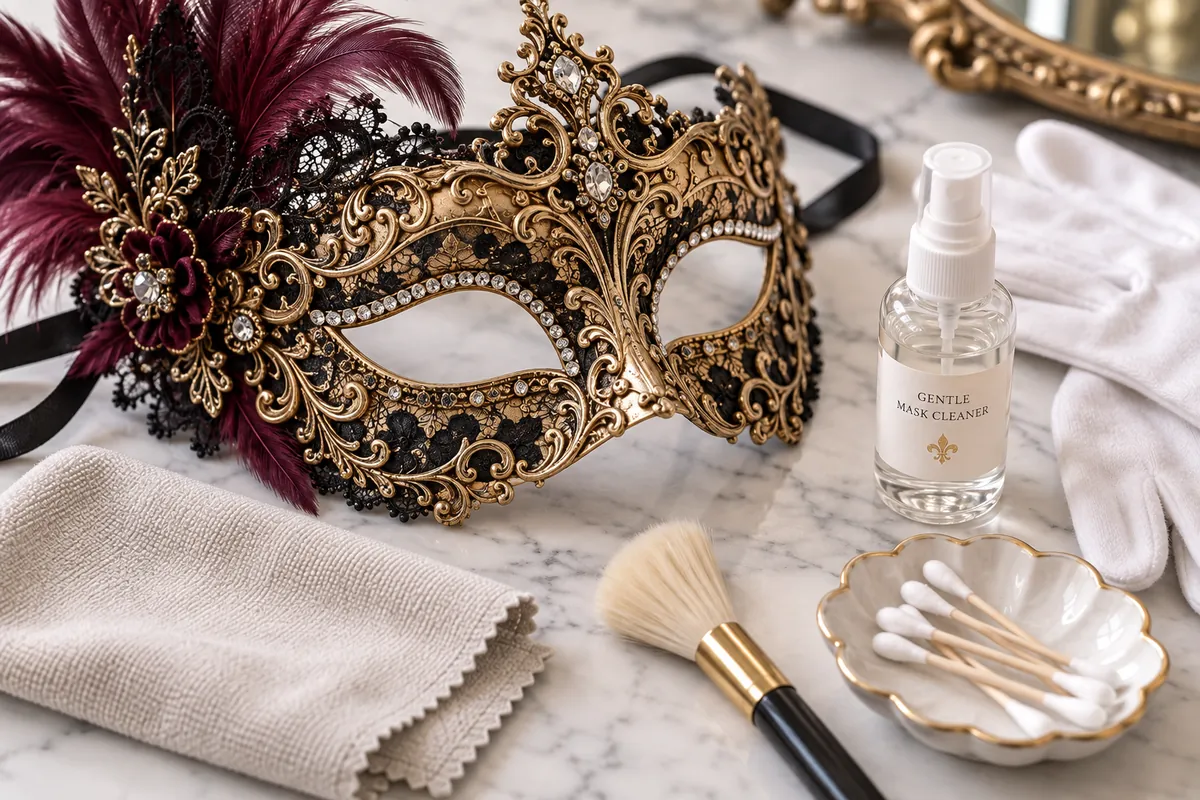
Gather only what you need: a clean microfibre cloth, cotton buds, a soft artist’s brush and a small bowl for any loose decorations. Do not bring a spray bottle to the table. Aerosol cleaner travels farther than expected and can settle into lace, under crystals and between filigree openings.
Test any damp method in a hidden area, such as the underside near the elastic attachment. Use plain water, not detergent. Dab once, blot once, and wait ten minutes. If colour appears on the cotton bud, the finish becomes tacky or the fabric edge darkens, stop. The mask has answered the question for you.
It is also worth considering whether the issue needs cleaning at all. Loose glitter can be normal. A faint paint variation may be intentional. A stubborn makeup mark on a delicate mask may be less noticeable at an event than a pale rubbed patch caused by over-cleaning. The clear crystal filigree range is a good reminder that sparkle is built from many tiny parts, so rubbing hard is never the answer.
Expert Care Tips
Clean promptly after wearing, but let the mask cool and dry first. If you have danced for three hours, moisture from skin and hair needs a little air before the mask goes into a box. Leave it on a clean towel in a shaded, well-ventilated room for 30 to 60 minutes. Direct sun can fade colour and heat can soften adhesives.
For makeup transfer, prevention is better than cleaning. Apply foundation and setting products before putting on the mask, let them settle, and avoid heavy product across the upper cheeks and nose bridge. If you use false eyelashes, check that they do not press against the inside of the mask. That small fit check prevents mascara streaks that are notoriously hard to remove.
Store the mask in a rigid box large enough that nothing is compressed. Place acid-free tissue around, not over, feathered or crystal areas, and keep the mask away from bathrooms, garages and windowsills. High humidity encourages mould on fabric and can affect glue. The US National Park Service’s collection-storage advice is aimed at museum objects, but its core message is sound: stable conditions beat heroic repairs.
Use a dedicated soft pouch only for simple, unembellished masks. A pouch is not suitable for high feathers, lace bows or raised metalwork because pressure bends them in transit. For a mask with an elastic strap, lay the elastic loose rather than stretching it around the mask. Repeated tension shortens its life.
If a crystal is loose, a feather comes away or paint begins to flake, stop cleaning. Put the detached part in a labelled envelope and seek advice from a conservator or experienced costume repairer. The Australian Institute for the Conservation of Cultural Material is a useful starting point for understanding professional conservation care. For a wearable mask, a careful repair is often possible; aggressive DIY glue is usually what turns a small issue into a permanent shiny blob.
Finally, buy with care in mind. A sale piece can still be a great choice if it suits the event and can be stored safely. The clearance selection is worth checking, but inspect embellishments on arrival and keep the packaging until you know the fit is right. A well-fitting mask touches the face less, shifts less and collects less makeup.
FAQ
What is the best masquerade mask?
The best masquerade mask fits comfortably, suits the event dress code and uses materials you can care for properly. For repeat wear, choose a secure fit and finishes that will not rub against lashes, glasses or elaborate hair styling.
How do I know which masquerade mask is right for me?
Check the width across the eyes, the nose bridge and how the strap feels after several minutes. Choose a lighter mask for a long function, and leave enough room for your eyelashes so the mask does not shift while you talk or dance.
What should I look for when buying a masquerade mask?
Look for a secure strap or handle, smooth inner edges and decorations that are firmly attached. Consider the lighting at the venue too: crystals and metallic finishes can look quite different in daylight, candlelight and flash photography.
Are there budget-friendly masquerade mask options?
Yes. A simpler painted or plain-finish mask can look excellent when it fits well and matches the outfit. Spend attention on comfort and clean edges before chasing the most elaborate decoration, especially for a one-night event.