Bauta, Colombina, Volto: A Guide to Traditional Venetian Mask Styles
What Are Venetian Masks?
Venetian masks go back to at least the 13th century, when Venice’s carnival gave everyone from nobles to servants a legal excuse to hide their identity in public for weeks at a time. That anonymity mattered. It let a merchant gamble next to a nobleman without anyone caring who was who, and it let people flirt, gossip and misbehave without their reputation following them home. The masks weren’t fancy dress in the way we think of it now, they were a social tool, and different shapes existed because different situations called for different levels of disguise.
That’s the bit a lot of people miss when they’re shopping for a masquerade mask today. A masquerade mask that covers the whole face works differently to one that leaves the mouth free, and if you’re planning to eat, drink or talk all night at a ball, that distinction is worth knowing before you buy rather than after.
Picking the Right Style
Before you get lost in gold leaf and feathers, work out what you’re actually using the mask for. A wedding, a Melbourne Cup marquee, a Halloween party and a themed corporate gala all put different demands on a mask, and the traditional Venetian styles were built with exactly this kind of trade-off in mind.
Start with three questions. First, do you need to eat and drink in it, or is it purely for photos and the grand entrance? Second, are you happy being recognised, or do you want genuine anonymity? Third, is this a one-night thing or something you’ll want to keep and wear again? A full filigree metal mask photographs beautifully but sits heavier on the face for hours than a light half-mask does, so if you’re going to be dancing until 1am, that’s worth factoring in.
Colour matters more than most people expect too. Traditional Venetian pieces lean gold, black and white, but there’s nothing stopping you matching a mask to an outfit or a theme. A black mask reads formal and a bit mysterious, a cream mask sits softer against most skin tones and works well for daytime events, and a blue mask tends to photograph brilliantly under evening lighting.
Top Venetian Mask Styles
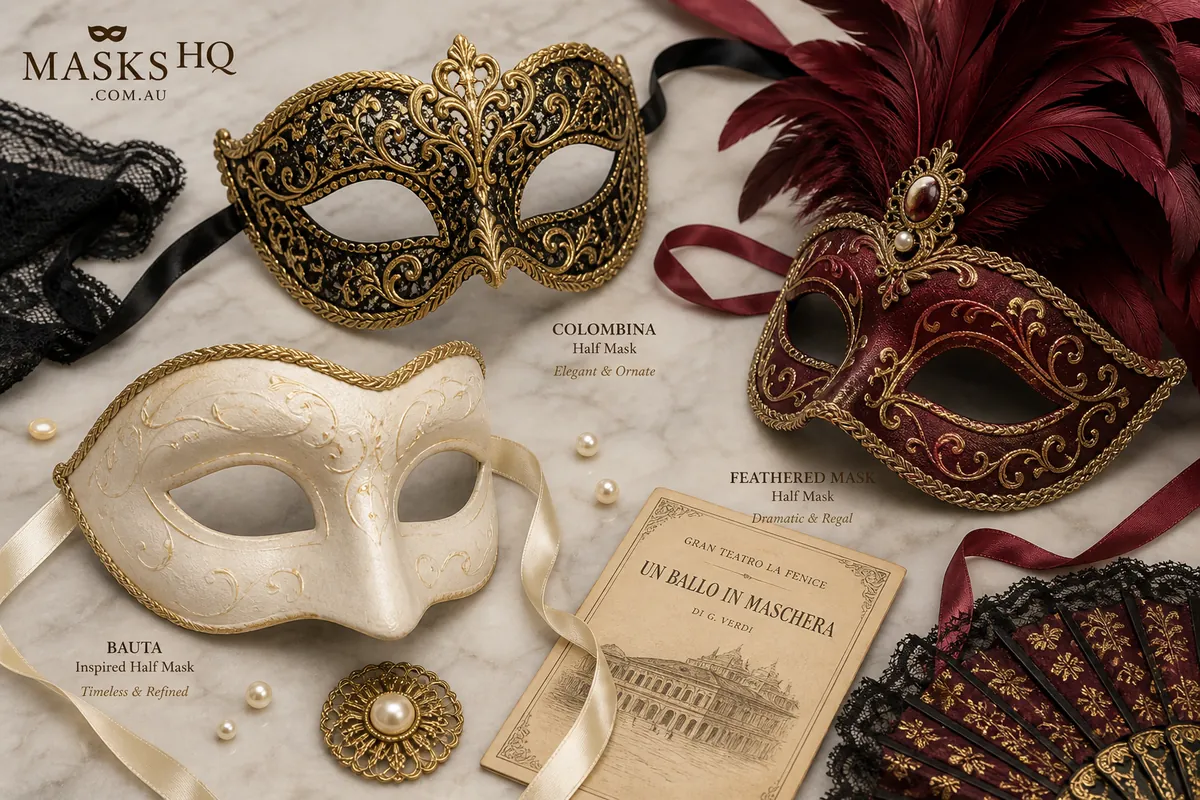
Bauta. This is the classic Venetian mask, and probably the one you’re picturing right now: a squared-off jaw, no mouth opening, and a shape that projects outward so the wearer can still eat, drink and talk without ever removing it. That’s not an accident, it’s the whole point. The Bauta was worn by Venetian citizens for political meetings and voting sessions where anonymity was legally protected, so the design had to let you function normally in public for hours. It’s traditionally paired with a black cape (the tabarro) and a tricorn hat, and it stays one of the most instantly recognisable pieces at any masquerade.
Colombina. A half-mask that covers just the eyes, nose and upper cheeks, usually held on with a ribbon or a stick rather than straps around the head. The story goes it was named after a famous 16th-century actress who didn’t want her striking face fully hidden. It’s the mask most people reach for when they want to look the part without hiding their whole identity, and it’s popular because it doesn’t interfere with eating, talking or lipstick.
Volto (Larva). The Volto, sometimes called the Larva, covers the entire face in a smooth, pale, almost featureless shape that sits slightly forward of the skin so you can still eat and drink behind it, similar in function to the Bauta but with a rounder, more delicate look. It was the go-to mask for genuine disguise in old Venice, worn with a hood and cloak so nothing of the wearer showed at all. It’s a strong choice if you want the dramatic, “who is that” effect at an event.
Moretta. A small, round, black velvet oval held in place by biting down on a button on the inside, meaning the wearer physically can’t speak while it’s on. It was worn almost exclusively by women and was considered mysterious and even a little seductive precisely because it enforced silence. It’s less common as a modern party mask for obvious practical reasons, but it’s a fascinating piece of the history and turns up in leather and velvet reproductions for collectors.
Medico della Peste. The plague doctor mask, with its long curved beak, is probably the most dramatic silhouette on this list. It was originally functional rather than festive: 17th-century doctors packed the beak with herbs and dried flowers, believing it filtered the bad air thought to spread disease. It got absorbed into carnival tradition later as one of the most theatrical characters going, and it’s still a favourite for anyone wanting a genuinely striking, conversation-starting piece rather than something subtle.
Gatto. The cat mask, all pointed ears and narrow almond eyes, is one of the “animal” characters that grew out of commedia dell’arte alongside figures like Arlecchino (Harlequin) and Pantalone. These character masks are less about historical function and more about personality and colour, which is exactly why they’ve stayed popular. A well-made leather mask in this style has real texture and weight to it and ages beautifully compared to cheaper plastic versions.
Dama (feathered lady mask). Not a strict historical category so much as a broad family of ornate, feathered, half-face pieces built for women’s masquerade wear. These are the ones covered in crystal, lace and plumes that you’ll see dominating Pinterest boards for masquerade balls and hen’s nights. If you want maximum glamour with minimum practical trade-off, this is usually where people end up.
What to Check Before You Buy
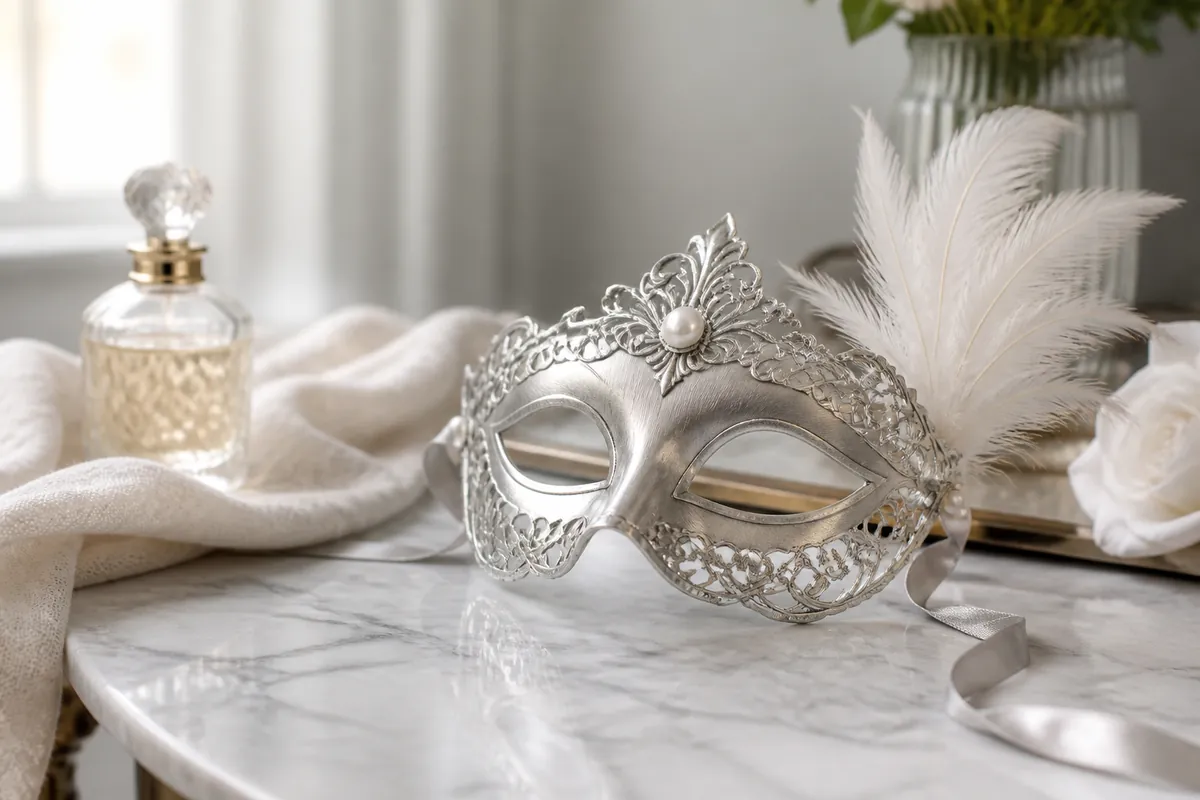
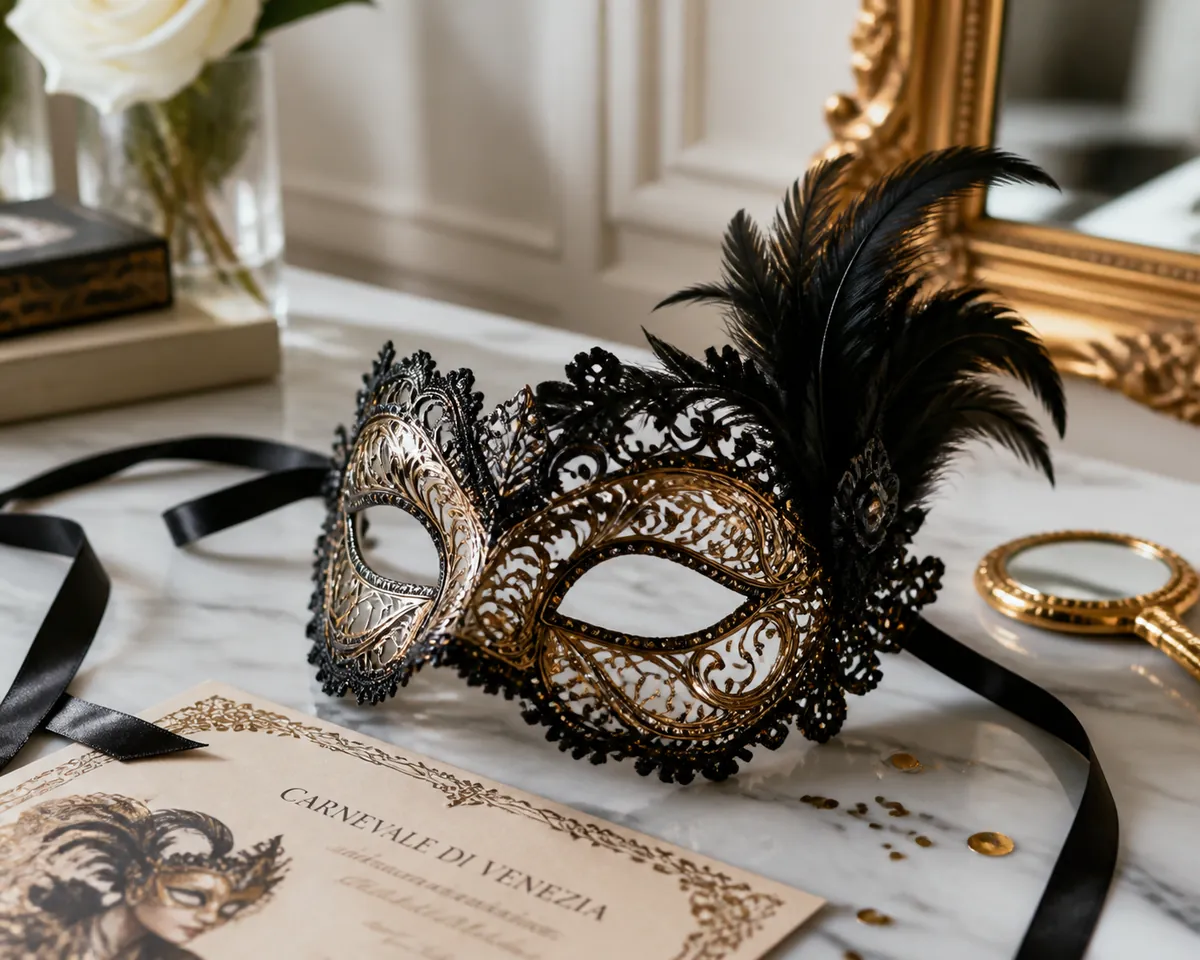
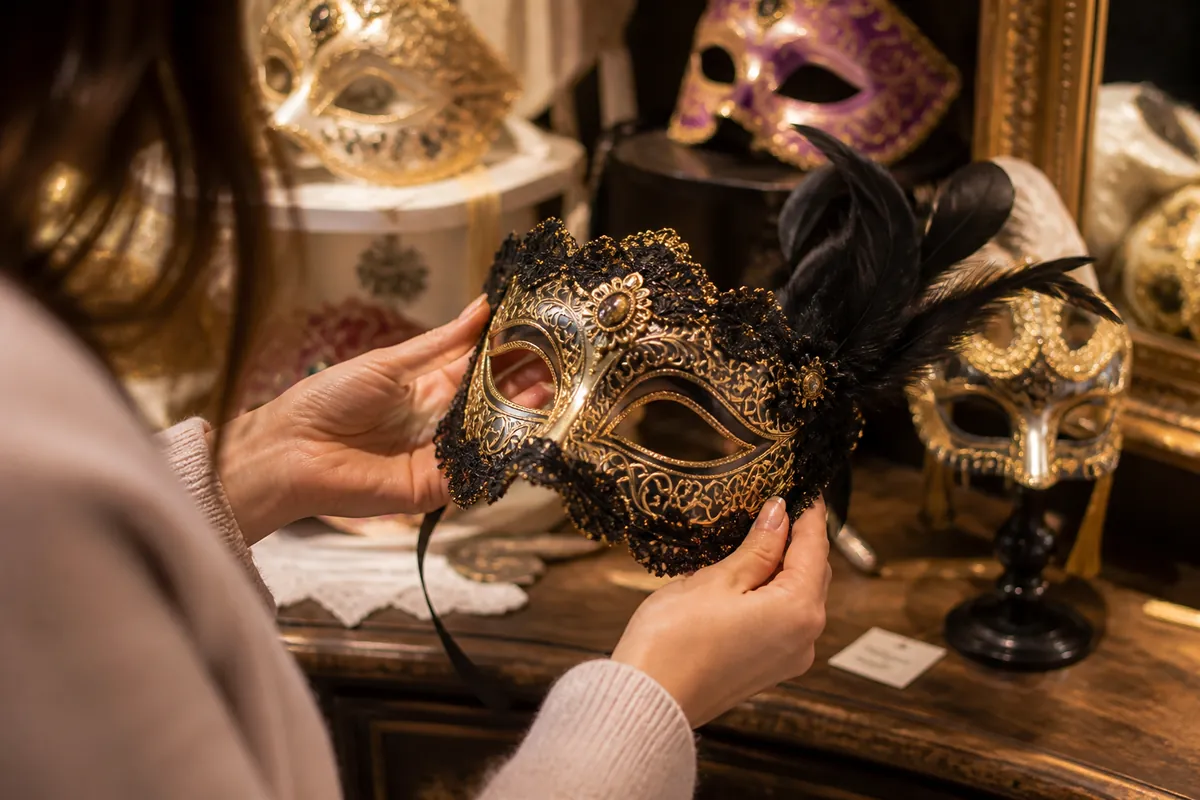
Material is the first thing to check, and it changes everything about how a mask feels after hour two. Filigree metal masks like our black filigree range are intricate and durable, cast rather than moulded, so the detail holds up under close-up photos in a way cheap plastic never does. They do sit heavier though, so if comfort over a full night matters more to you than that fine metalwork look, a black leather mask is usually the better call: lighter, moulds slightly to the face over the evening, and still has genuine texture and presence.
Fit is the second thing, and it’s the one people skip. Check whether the mask is held by ribbon ties, an elastic strap, or a stick you hold up, and think honestly about which one survives a night of dancing, photos and a couple of drinks. Ribbon ties give the most secure, adjustable fit for a long event. Stick masks look elegant in photos but need a free hand, which gets old fast on a dance floor.
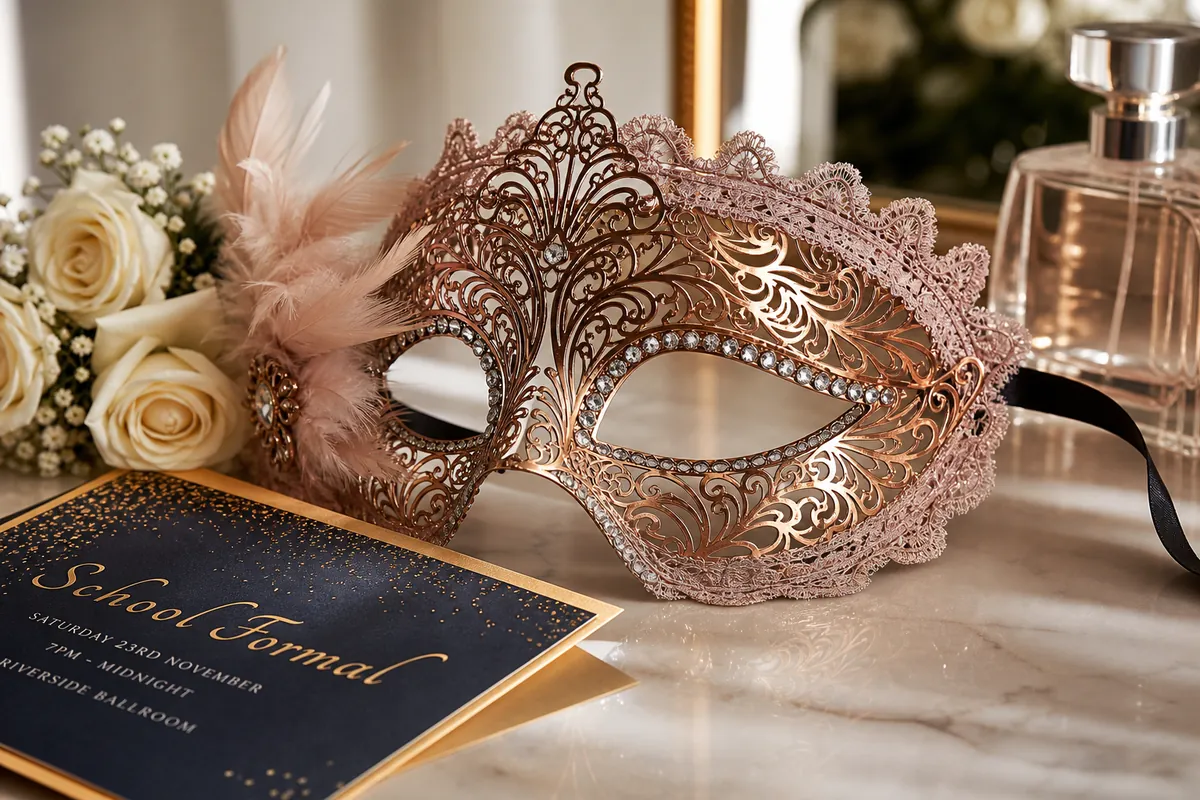
Then there’s finish and detail. Crystal and rhinestone work catches the light beautifully under event lighting, and pieces like the blue crystal filigree mask or the clearer clear filigree crystal mask are popular precisely because they photograph well from a distance and up close. If you’re outfitting a group, whether that’s a bridal party, a corporate table, or a family doing Halloween together, buying from one masquerade mask collection keeps the styling consistent without everyone individually hunting for matching pieces. And if budget’s tight, it’s always worth a look through clearance masks before assuming the good ones are out of reach, we rotate stock through there regularly and the quality doesn’t drop just because the price has.
Tips From the Experts
A few things we’ve picked up after years of fitting people out for balls, weddings and themed parties. Try the mask on with your hair actually styled the way you’ll wear it on the night, not before, because updos and loose curls change how straps and ties sit completely. If you’re wearing glasses, measure the eye openings against your frames before you buy rather than after, a mask that’s gorgeous but won’t sit over your glasses is a wasted purchase.
For anyone buying for a group event, order at least a week earlier than you think you need to. Filigree and crystal pieces in particular can sell through fast in the run-up to Melbourne Cup and end-of-year party season, and matching styles across six or eight people is much easier when you’re not scrambling for whatever’s left. Finally, don’t underestimate a plain gold or black Bauta or Volto as the safe, versatile option, it goes with almost any outfit colour and never looks like it was a last-minute grab. If you want more ideas on pulling a full look together, our masks HQ homepage and blog both cover styling for specific events in more depth, and the about page has more on how we source and make our pieces if you’re curious about the craftsmanship side of things.
Frequently Asked Questions
What is the best venetian mask style?
There isn’t one “best” style, it depends on the event. The Bauta and Volto are the safest all-rounders because they cover the full face without stopping you eating or talking, while the Colombina half-mask suits anyone who wants a lighter, more comfortable option for a long night out.
How do I choose the right venetian mask?
Start with how long you’ll wear it and whether you need to eat or talk, then narrow it down by colour and material to match your outfit. A full-face style like the Volto suits dramatic anonymity, while a half-mask like the Colombina works better for a more social, comfortable evening.
What should I look for when buying one?
Check the material first, filigree metal is durable and detailed but heavier, leather is lighter and more comfortable over a full night. Then check how it attaches to your face, ribbon ties generally hold up better through dancing and drinks than a stick or clip.
Are budget-friendly venetian masks available?
Yes, well-made masks don’t have to cost a fortune. Our clearance range rotates regularly and still includes proper filigree and leather pieces, so it’s worth checking there before settling for a flimsier version elsewhere, especially if you’re outfitting a larger group.