Feather, Lace or Metal: Choosing a Masquerade Mask Style
Masquerade Mask Styles Explained
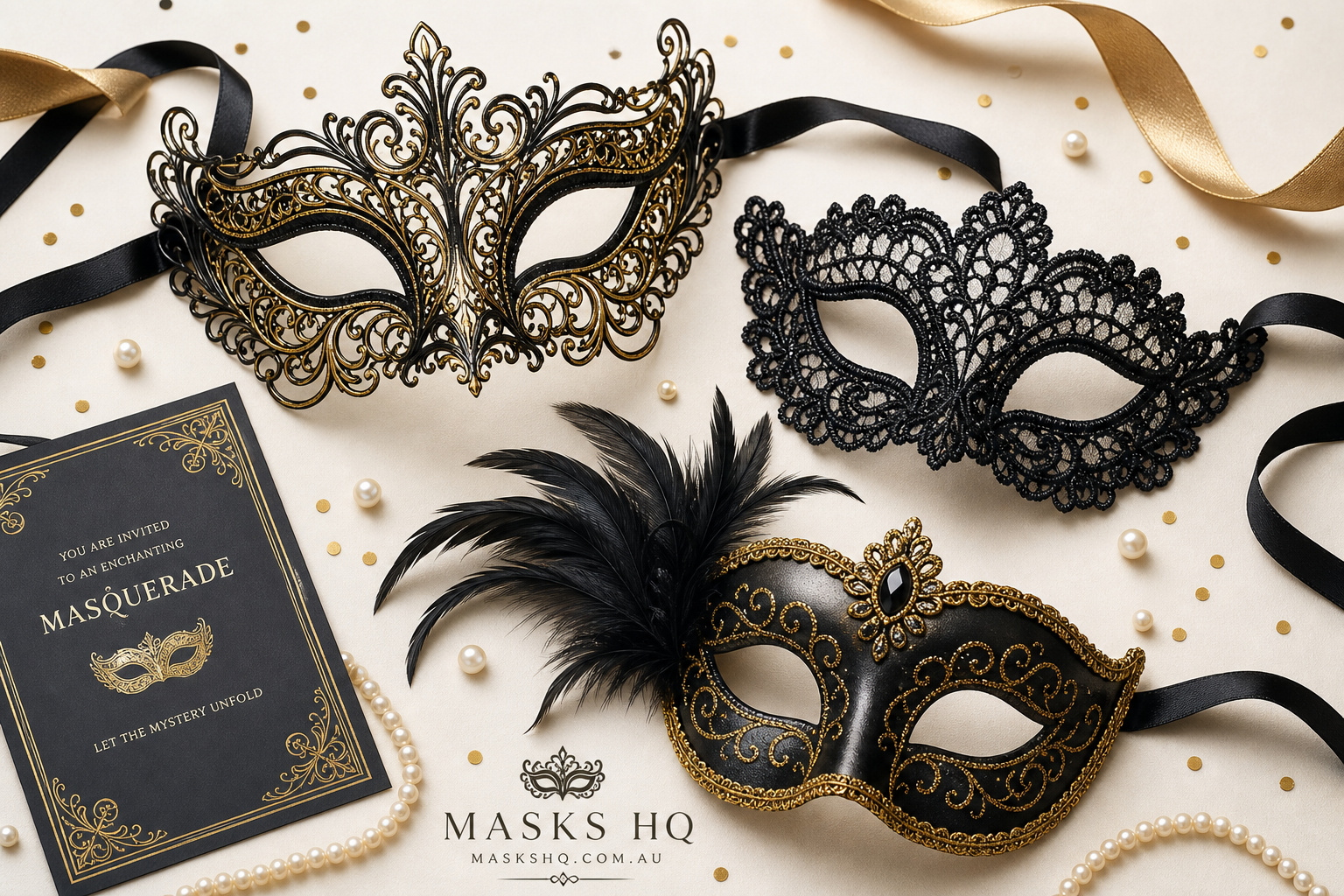
Ask ten people what a “masquerade mask” looks like and you’ll get ten different pictures in their head. Some see the gilded, long-nosed Bauta from old Venice. Others picture a simple black lace eye mask from a hens’ night. Both are right, and that’s the whole point of this article, because “masquerade mask styles” isn’t one thing, it’s a category covering at least four very different construction methods: filigree metal, leather, feather, and lace or fabric.
Why does the style you pick actually matter, beyond looks? Three reasons, and we see people underestimate all three every year. First, weight and balance change how a mask sits on your face over a four or five hour party, a heavy metal piece that felt fine in the mirror at home can start digging into your temples by 11pm. Second, the style dictates how a mask photographs, and with masquerade events these days you can guarantee at least half the guests are on their phones. Third, style signals formality, a full-face leather mask reads differently to a black-tie ball than a delicate lace half-mask does, and turning up in the wrong register can make you either underdressed or overdone.
We stock a full spread of these across our masquerade mask range, and the questions we get from customers cluster around the same handful of trade-offs. This guide answers them in order: how to choose, what the main styles actually are, what to check before paying, and the small things that separate a mask you wear once from one you keep for years.
How to Choose Your Mask Style
Start with the outfit, not the mask. Nine times out of ten, someone buys a mask first and then spends a week trying to find a matching gown or suit, which is backwards and makes everything harder. Your outfit’s colour palette and formality should decide the mask’s family before you even open a product page.
If your outfit is structured, black tie, a fitted suit, a column gown, lean towards filigree metal or leather. Both hold a crisp silhouette and read as “designed”, not “costume”. Browse the filigree metal collection for the ornate, laser-cut pieces, or the leather masks if you want something with more weight and a slightly rougher, more theatrical edge.
If your outfit is soft, chiffon, tulle, anything with movement, feather or lace suits better because it echoes that softness instead of fighting it. A stiff metal mask against a floaty dress can look like two different outfits stapled together.
Next, think about how long you’ll actually wear it. A ball where the mask stays on for the photo and then gets pushed up onto your forehead for the rest of the night has very different requirements to a full formal event where it’s on your face for hours. For the latter, prioritise padding at the nose bridge and check the eye holes are wide enough for your peripheral vision, nobody enjoys squinting through a party.
Finally, factor in colour matching. We sell masks across nearly every shade you’d need for a formal palette, from black masks for classic black-tie, through to blue masks for navy or royal blue gowns, and cream masks for warmer, neutral outfits. Matching the mask to your actual garment, not just “a mask that looks nice”, is the single biggest upgrade most people can make.
Top Styles and Options
Here’s how the main families actually differ in practice, not just in marketing copy.
Filigree Metal Masks
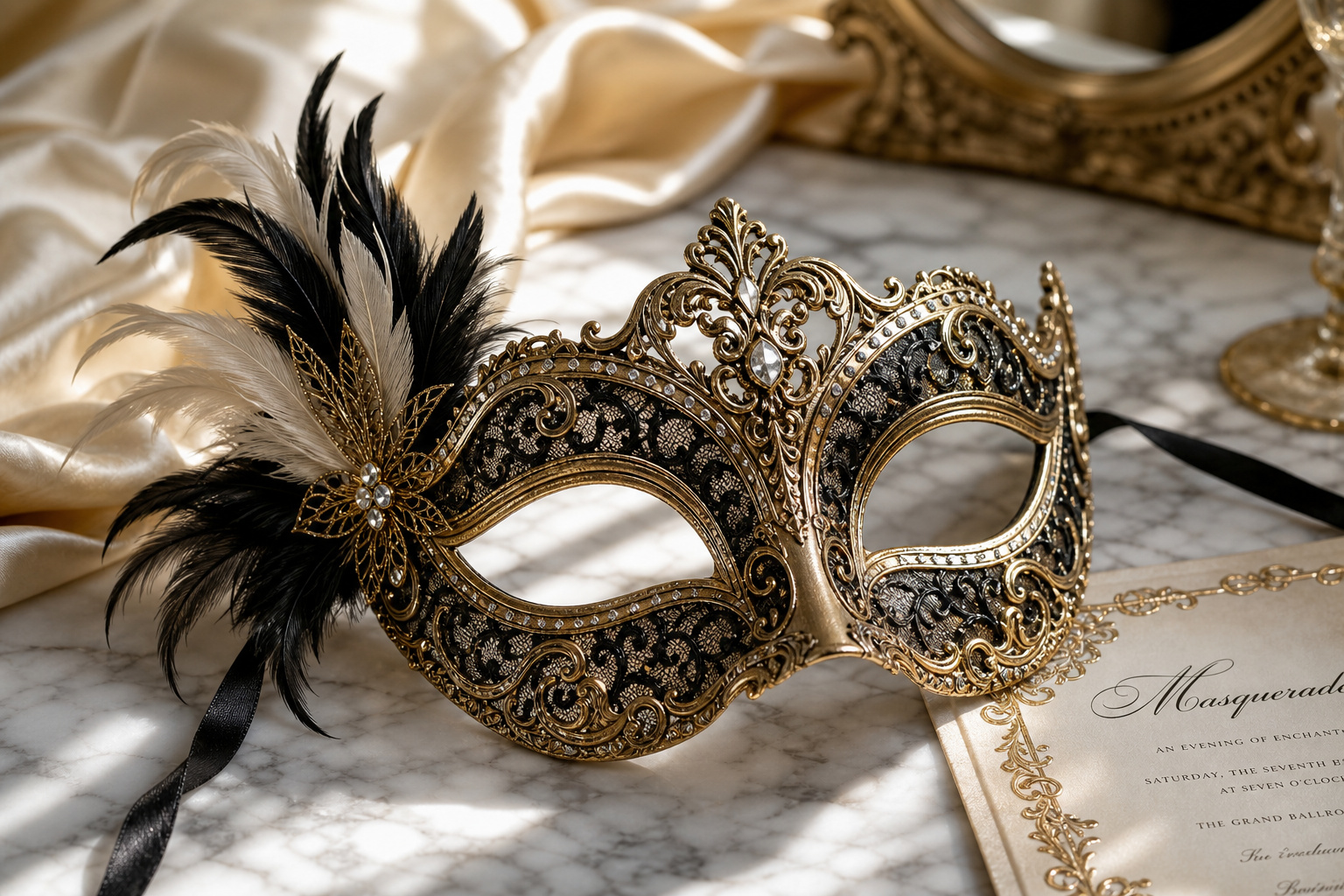
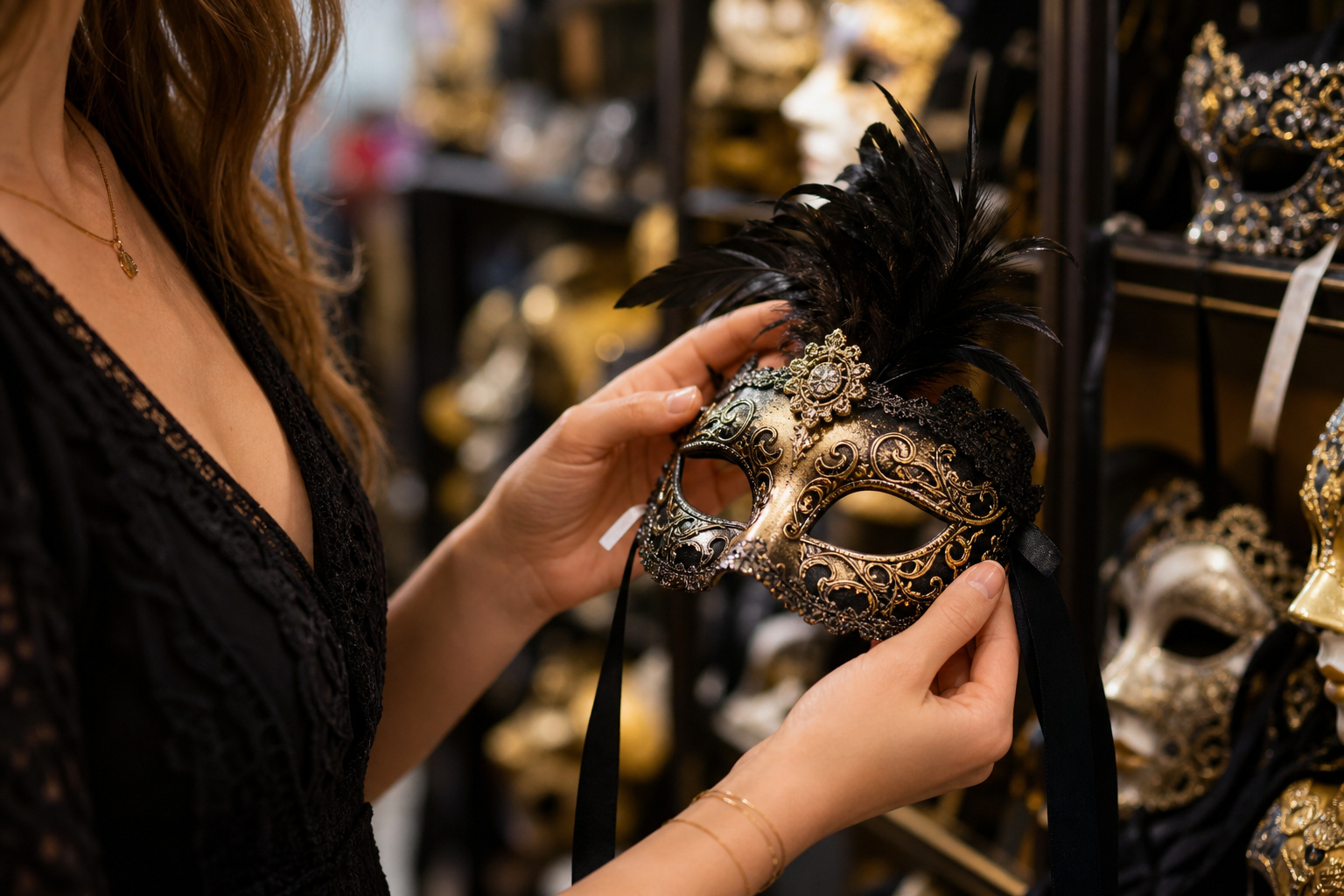
These are laser-cut or hand-pierced metal, usually with a lace overlay or crystal detailing bonded to the front. They catch light beautifully under venue lighting, which is exactly why they photograph so well, and they hold their shape all night without drooping. The trade-off is weight, a full ornate filigree piece with heavy crystal work can sit noticeably heavier than a fabric mask, so if you’ve got a long night ahead, look at the lighter-gauge designs. Our black filigree masks are the best-seller in this family for exactly that reason, they’re substantial enough to look premium but not so heavy they’re a chore by midnight. For something with more sparkle, the blue crystal filigree masks and clear filigree crystal masks both work well against darker gowns because the crystal reads as jewellery rather than costume.
Leather Masks
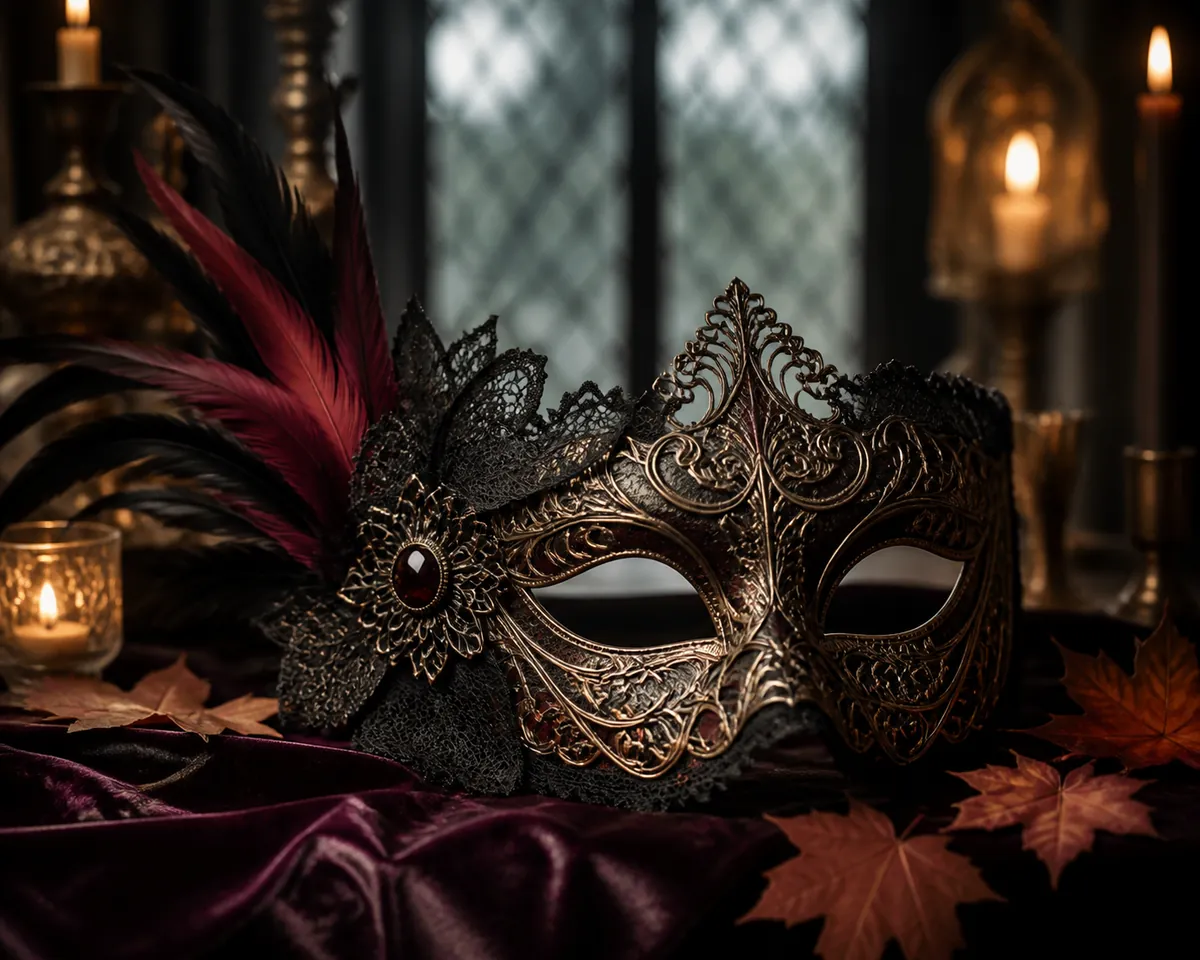
Leather sits at the more theatrical end, think Venetian Carnival rather than a corporate gala. It’s durable, genuinely built-to-last in a way lace and feather aren’t, and it develops a bit of character with age rather than looking worn out. It’s the right pick if you’re after something with real presence, a strong jawline shape or a full-face design, and it’s popular for repeat-wear costumes because it doesn’t crush in storage the way feather does. The black leather masks are the most versatile starting point, and if your outfit leans cooler in tone the blue leather masks hold their dye well without fading under stage or dance-floor lighting.
Feather Masks
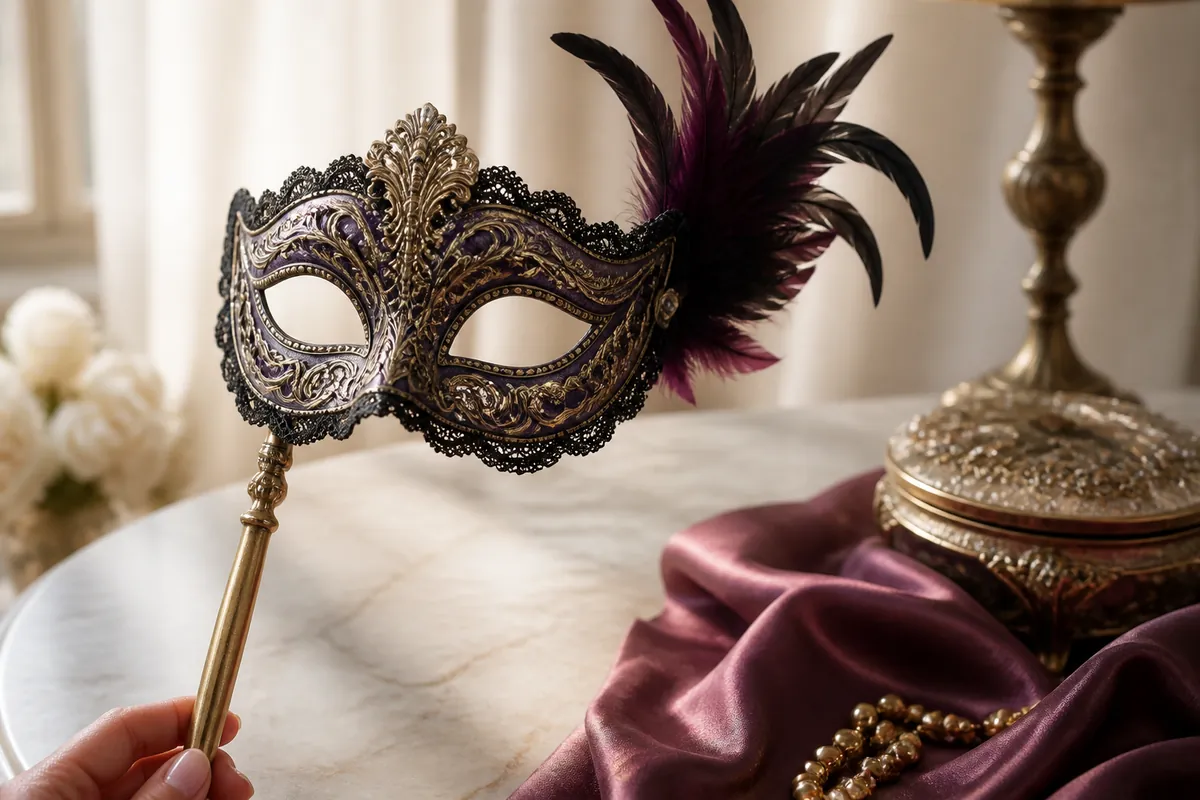
Feather is the most forgiving style if you want drama without heaviness. A well-made feather mask moves slightly as you turn your head, which honestly reads better in photos than a static piece, movement catches the eye. The catch is durability, feathers crush in transit and in storage, so they’re better suited to a single big event than years of repeat wear. If feather is your pick, buy last and store it in a box, not a drawer.
Lace and Fabric Masks
Lace is the softest, most romantic option and usually the lightest to wear, which matters more than people expect once you’ve had a mask on for three hours straight. It suits vintage or bridal-adjacent styling particularly well. It’s the least structured of the four families though, so it won’t hold a strong silhouette the way metal or leather will, and it’s the easiest to accidentally under-dress with, pair it with something too casual and it can look more “craft fair” than “ball”.
If you’re still torn between families, our full Venetian mask range is worth a look too, since the traditional silhouettes come in a spread of finishes, so you can get the classic look in whichever material suits your event.
What to Consider Before You Buy
A handful of practical checks stop a good-looking mask from becoming an uncomfortable night.
Fit around the eyes. Hold your phone up and look at the eye-hole spacing relative to your own eye width before you buy, not after. Masks designed on a narrower face template can pinch at the outer corners on a wider face, and there’s no fixing that after delivery.
Strap type. Ribbon ties give the most adjustable, secure fit for an active night, dancing, hugging people, the works. Elastic is faster to put on and take off but can slip on some hair types. If you’re wearing your hair up, ribbon ties are almost always the better call because they anchor properly against the scalp.
Weight distribution. Pick the mask up and hold it against your face in the mirror for a solid minute, not five seconds. That’s roughly how long it takes to notice whether the weight is sitting evenly or pulling down on one side, which becomes obvious fatigue three hours into a party.
Colour under venue lighting. Warm gold lighting (common at most function centres and hotel ballrooms) shifts how metallics and pale colours read. A silver filigree mask can look almost champagne-toned under warm downlights, so if you’re colour-matching precisely to a dress, check swatches or product photos taken in similar lighting rather than daylight shots alone.
Storage and reuse. If this is a one-off event, buy for the look. If you’re likely to wear it again, factor durability into the decision now, leather and metal filigree both outlast feather and lace by a wide margin when it comes to repeat outings.
One more thing worth checking: delivery timing. Masquerade events tend to cluster around certain months, and popular colourways in filigree and leather can sell through ahead of peak season, so ordering a few weeks out rather than the week before saves the stress of a compromise pick.
Tips from the Experts
A few things we’ve picked up from years of fitting masks for balls, weddings and themed parties, most of which nobody tells you until you’ve already had the problem.
Try the mask on with your actual hairstyle for the night, not however your hair happens to be sitting when the parcel arrives. Updos change how a strap sits against the head completely, and a mask that felt secure over loose hair can slide on an updo.
Bring a small compact mirror or use your phone camera if you need to adjust the mask mid-event. Filigree and leather masks especially can shift slightly after a few hours, and a thirty-second re-centre beats spending the rest of the night peering through misaligned eye holes.
If you’re outfitting a group, for a wedding party, a corporate ball, a themed birthday, don’t put everyone in an identical mask. Same family, different colours or finishes reads far more intentional in photos than a dozen matching masks, which tends to look like a uniform rather than a coordinated group.
And if in doubt between two styles, go one notch more formal than you think the event calls for. It’s much easier to dress a leather or filigree mask down with a simpler outfit than it is to make a lace half-mask feel appropriate at a black-tie affair.
Frequently Asked Questions
What is the best masquerade mask style?
There’s no single “best” style, it depends on your outfit and how long you’ll wear it. Filigree metal and leather suit structured, formal outfits and hold up well over a full night, while feather and lace suit softer, romantic looks but wear less over repeat use. Match the family to your outfit’s formality first, then pick colour and finish from there.
How do I know which masquerade mask style is right for me?
Look at your outfit first: structured, tailored pieces pair best with filigree metal or leather, while flowing fabrics like chiffon or tulle suit feather or lace. Then factor in how long you’ll wear the mask, a heavier ornate piece is fine for a photo but can feel like a lot four hours into dancing.
What should I look for when buying a masquerade mask?
Check the eye-hole spacing against your own face width, the strap type (ribbon ties are more secure for an active night than elastic), and how the mask’s weight distributes when held up in a mirror. Also consider how the colour reads under warm venue lighting, not just in daylight product photos.
Are there budget-friendly masquerade mask styles?
Yes, lace and simpler filigree designs tend to sit at the more accessible end of the range while still looking well finished. If you’re outfitting a group or buying for a one-off event, these are a sensible starting point, you can always step up to leather or heavier crystal filigree for a piece you plan to keep and rewear.